
Herniated Disc Second Opinion in Beijing: An Alternative to Fusion
After years of back pain and limited relief from conservative care, one U.S. patient sought a spine surgery second opinion in Beijing and was evaluated for a less invasive option.
For many patients with lumbar disc herniation, the hardest part is not the diagnosis. It is the moment when conservative care no longer seems enough, and surgery enters the conversation.
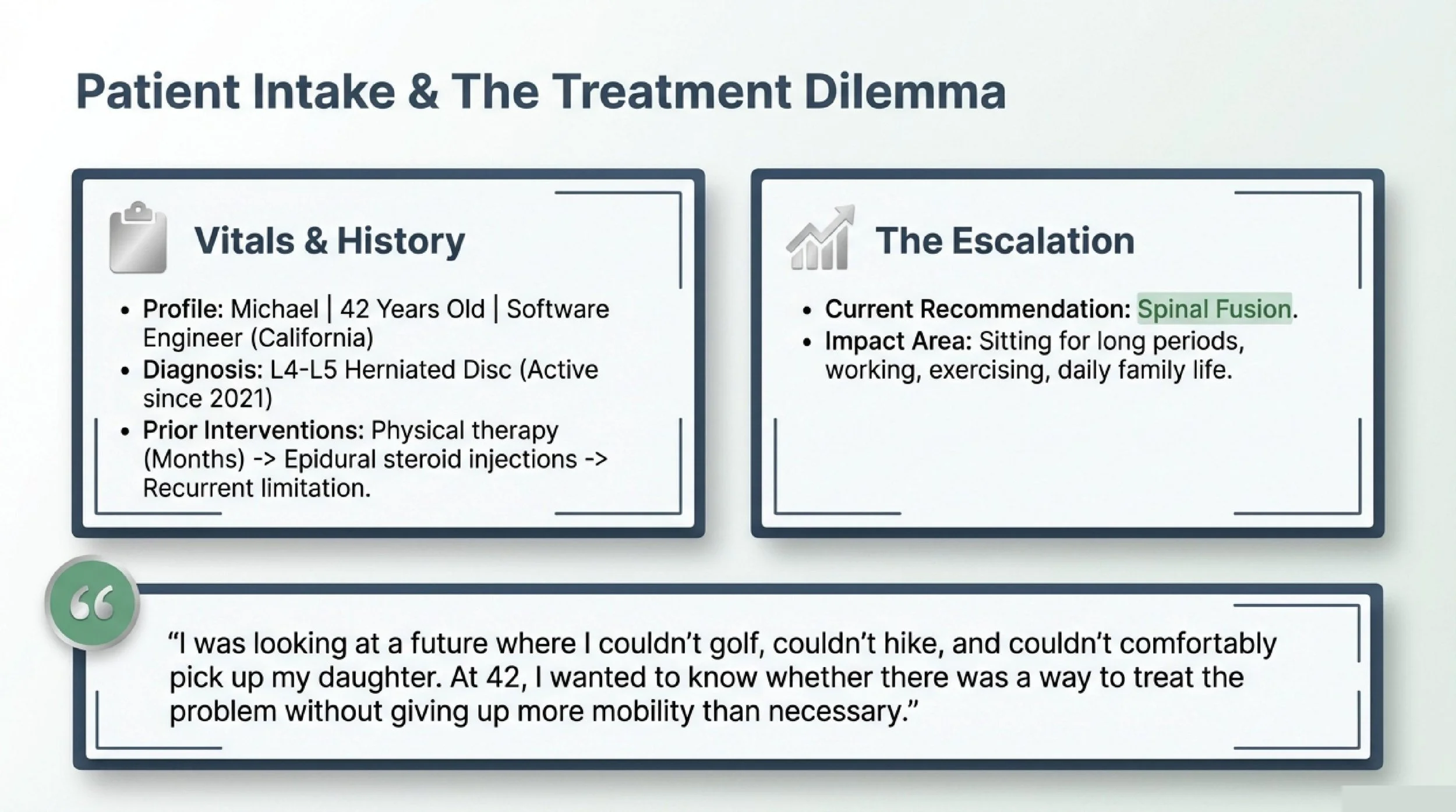
That was where Michael, a 42-year-old software engineer from California, found himself. He had been living with an L4-L5 herniated disc since 2021. Sitting for long periods had become difficult. His symptoms were affecting work, exercise, and daily family life. He had already completed months of physical therapy and received epidural steroid injections, but the relief did not last.
When spinal fusion was presented as the next likely step, he wanted to understand whether that was truly the only option.
“I was looking at a future where I couldn’t golf, couldn’t hike, and couldn’t comfortably pick up my daughter,” Michael said. “At 42, I wanted to know whether there was a way to treat the problem without giving up more mobility than necessary.”
Why He Looked for a Spine Surgery Second Opinion
Michael’s case was not unusual in one important way: he had already done what many patients are advised to do first. He tried non-surgical treatment. He waited. He monitored symptoms. But after three years of recurrent limitation, he still did not feel confident moving forward with fusion without another review.
Through a referral, he connected with PandaMed, a cross-border medical coordination service that helps international patients organize medical records, obtain specialist review, and communicate with hospitals in China. PandaMed was not the treating provider. Its role was to support case intake, document preparation, communication, translation, and travel-related coordination.
Within 72 hours of uploading his MRI and clinical history, Michael received a written case review arranged with the spine team at Peking Union Medical College Hospital (PUMCH) in Beijing.
What the Beijing Review Focused On
The key question was straightforward: Did Michael’s imaging and symptoms actually support fusion, or could a more limited procedure be considered?
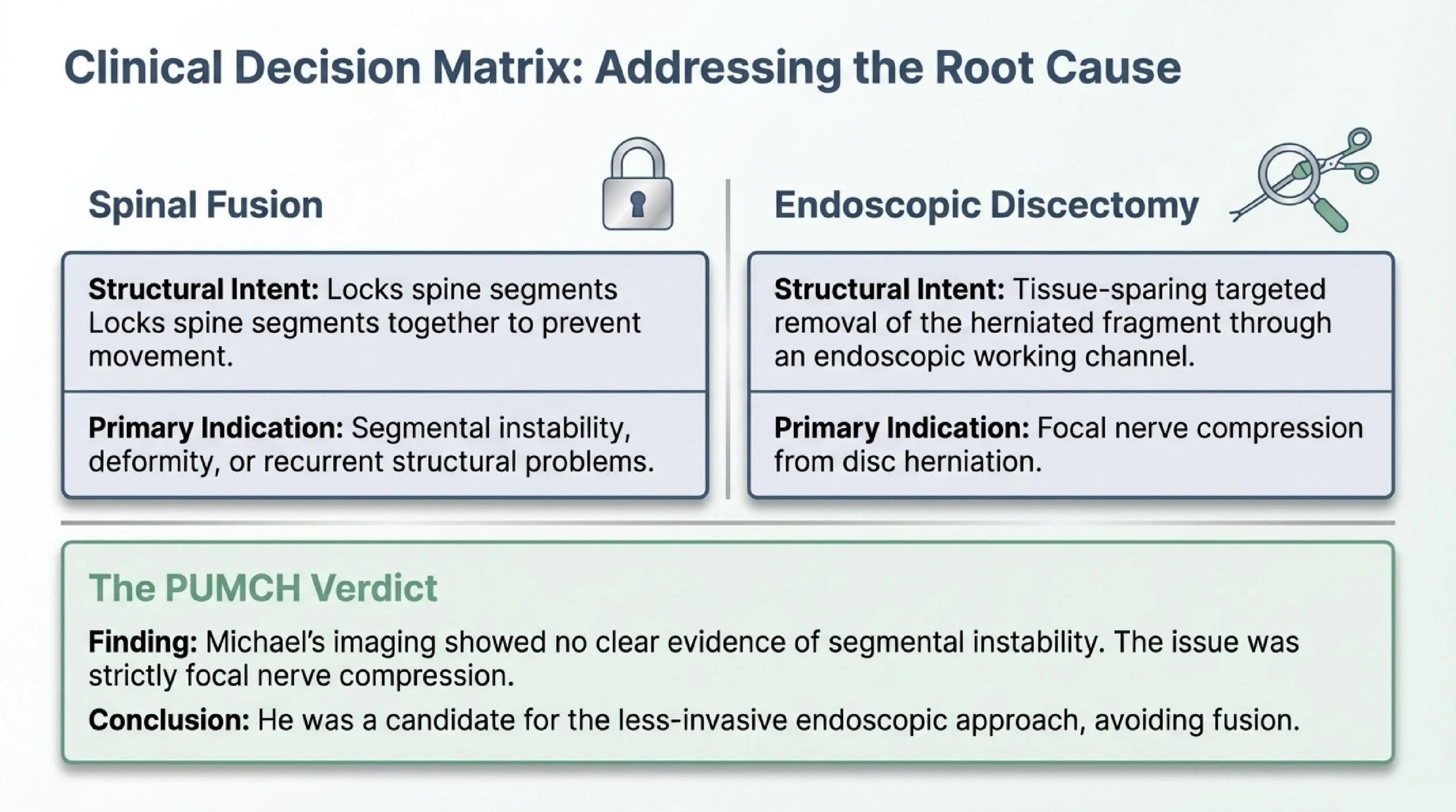
According to the Beijing team’s review, his imaging did not show clear evidence of segmental instability, which is often an important consideration when fusion is being discussed. The main issue appeared to be focal nerve compression from the disc herniation itself.
Based on that interpretation, the team believed his case might be suitable for a more tissue-sparing approach: targeted removal of the herniated fragment through an endoscopic working channel, rather than fusion of the spinal segment.
That distinction mattered to Michael. He was not simply looking for treatment in another country. He was looking for a clearer answer to a specific question: Is there a reasonable alternative to fusion for my type of disc herniation?
Why Minimally Invasive Spine Surgery in Asia Gets Attention
For patients researching a herniated disc second opinion or endoscopic discectomy in China, one reason Beijing often comes up is surgeon and center volume.
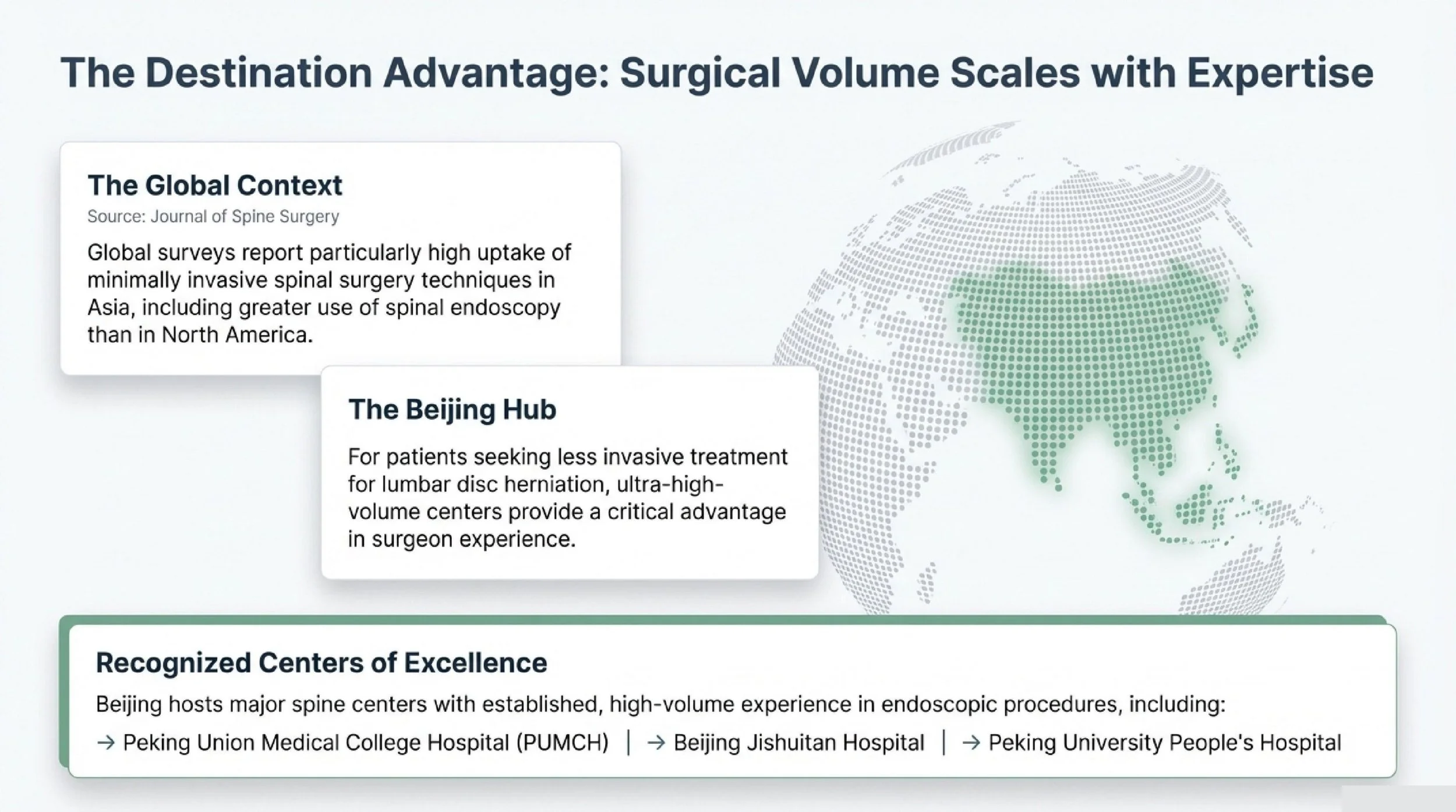
Published literature has suggested meaningful regional differences in the adoption of minimally invasive spine techniques. A global survey published in the Journal of Spine Surgery reported particularly high uptake of minimally invasive spinal surgery techniques in Asia, including greater use of spinal endoscopy than in North America. Other reviews have also noted growing interest worldwide in endoscopic approaches for selected lumbar disc cases.
That does not mean one region is universally better for every patient or every spinal condition. Surgical decision-making depends on diagnosis, anatomy, surgeon experience, hospital resources, and patient priorities. But for patients specifically exploring less invasive treatment options for lumbar disc herniation, high-volume endoscopic centers may offer useful additional perspectives.
Why Beijing Became a Practical Option
For Michael, Beijing became a realistic choice not because he wanted something experimental, but because he wanted access to a team with substantial experience in minimally invasive spine procedures.
Major spine centers in Beijing, including PUMCH, Beijing Jishuitan Hospital, and Peking University People’s Hospital, are widely recognized in China for orthopedic and spine care. Publicly available hospital information and academic reporting suggest that these centers manage large case volumes and have established experience in minimally invasive and endoscopic spine surgery.
For international patients, those factors can matter. In technically demanding procedures, experience at the surgeon and center level is often one part of the decision-making process.
Preparing for Treatment in China
After reviewing the written assessment and discussing the proposed pathway, Michael decided to travel to Beijing.
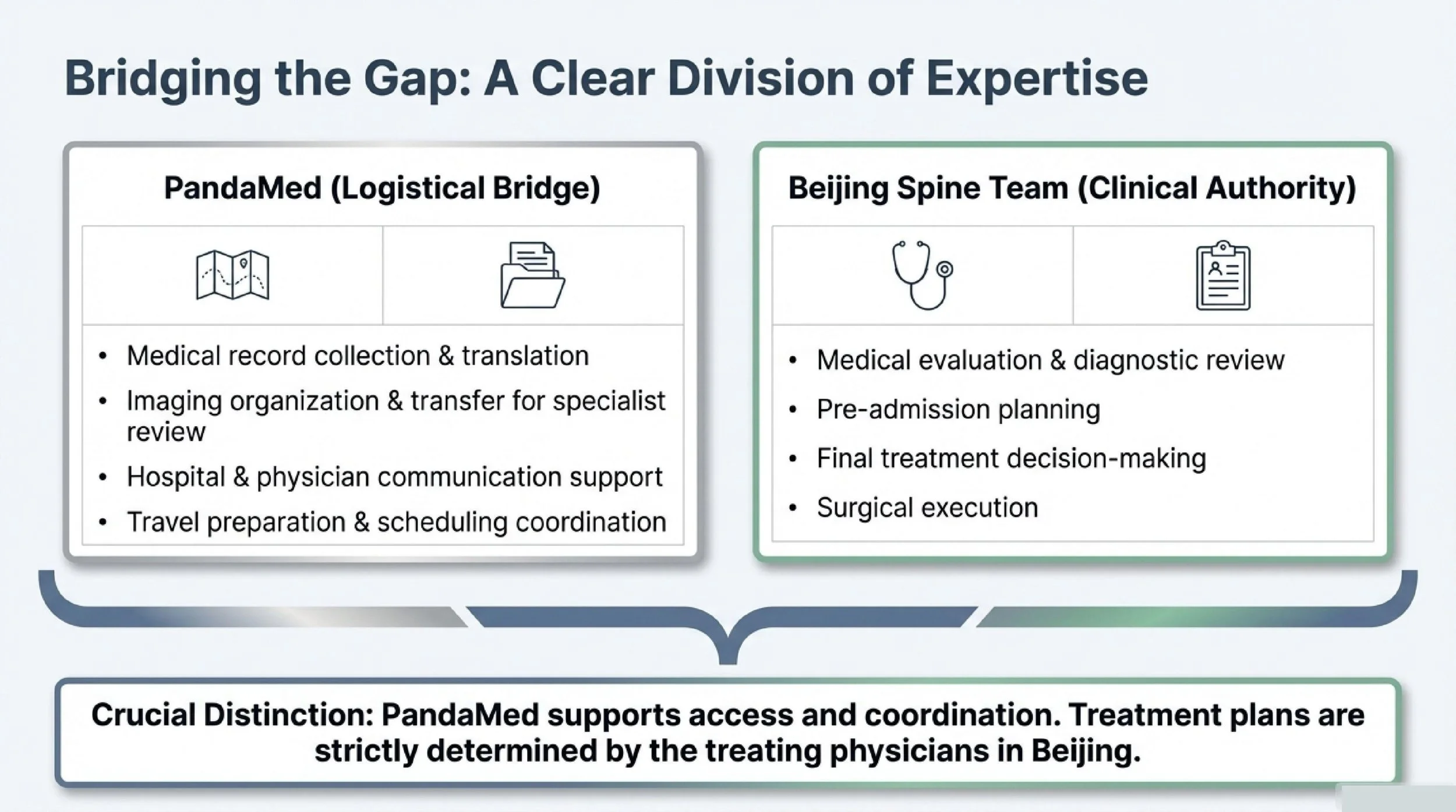
PandaMed helped coordinate the non-clinical side of the process, including document collection, translation support, communication with the hospital, imaging transfer, and travel preparation. The hospital team handled the medical evaluation, pre-admission planning, and final treatment decision.
This separation of roles is important. Michael’s treatment plan was determined by the treating physicians in Beijing, while PandaMed supported the coordination needed to make cross-border care more manageable.
The Procedure He Underwent
According to the case record provided for this story, Michael underwent an endoscopic lumbar procedure at L4-L5 in Beijing.
His reported operative details included:
Local anesthesia with sedation rather than general anesthesia
A small paraspinal incision, approximately 7 mm
Endoscopic visualization and targeted removal of the herniated fragment
Operative time of 47 minutes
Estimated blood loss under 20 mL
He was able to begin walking within hours after the procedure and was discharged the same day.
While these details reflect one patient’s reported experience, recovery patterns can differ significantly depending on diagnosis, procedure type, prior treatment history, and physician assessment.
Recovery After Endoscopic Lumbar Disc Surgery
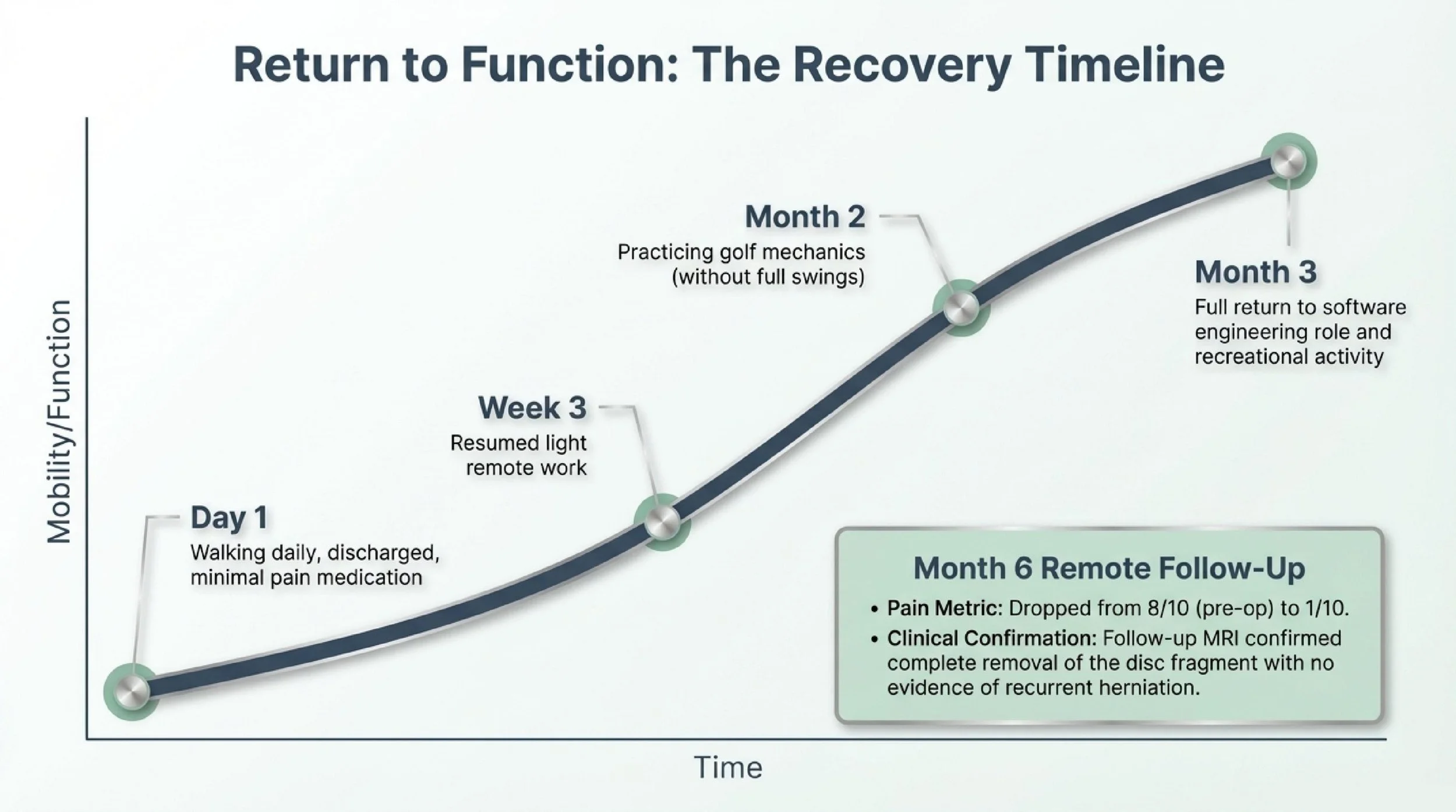
Michael described his early recovery as gradual but encouraging.
In the first week, he was walking daily and using minimal pain medication. By week three, he had resumed light remote work. At around two months, he had started practicing golf mechanics again without full swings. By the third month, he had returned to his regular software engineering role and recreational activity.
At six-month follow-up conducted through remote review, his reported pain score had improved substantially, from 8 out of 10 before treatment to 1 out of 10. Follow-up MRI reportedly showed removal of the disc fragment without evidence of recurrent herniation at that time.
What This Case May Mean for Other Patients
The most important lesson from Michael’s case is not that one procedure is always better than another. It is that the right surgery depends on the right diagnosis.
Some patients with lumbar disc herniation do require fusion, especially when instability, deformity, recurrent structural problems, or other complicating factors are present. Others may be candidates for decompression-focused or endoscopic approaches. The challenge is that these distinctions are not always obvious to patients when they first hear a surgical recommendation.
A structured spine surgery second opinion can be useful when:
the diagnosis is clear, but the best procedure is still uncertain
conservative treatment has failed, but the patient wants to understand all reasonable options
the patient has been advised to consider fusion and wants another review of imaging and indications
the patient is exploring treatment at a high-volume minimally invasive spine center
PandaMed’s Role in Cross-Border Second Opinions
For international patients considering evaluation in China, PandaMed’s role is to support access and coordination rather than to provide treatment directly.
Depending on the case, that may include:
medical record collection and translation,
imaging organization for specialist review,
communication support with hospitals and physicians,
travel and scheduling coordination,
and follow-up communication planning after return home.
For patients who are not yet ready to travel, a second-opinion review may still help clarify whether a proposed treatment path deserves further discussion.
A Final Word for Patients Considering Their Next Step
Michael’s story reflects one patient’s individual experience. It should not be read as a promise of outcome or as a substitute for medical advice. Treatment suitability and results vary based on diagnosis, imaging findings, symptoms, prior treatment history, and physician evaluation.
Still, for patients facing a major spine decision, one thing is often worth remembering: a recommendation is important, but it does not always have to be the last word.
If you have been advised to consider surgery for a herniated disc and would like help organizing a second opinion from specialists in China, you can contact PandaMed at contact@pandamedglobal.com. The team can help review whether your records are suitable for cross-border evaluation and explain the next steps in a clear, low-pressure way.
References
General medical context in this article is informed by the following sources:
Journal of Spine Surgery (2020), Regional variations in acceptance, and utilization of minimally invasive spinal surgery techniques among spine surgeons: results of a global survey. PMID: 32195433
Journal of Clinical Medicine (2025), Current Trends and Future Directions in Lumbar Spine Surgery: A Review of Emerging Techniques and Evolving Management Paradigms. PMID: 40429385
Zhongguo Xiu Fu Chong Jian Wai Ke Za Zhi (2022), Comparison of unilateral biportal endoscopic transforaminal lumbar interbody fusion versus minimally invasive tubular transforaminal lumbar interbody fusion for lumbar degenerative disease. PMID: 35570634
