
How to Apply for a China Visa for Medical Treatment: Step-by-Step Guide
SEO Title: How to Apply for a China Visa for Medical Treatment
If you are planning medical travel to China, the visa process can seem more complicated than expected. Many patients assume the hardest part is the application form. In reality, the form is often the easy part. The harder part is making sure your treatment plan, medical records, travel timeline, and hospital support documents are already in order before you apply.
That is why this process should be understood as part of a larger medical journey, not just an administrative task. Here is a practical guide to help you understand how the process usually works.
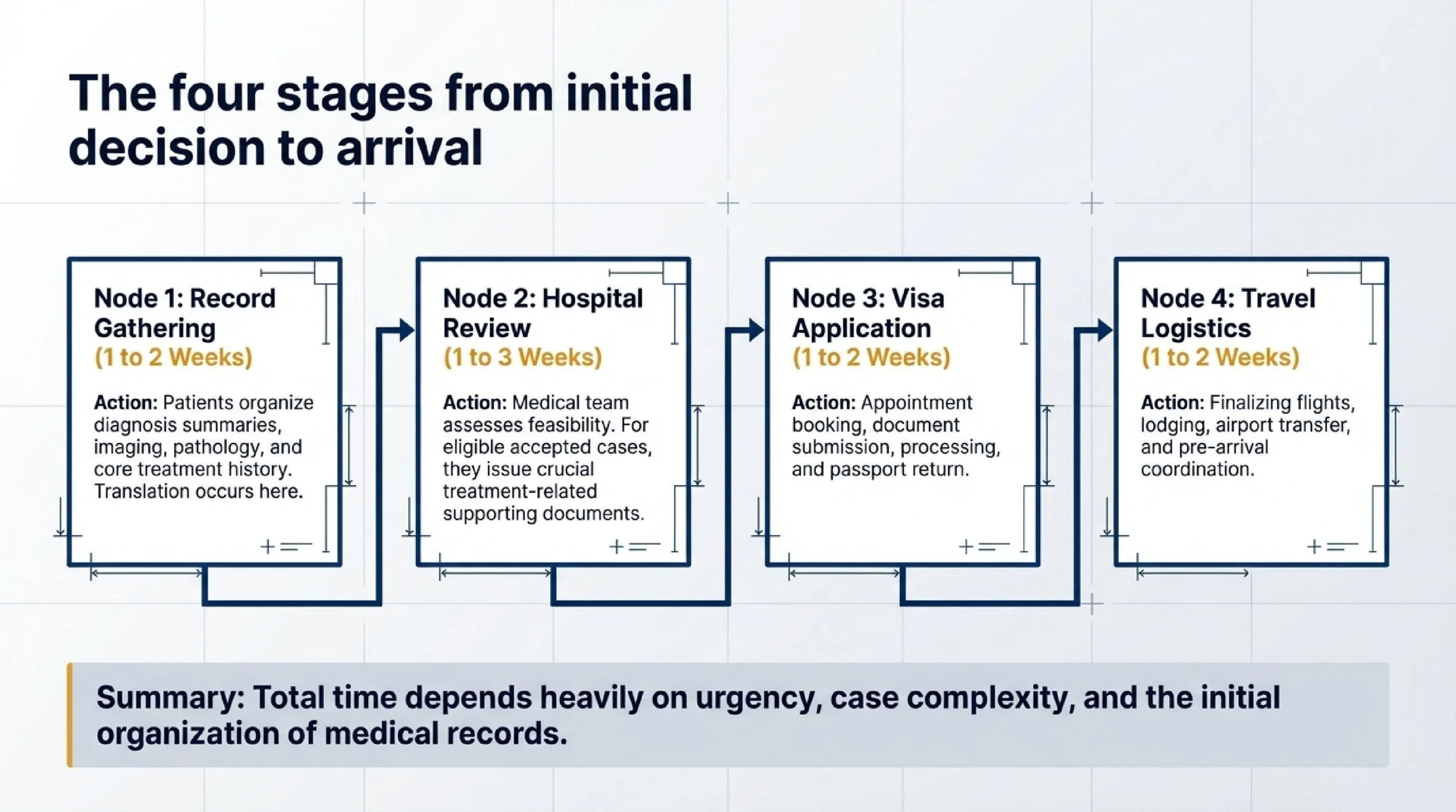
Step 1: Confirm Your Treatment Purpose and Estimated Stay
Before you start any visa paperwork, get clear on why you are traveling to China and how long you may need to stay.
This matters because a short outpatient consultation is very different from a planned surgery, a course of inpatient treatment, or a longer recovery period. The more clearly you define your treatment purpose, the easier it becomes to understand what type of visa pathway may apply and what supporting documents you may need.
Depending on your nationality, travel itinerary, intended length of stay, and current policy, you may qualify under a visa-free arrangement, use a standard visa route, or need a category that fits short-term medical travel. In some cases, applicants use an S2 visa for short-term private affairs, which may be relevant to medical treatment. But the exact route can vary by jurisdiction and case, so the final rule should always come from the Chinese embassy, consulate, or visa center handling your application.
At this stage, try to define the basics as clearly as possible:
Are you coming for consultation, surgery, treatment, or follow-up care?
How long is the likely stay?
Will a spouse, parent, child, or caregiver travel with you?
Do you already have a hospital review result, appointment confirmation, or tentative admission plan?
These details shape everything that comes next.
Step 2: Organize the Standard Visa Documents
Once your medical purpose and likely travel timeline are clear, the next step is to gather the standard visa application materials.
In many countries, applicants now complete the China Online Visa Application (COVA) form before submission. Exact requirements vary by location, but the standard file set often includes:
A valid passport, usually with at least six months of remaining validity and blank visa pages
A completed visa application form
Recent passport-style color photos that meet the local embassy or visa center requirements
A travel itinerary, which may include round-trip or onward flight information and accommodation plans for the non-hospital part of the stay
Some jurisdictions may also require an appointment booking, fingerprint collection, or other biometric steps. Because procedures can differ, it is always best to check the official instructions for your own embassy, consulate, or Chinese Visa Application Service Center before submission.
Step 3: Prepare the Medical Supporting Documents
This is the part that often matters most for medical travelers.
If your trip is clearly tied to diagnosis, surgery, treatment, or follow-up care, the visa process may require documents that show the medical purpose of your visit. Depending on the case, these may include an appointment confirmation, treatment plan, admission notice, invitation letter, or other hospital-issued supporting materials.
Many patients do not struggle with the form itself. They struggle with what medical information to prepare before the application.
That is the real bottleneck for many families.
Before a hospital can issue treatment-related supporting documents, it usually needs to review the case first. That often means preparing a usable set of records, such as:
diagnosis summaries
recent clinic notes
imaging reports
original scans when needed
pathology results if relevant
discharge summaries
prior treatment history
If records are incomplete, scattered across different providers, or not translated into usable English or Chinese, delays can happen before the visa step even begins.
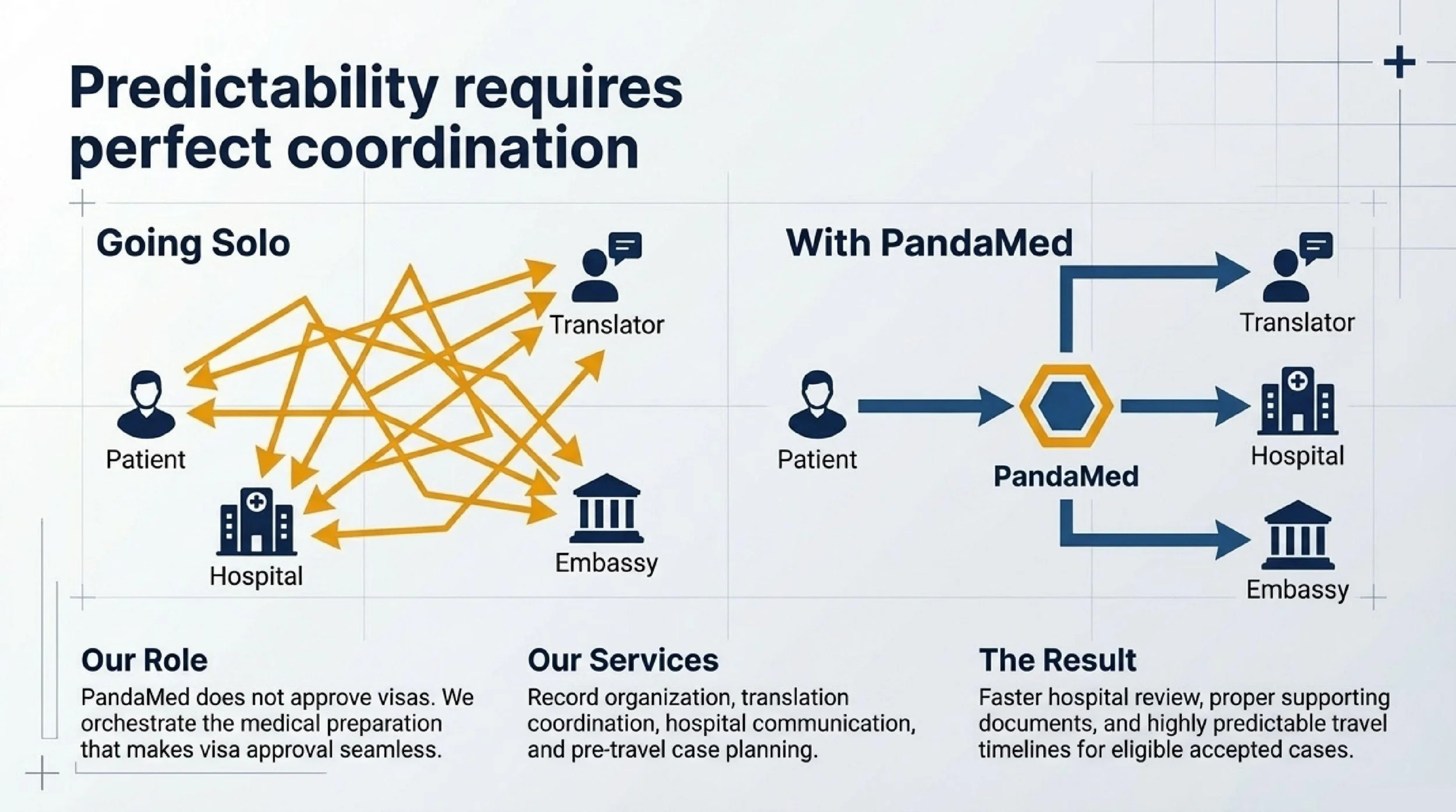
For eligible patients whose cases are accepted, our partner hospitals in Beijing may issue the treatment-related supporting documents needed for a medical visa application. PandaMed helps coordinate that process by organizing records, preparing translations, supporting hospital communication, and helping patients understand what to prepare before submission.
PandaMed does not make visa decisions, and final requirements and approvals always depend on the relevant embassy, consulate, visa center, and immigration authorities. But in real life, many delays happen before the application is filed, not after.
Step 4: Submit Through the Correct Embassy or Visa Center
Once your passport, application materials, travel documents, and hospital support papers are ready, you can move to formal submission.
Depending on where you live, this may be done through:
a Chinese embassy or consulate, or
a Chinese Visa Application Service Center (CVASC)
This is why it is important not to rely on generic advice from another country or an outdated blog post. The required forms, appointment systems, biometric rules, and processing times can all vary by jurisdiction.
Before booking anything, check the latest official instructions from the exact office responsible for your location.
Common Problems Patients Run Into
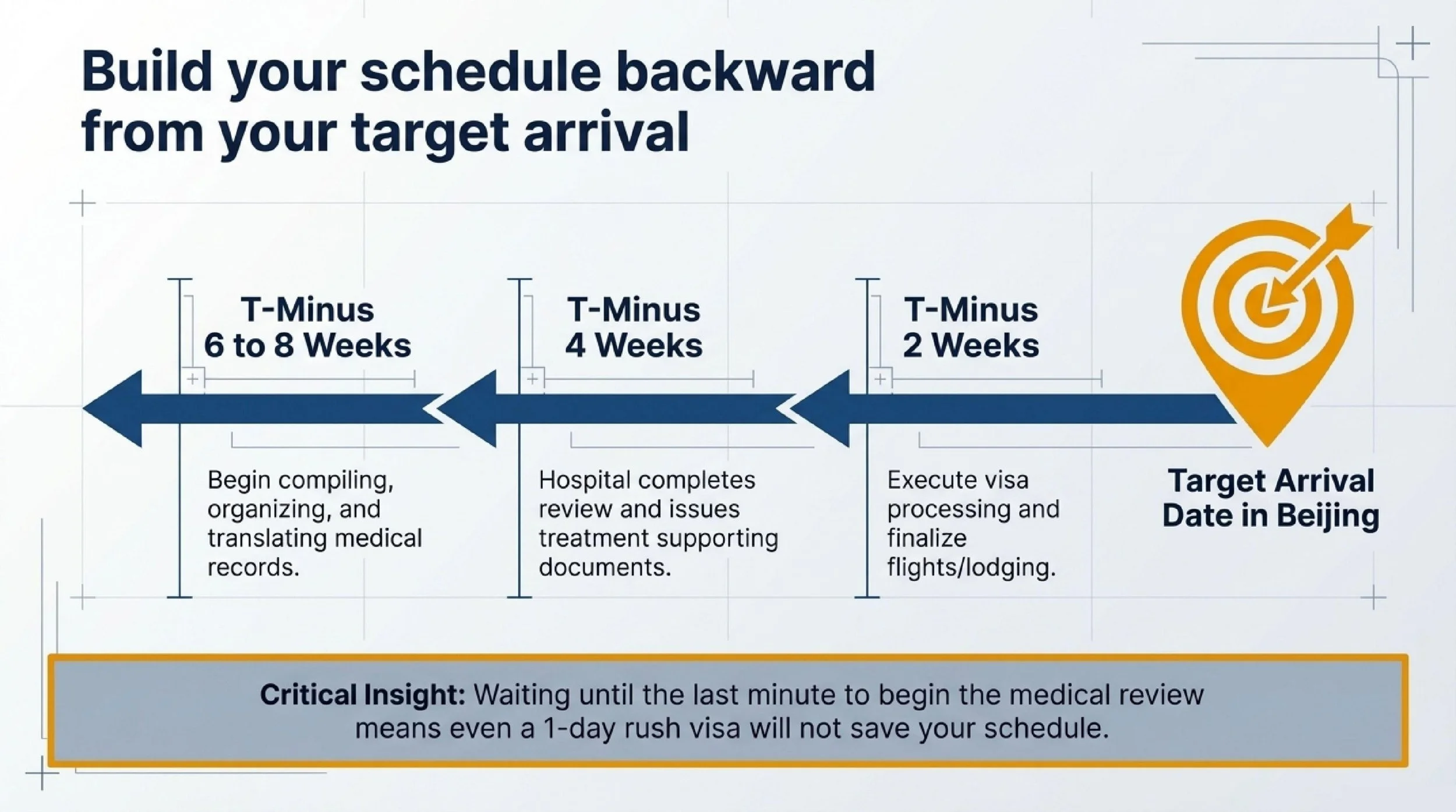
The most common delays usually come from preparation gaps, not from the embassy form itself.
Examples include:
the treatment purpose is still unclear
the expected length of stay is unrealistic
the hospital has not reviewed the case yet
supporting medical records are incomplete
imaging is missing or hard to interpret
translations are not ready
the patient assumes any visa category will work the same way
That is why it helps to think of the visa application as the last organized step of medical travel preparation, not the first.
How PandaMed Can Help
Some patients prefer to manage every step themselves. Others want help reducing confusion and repeated back-and-forth before travel.
If your records are scattered, your timeline is tight, or you are not sure whether a Beijing hospital is likely to accept your case, PandaMed can help you organize the case file first. For eligible patients accepted by partner hospitals, we can also help coordinate the treatment-related supporting documents used for a medical visa application.
This does not replace official embassy procedures, and PandaMed is not an immigration authority. But it can make the medical side of the process much clearer before you submit.
If you want help understanding what records to prepare first, you can contact contact@pandamedglobal.com.
FAQ
How long does it usually take to process a China visa for medical treatment?
In many jurisdictions, standard processing takes around 4 to 5 business days, and faster options may sometimes be available. But that does not include the time needed for hospital case review, medical record preparation, translation, or hospital-issued support documents.
Do I need a special medical visa for treatment in China?
Not always in the way patients expect. The correct visa route can depend on your nationality, treatment purpose, stay length, and the latest local rules. Some patients may use an S2-related pathway for short-term medical travel, but the final answer should come from the official Chinese embassy, consulate, or visa center responsible for your application.
Can I apply first and sort out the hospital paperwork later?
That is usually not the best approach if your trip is mainly for treatment. In many cases, the hospital-side review and supporting documents should be prepared first, because they may be part of what justifies the medical purpose of travel.
What if my treatment takes longer than planned?
If your stay needs to be extended, the next step may depend on your visa type, your location in China, your treatment status, and current local exit-entry rules. In some cases, updated hospital documentation may be needed. Always check with the relevant Chinese authorities before your current stay expires.
Can PandaMed help with the medical visa process?
Yes, within the correct scope. PandaMed does not approve visas and does not replace official visa channels. But for eligible patients accepted by partner hospitals, PandaMed can help coordinate the medical records, translations, hospital communication, and treatment-related supporting documents that may be needed before a medical visa application is submitted.
Final Reminder
Visa rules can change. Embassy procedures can change. Country-specific requirements can change.
So while the general logic is consistent, the final checklist for your case should always be confirmed through the official Chinese embassy, consulate, or visa center responsible for your region.
If you are unsure whether your current medical records are enough, or you want help understanding what to prepare before the visa stage, email contact@pandamedglobal.com. In many cases, old records are enough to begin the initial review.
