
Do You Need a Medical Visa for Treatment in China?
If you are planning medical treatment in China, one of the first questions you may ask is whether you need a specific medical visa.
The short answer is: it depends on your nationality, your treatment plan, your expected length of stay, and the documents available from the hospital that may receive your case.
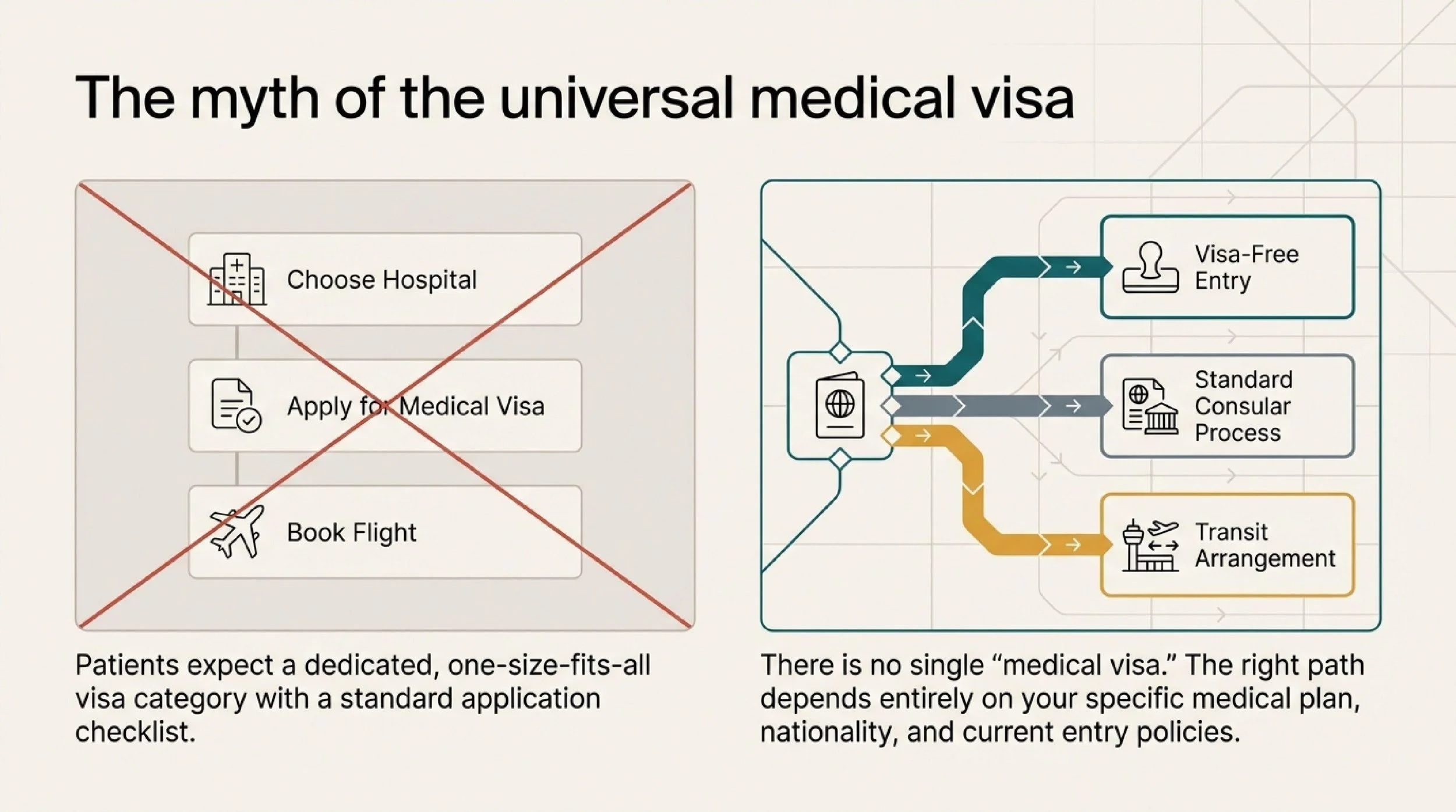
There is no single universal “medical visa” that applies to every international patient. Some patients may need a formal visa application. Others may be able to travel under a different visa category or, in some cases, under an applicable visa-free entry policy. The right path depends on the details of the case and the current official requirements that apply to the traveler.
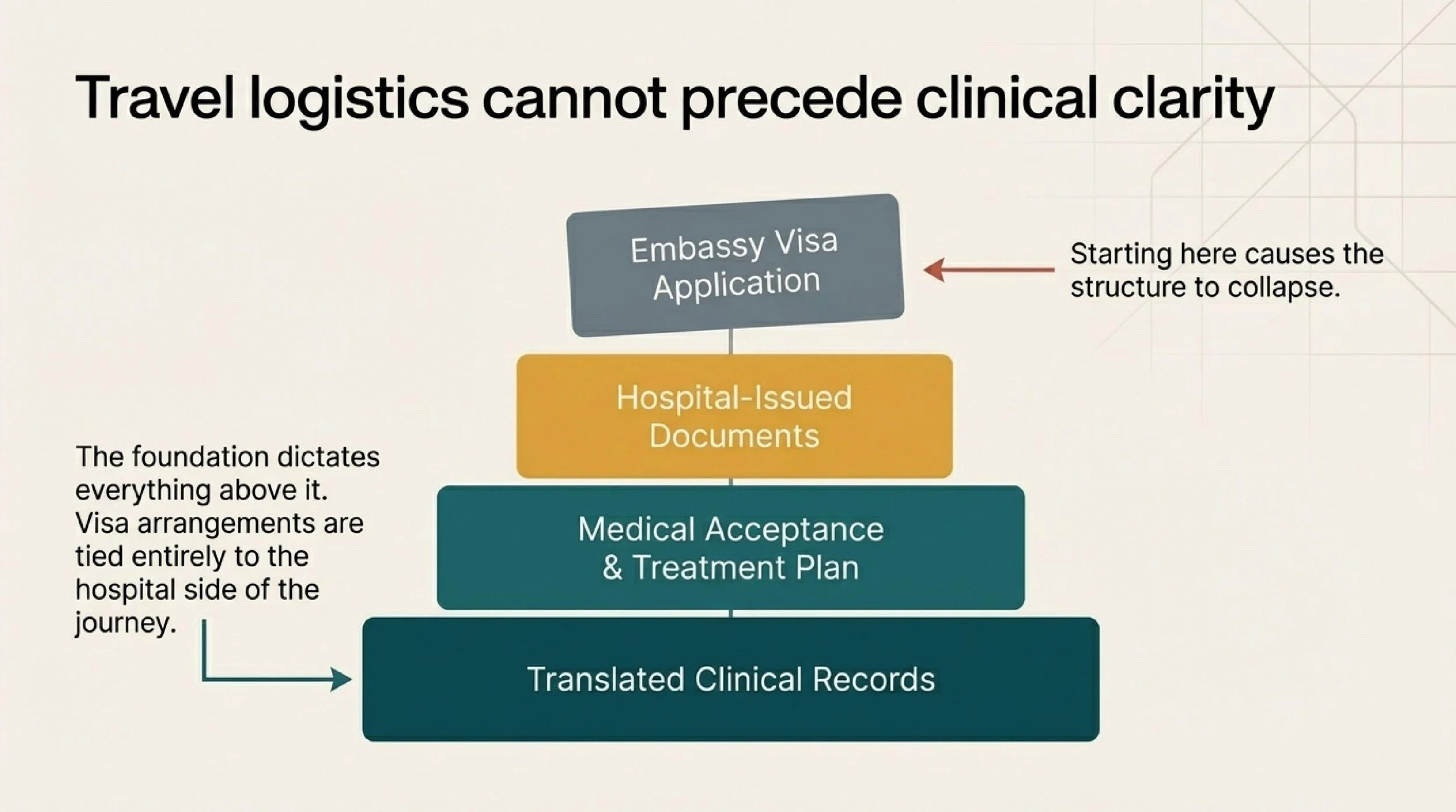
More importantly, the visa process usually comes after the medical pathway becomes clear. Before you can decide what travel documentation is appropriate, you generally need to know whether a hospital in China is able to review, accept, or schedule your case.
Why This Question Matters
For patients and families, international medical travel already involves a lot of uncertainty. People naturally want a simple checklist: choose a hospital, apply for a visa, book the trip, and begin treatment.
In reality, it is rarely that straightforward.
Many patients search for a medical visa for China expecting to find a dedicated visa category with a standard application process. Instead, they discover that visa arrangements are often tied closely to the hospital side of the journey. The documents needed for a visa may depend on whether you are coming for a brief consultation, a scheduled procedure, an inpatient admission, or longer-term follow-up care.
That is why the visa question cannot be answered well in isolation. The practical answer depends on the medical plan.
There Is No One-Size-Fits-All Medical Visa
International patients often assume there must be one official visa type used in every treatment case. In practice, the situation is more nuanced.
Depending on nationality, travel purpose, expected stay, supporting hospital documents, and current consular rules, patients may travel under different visa arrangements. In some cases, a short visit for consultation may be handled differently from a longer stay for surgery, cancer treatment, rehabilitation, or inpatient monitoring.
For that reason, it is best to avoid thinking of the visa as a standalone task. A visa application for medical travel usually needs to reflect the actual reason for the trip, and that reason must be supported by real medical documentation.
Why Hospital Review Usually Comes First
In many cases, you cannot simply request a visa for medical treatment in China without first showing why the trip is medically necessary and where care is expected to take place.
That is why patients often need one or more of the following before finalizing a visa path:
an appointment confirmation
an invitation letter
hospital admission paperwork
a treatment plan or physician review outcome
The exact documents vary by case. But the broader principle is consistent: the medical case usually needs to be reviewed before the travel paperwork can be properly aligned.
This is especially important for patients with more complex needs, including surgery, oncology treatment, fertility care, rehabilitation, or multidisciplinary evaluation. A realistic medical timeline often affects what kind of visa arrangement makes sense.
What Determines the Right Visa Path?
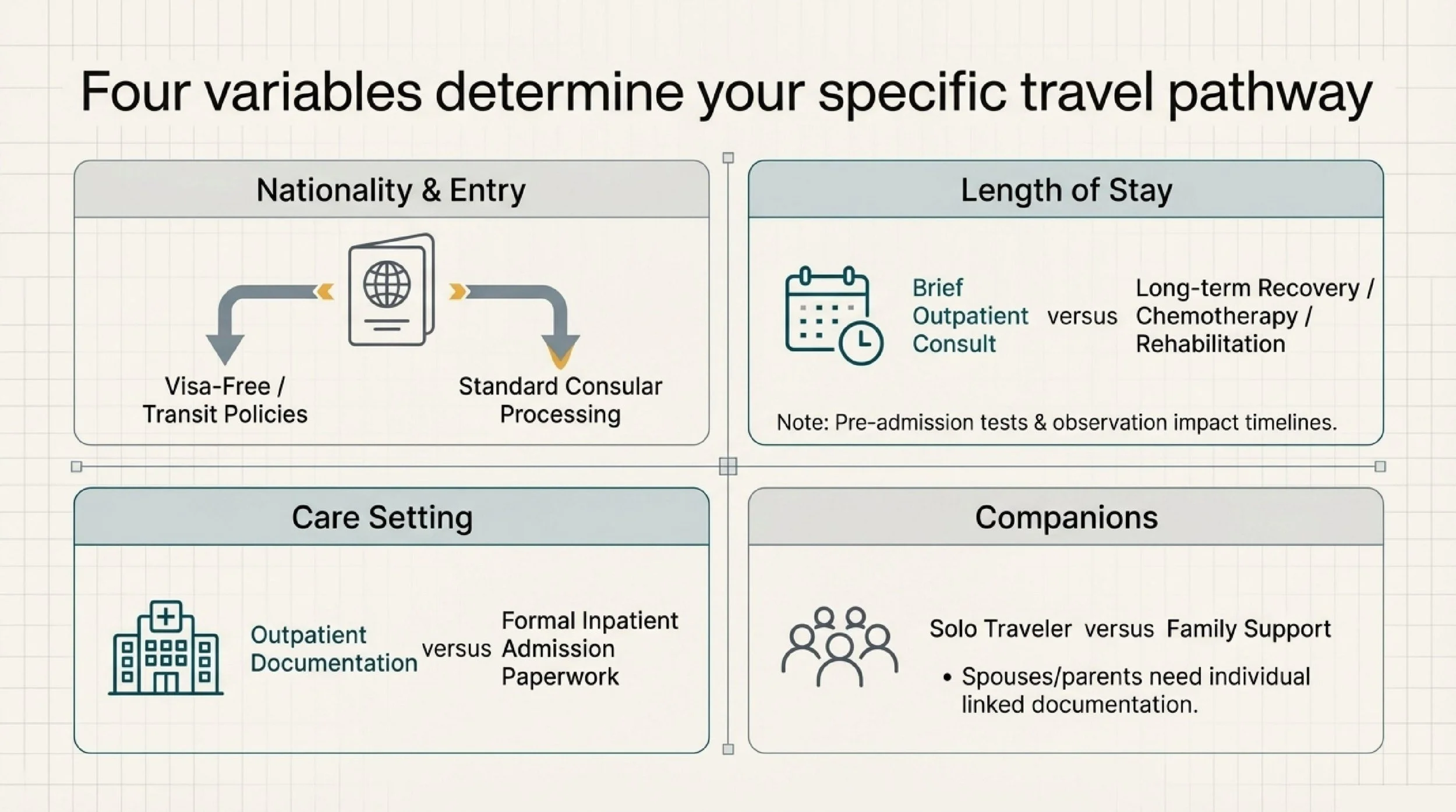
Several practical factors can affect what kind of travel documentation an international patient may need.
Nationality and Current Entry Policies
Visa rules are not the same for all travelers. Some nationalities may benefit from visa-free entry arrangements, transit policies, or other entry mechanisms for short stays, while others may need to apply through the standard consular process regardless of trip length.
Because these rules can change and may differ by passport and itinerary, patients should always confirm the latest official requirements with the relevant embassy, consulate, or authorized visa center.
Length of Stay
The amount of time needed for medical care is often longer than patients initially expect.
A brief outpatient consultation or second opinion may only require a short visit. But surgery, inpatient recovery, fertility treatment cycles, chemotherapy, rehabilitation, or follow-up imaging may require a significantly longer stay. In many cases, it is not just the procedure date that matters. Pre-admission tests, observation periods, and post-treatment review can all affect how long you need to remain in China.
Inpatient or Outpatient Care
The type of care also matters.
If you are being admitted to a hospital, the supporting paperwork may include more formal admission-related documents. If you are traveling for outpatient care only, the documentation may look different. This distinction can influence how your case is presented during visa preparation.
Family Members Traveling With You
Many international patients do not travel alone. A spouse, parent, child, or other close family member may come to provide support during treatment and recovery.
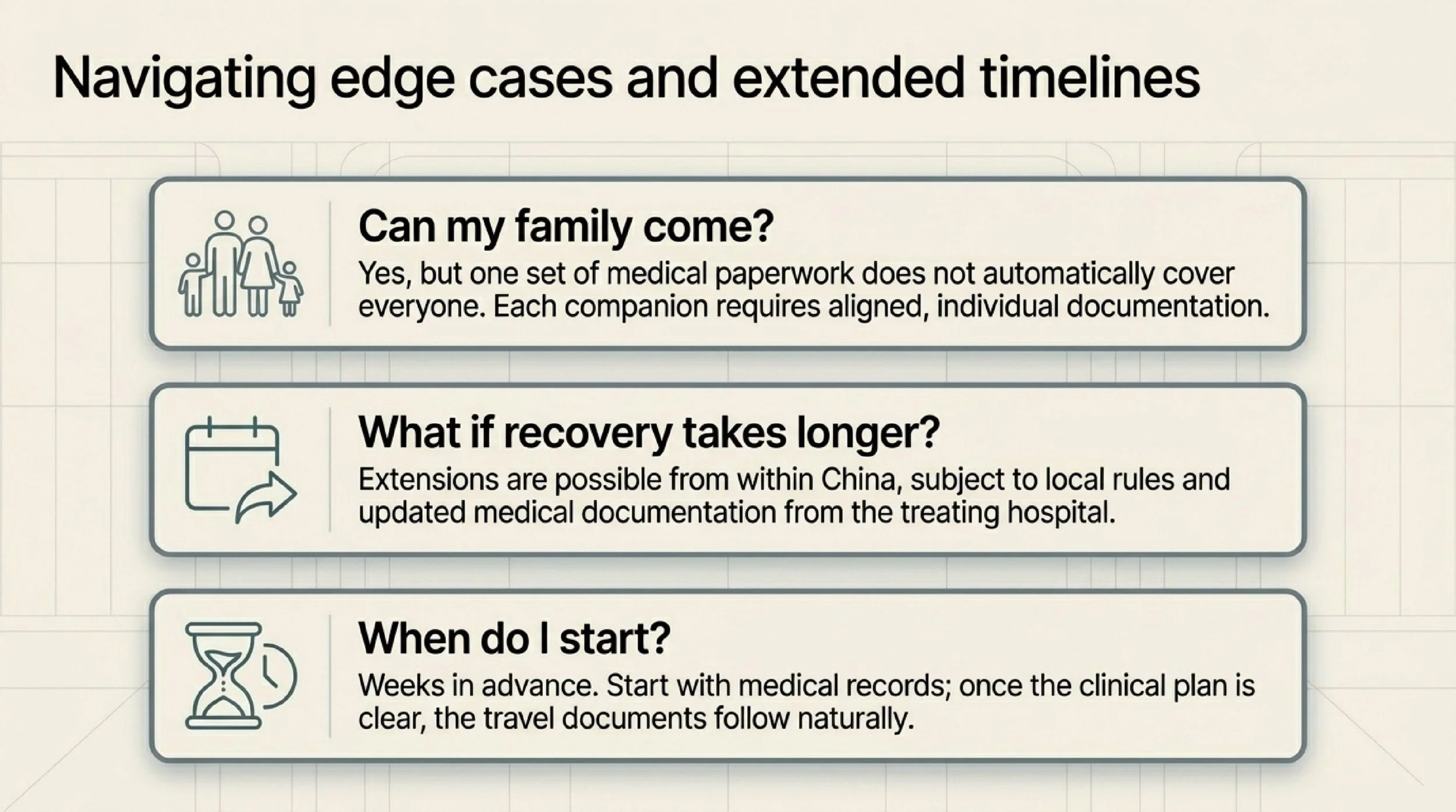
In those situations, each traveler typically needs appropriate documentation for their own application or entry arrangement. Their travel plan may be connected to the patient’s case, but it should not be assumed that one set of medical paperwork automatically covers everyone in the group.
What Patients Should Prepare First
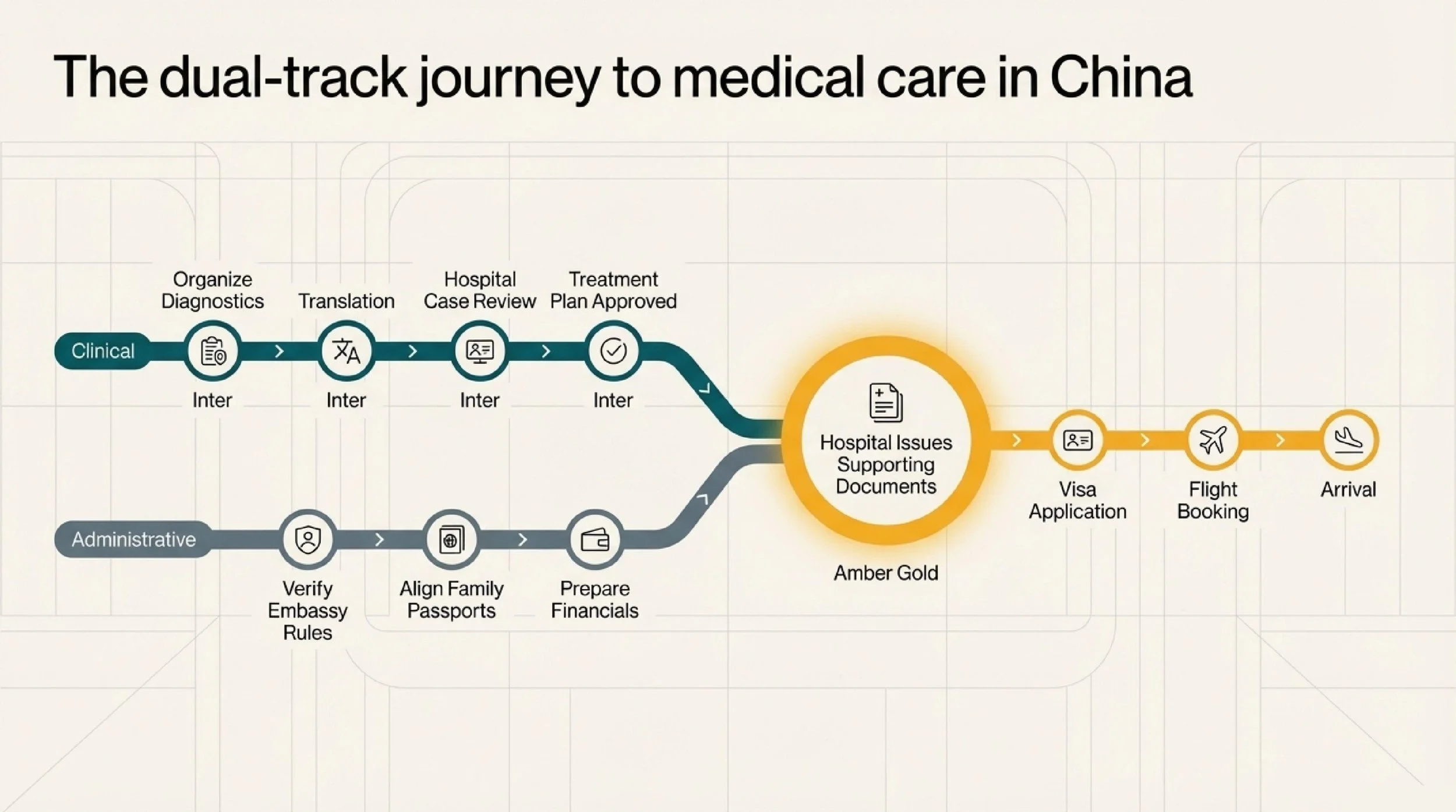
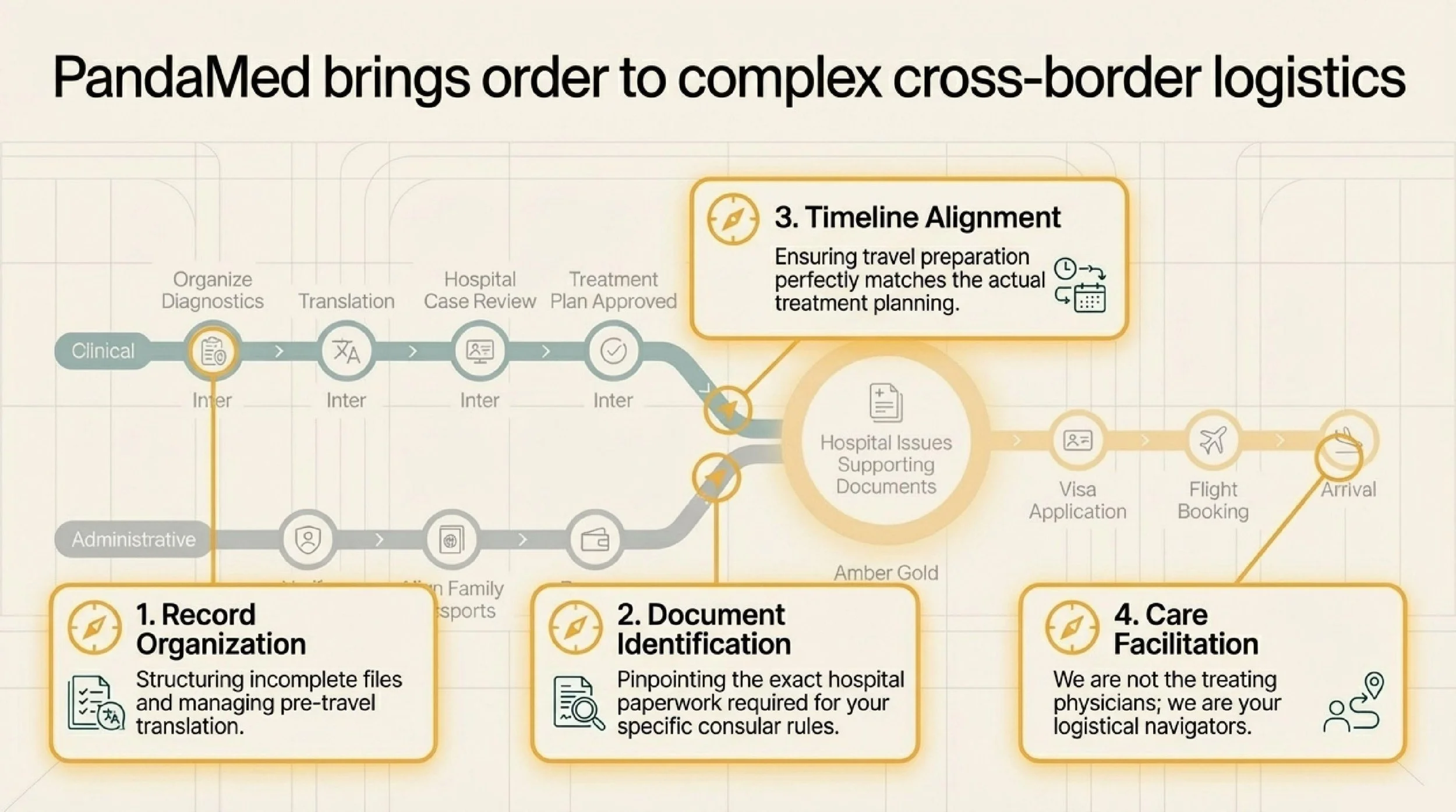
If you want the visa process to go more smoothly, the most useful first step is usually not the embassy. It is the medical file.
Start by organizing the clinical side of the trip as clearly as possible. That may include your diagnosis, recent imaging, pathology results if relevant, treatment history, medication information, and any physician recommendations already available. If the records are not in English or Chinese, translation may be needed before hospital review.
Once your records are organized, the next priority is to determine whether a hospital in China can review the case and what type of care may be appropriate. That is the stage where a preliminary treatment pathway becomes clearer, and where the likely visa-supporting documents begin to take shape.
It also helps to build a realistic timeline. Patients often focus on the planned procedure date, but travel decisions should also account for pre-treatment evaluation, possible admission timing, recovery needs, and follow-up visits.
Common Mistakes to Avoid
One of the most common mistakes is treating the visa application as the very first step.
If a patient applies before the medical pathway is properly documented, there may be a mismatch between the visa arrangement and the actual treatment timeline. That can create unnecessary delays and added stress.
Another frequent issue is booking non-refundable flights too early. Travel plans should ideally be made only after both the medical acceptance process and the relevant visa or entry arrangements are reasonably clear.
Patients also sometimes underestimate how long it may take to gather records, obtain hospital review, and prepare supporting documentation. What looks simple at first can become rushed very quickly, especially if multiple departments, translations, or family travel arrangements are involved.
When Extra Support May Help
Some patients are comfortable organizing everything on their own. Others prefer help because the challenge is not finding information online. The challenge is understanding which information actually applies to their case.
This is especially true when records are incomplete, timelines are tight, or the patient is still deciding whether treatment in Beijing is medically realistic and worth pursuing.
In those situations, it can be helpful to begin with a structured case review. A clear medical pathway can make the administrative pathway much easier to manage.
How PandaMed Supports International Patients
PandaMed supports international patients who are exploring medical care in Beijing. We are not the treating hospital or physician. Our role is to help patients prepare for cross-border care more clearly and efficiently.
Depending on the case, that support may include:
organizing medical records for review
helping identify what documents may matter most for hospital evaluation
supporting communication and translation during the pre-travel stage
helping patients understand how treatment planning and travel preparation fit together
For patients who are still at the early decision stage, our Priority Assessment & Triage is designed to help clarify whether a case appears suitable for further treatment planning in Beijing and what steps may be worth taking next.
That kind of early clarity can be especially helpful before patients spend time and money on flights, consular appointments, or rushed logistics.
A Practical Way to Think About It
If you are asking whether you need a medical visa for China, the better question may be:
What does my actual treatment journey look like, and what documents will support it?
Once that is clear, the visa path is usually much easier to understand.
If you would like help reviewing your case, organizing the right records, or understanding what preparation steps may come before travel, you are welcome to contact PandaMed at contact@pandamedglobal.com.
FAQ
Is there a specific “medical visa” for China?
There is no single visa type that works as a universal medical visa for every patient. Depending on nationality, stay duration, travel purpose, supporting documents, and current official requirements, patients may use different visa or entry arrangements. Travelers should always verify the latest rules through official channels.
Do I need a letter from a Chinese hospital?
In many cases, if your travel is specifically for medical care, hospital-issued documents such as an invitation letter, appointment confirmation, or admission-related paperwork may be important for the visa process. The exact requirement depends on the case and the applicable consular rules.
Can family members come with me?
Yes, family members may travel with the patient, but each traveler typically needs their own appropriate documentation or visa arrangement. It is best to plan these applications together so timing is aligned.
What if treatment takes longer than expected?
If a medical stay needs to be extended, additional administrative steps may sometimes be possible from within China, subject to the relevant local rules and supporting medical documentation. Patients should confirm the applicable process with the appropriate authorities and the treating hospital.
How early should I start preparing?
It is wise to begin several weeks in advance, and sometimes earlier for more complex cases. The first step is usually to organize your records and seek hospital review. Once the medical plan is clearer, the travel documentation process becomes easier to manage.
