
Chest Wall DFSP: Stop the Cycle of Recurrence and Scarring with Advanced Flap Reconstruction in Beijing
(SEO Title: Chest Wall DFSP Surgery: Avoiding Recurrence and Scars with Beijing's Elite Microsurgeons)
Getting diagnosed with Dermatofibrosarcoma Protuberans (DFSP) is hard enough. But the real nightmare is the surgery: doctors must remove a massive amount of tissue to stop it from coming back, often leaving a devastating, life-altering hole in your chest. Beijing’s top public hospitals offer a definitive way out. They combine radical tumor removal with elite, immediate microsurgical reconstruction so you don't have to sacrifice your body's appearance or function.
TL;DR: Standard Care vs. The Beijing Timeline
| Feature | Western Standard | Beijing Tier-3 Hospitals (PUMCH / Badachu) |
|---|---|---|
| First-Line Treatment | Standard excision, often with delayed or basic reconstruction. | Simultaneous wide oncological excision + immediate microsurgical flap reconstruction. |
| Specialist Wait Time | 3 to 6 months to see a reconstructive microsurgeon. | 3 to 5 days for expert case review; surgery within 10 to 14 days. |
| Out-of-Pocket Cost | Extremely high without local network insurance. | Transparent, highly competitive self-pay pricing. |
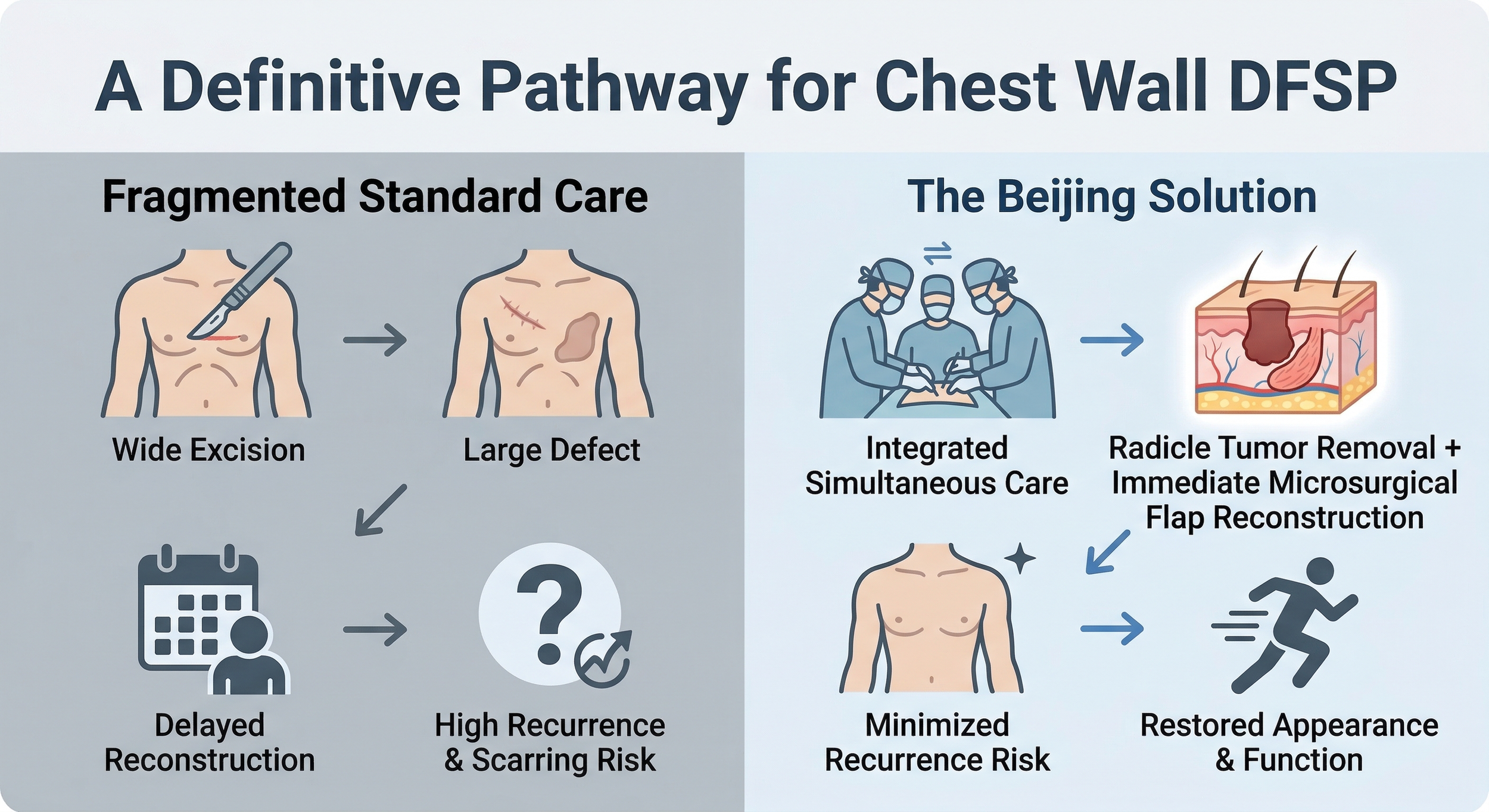
Why You Cannot Just "Wait and See"
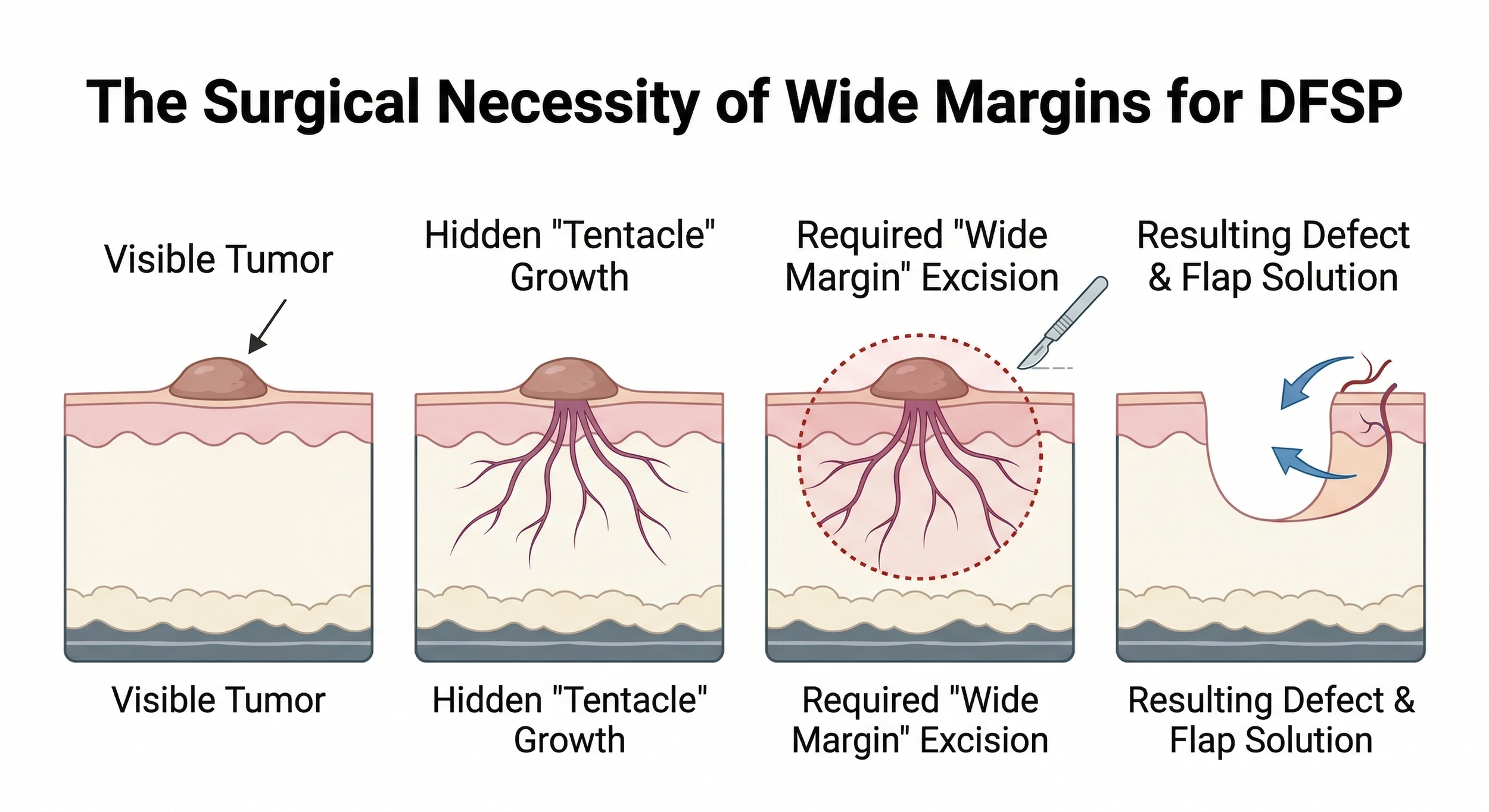
The "Tentacle" Growth Pattern
DFSP grows under your skin like tentacles. The tumor extends far beyond the visible lump you can see or feel. A "conservative" surgery that simply cuts out the main bump almost guarantees the cancer will return. To stop the cycle of recurrence, surgeons must take wide oncological margins. This means cutting out a large perimeter of healthy-looking tissue to ensure no microscopic cancer cells are left behind.
The Reconstructive Challenge
Taking wide margins on the chest wall or sternum creates a massive defect. You cannot just stitch this closed. Leaving a large "hole" after tumor removal is emotionally and physically devastating. You don't just need a surgical oncologist to remove the cancer—you need an elite reconstructive microsurgeon to rebuild the area. Using advanced tissue techniques, like the anterolateral thigh flap, these experts transfer healthy tissue to the chest, ensuring the site looks and functions as naturally as possible.
The Beijing Advantage: High Volume = High Precision
In microsurgery, repetition is the only path to mastery. For a rare tumor like DFSP, you need a doctor who sees "rare" every single day. Due to China's massive population, surgeons at Beijing’s top institutions perform more complex flap reconstructions in a single month than many Western experts see in a decade.
Plastic Surgery Hospital, CAMS (Badachu): Over 50,000 surgical procedures annually.
Peking Union Medical College Hospital (PUMCH): The Plastic Surgery department handles 10,000+ complex reconstructive cases per year.
Elite Hospitals & Surgeons for Your Case
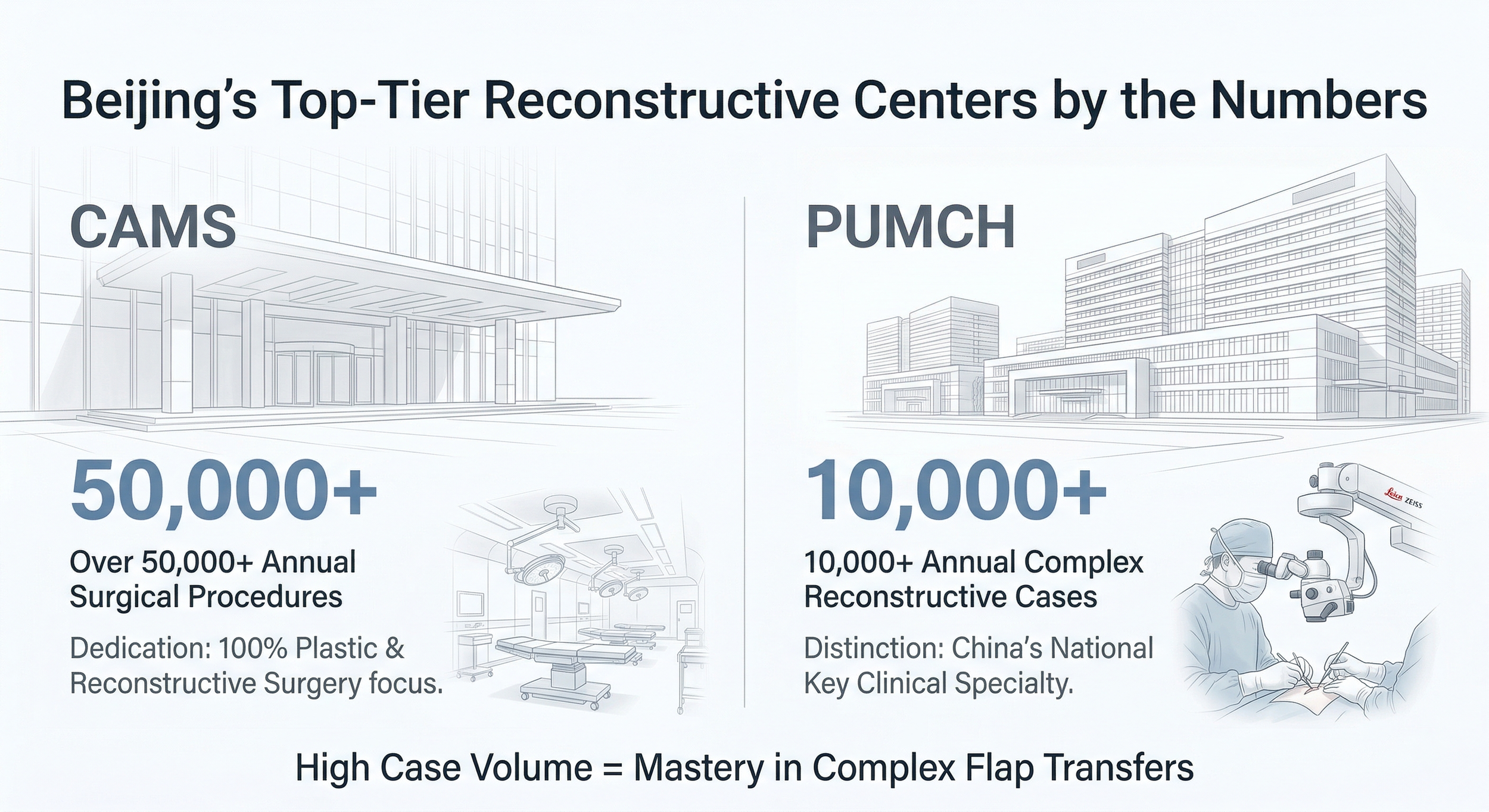
Top Hospital Profiles
Plastic Surgery Hospital, CAMS (Badachu): Founded in 1957, this is China’s premier 3A hospital dedicated entirely to plastic and reconstructive surgery. Equipped with world-class ZEISS and Leica surgical microscopes, the center is a global leader in ultra-fine microvascular anastomosis and complex chest wall reconstruction.
Peking Union Medical College Hospital (PUMCH): Ranked as the absolute top hospital in China, its Plastic Surgery Department is a National Key Clinical Specialty. Utilizing 3D bioprinting and cutting-edge Leica visualization, they specialize in multidisciplinary, high-difficulty oncological reconstructions.
Featured Master Surgeons
Dr. J (Plastic Surgery Hospital, CAMS)
Title: Chief Physician, Director of Craniofacial & Reconstructive Surgery.
Clinical Experience: 30+ years. A pioneer in microvascular anastomosis-assisted free tissue flap transplantation.
Surgical Volume: Performs 1,000+ complex surgeries per year; nearly 20,000 total career surgeries. Holds one of the highest case volumes globally for complex flap transfers.
Dr. Z (PUMCH)
Title: Chief Physician, Deputy Director of Plastic Surgery.
Clinical Experience: 20+ years specializing purely in complex microsurgical flap transplantation and oncological reconstruction.
Surgical Volume: Has personally executed over 7,900 complex reconstructive procedures. A master of soft tissue repair using advanced visualization technology.
What Records Do You Need? (The Checklist)
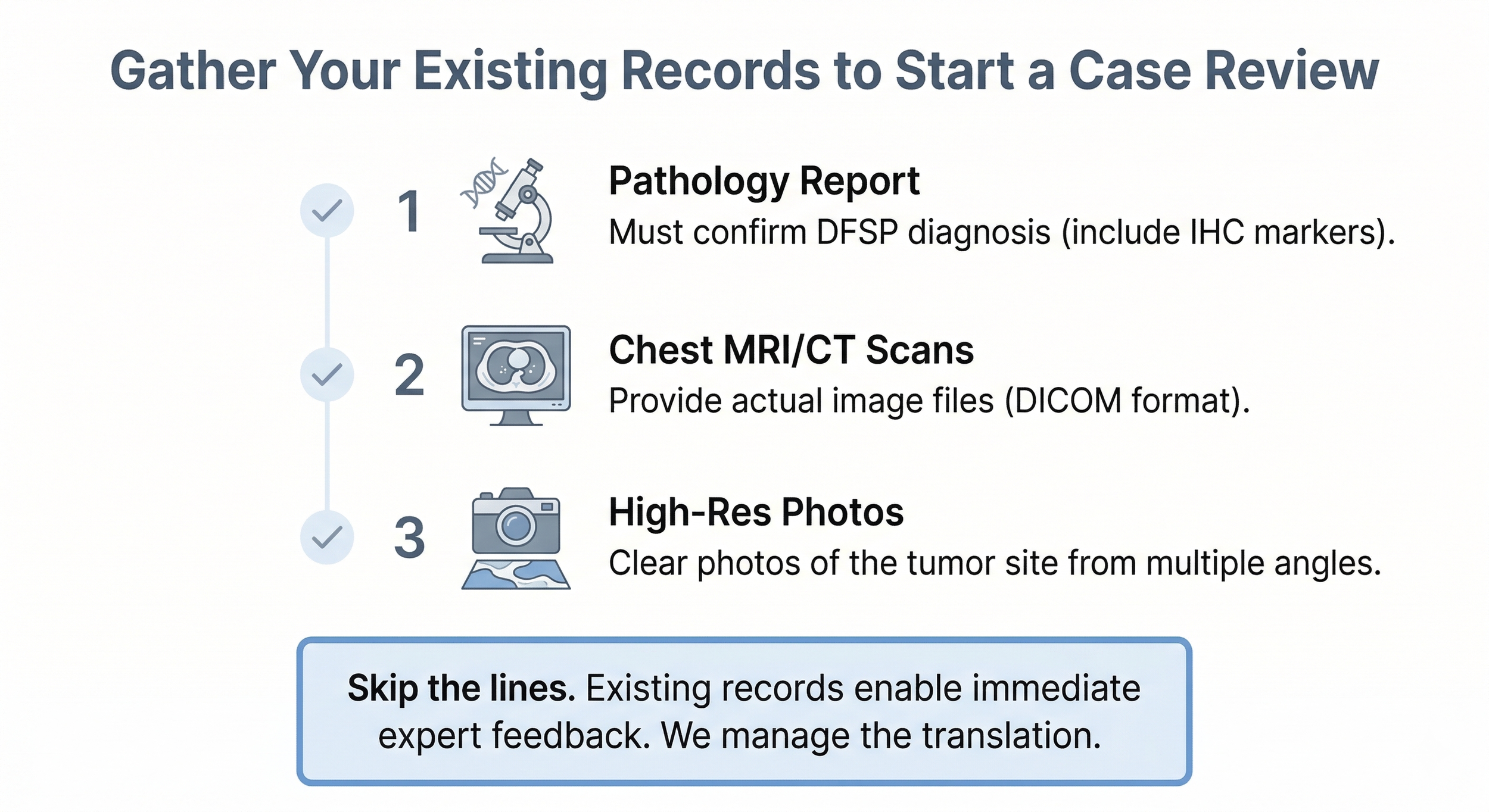
Have old scans? That's fine for an initial look. Do not wait weeks to get new imaging done. To bypass the queues and get an immediate answer for your DFSP case, simply gather your existing records:
Pathology Report: The full existing report confirming the DFSP diagnosis (must include IHC markers like CD34).
Chest MRI/CT: The actual image files (DICOM format) from your old scans to see how close the tumor is to the bone.
Clear Photos: High-resolution photos of the tumor site from multiple angles.
We manage the translation and bypass the public hospital queues for you.
Traveling with a partner? Ask about our $147 Family Coordination Plan for help with visas, lodging, and on-the-ground support.
About the Author
Ryan Lee is a Beijing-based medical concierge and the founder of PandaMed. With a strict compliance background, he helps international patients navigate China's top public hospitals safely. He secures direct access to Chief Physicians for complex cases.
Medical Disclaimer: This information is for educational purposes only and is not medical advice. PandaMed is a care coordination service, not a medical provider. Always consult a qualified doctor for your specific condition.
References:
Gloster HM Jr. Dermatofibrosarcoma protuberans. J Am Acad Dermatol. 1996;35(3 Pt 1):355-376.
Surgical Volume and Clinical Efficacy Data, Plastic Surgery Department, Peking Union Medical College Hospital (2023 Internal Report).
Annual Surgical Case Volume Review, Plastic Surgery Hospital, Chinese Academy of Medical Sciences (2023 Internal Report).
