
Severe Knee Osteoarthritis: Bypassing the 6-Month Wait for Robotic Replacement in Beijing
If your knee is grinding bone-on-bone, waiting six months for surgery is not just frustrating—it is actively destroying your mobility and spinal health. You do not have to live in pain or pay exorbitant out-of-pocket costs for a standard procedure. Beijing's elite Grade-3A hospitals offer robotic-assisted joint replacement in weeks, not months.
TL;DR: Global Comparison & Beijing Timelines
| Key Decision Factor | Western Standard (Canada/UK/US) | Beijing Grade-3A Elite Centers |
|---|---|---|
| Surgical Wait Time | 5 to 6 Months (or longer) | 2 to 3 Weeks (via managed access) |
| Surgical Technology | Standard Manual Alignment | Robotic-Assisted (Mako/ROSA) |
| Out-of-pocket Cost | $30,000+ | $12,000+ |
| Post-Op Rehab | Rapid Discharge (24-48 hrs) | 5-7 Days Inpatient Clinical Care |
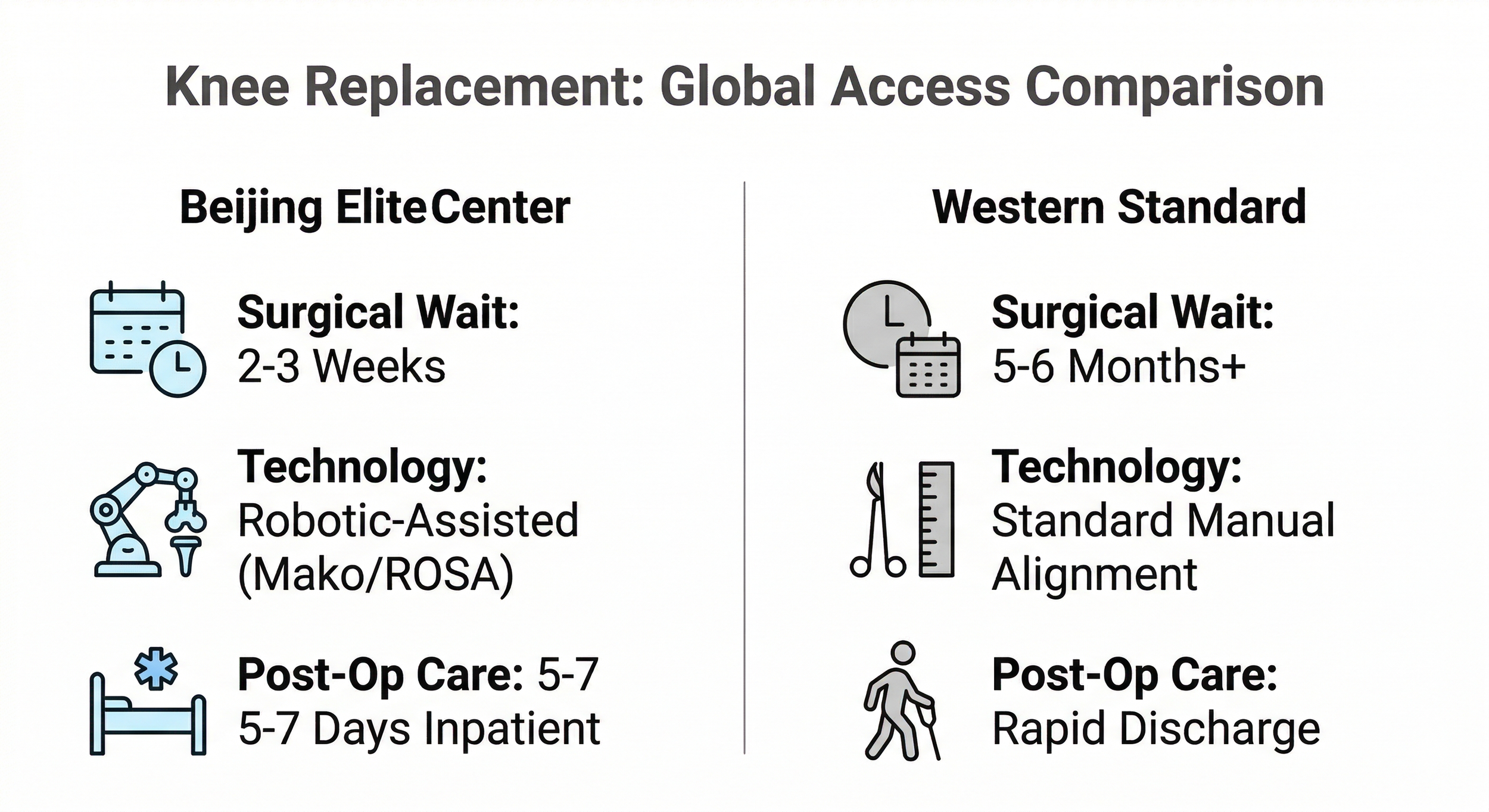
Source: OCED data | US-MDsave, 2024 | Beijing-Beijing Anzhen Hospital, ToChinaCare 2024
Why You Cannot Just "Wait and See"
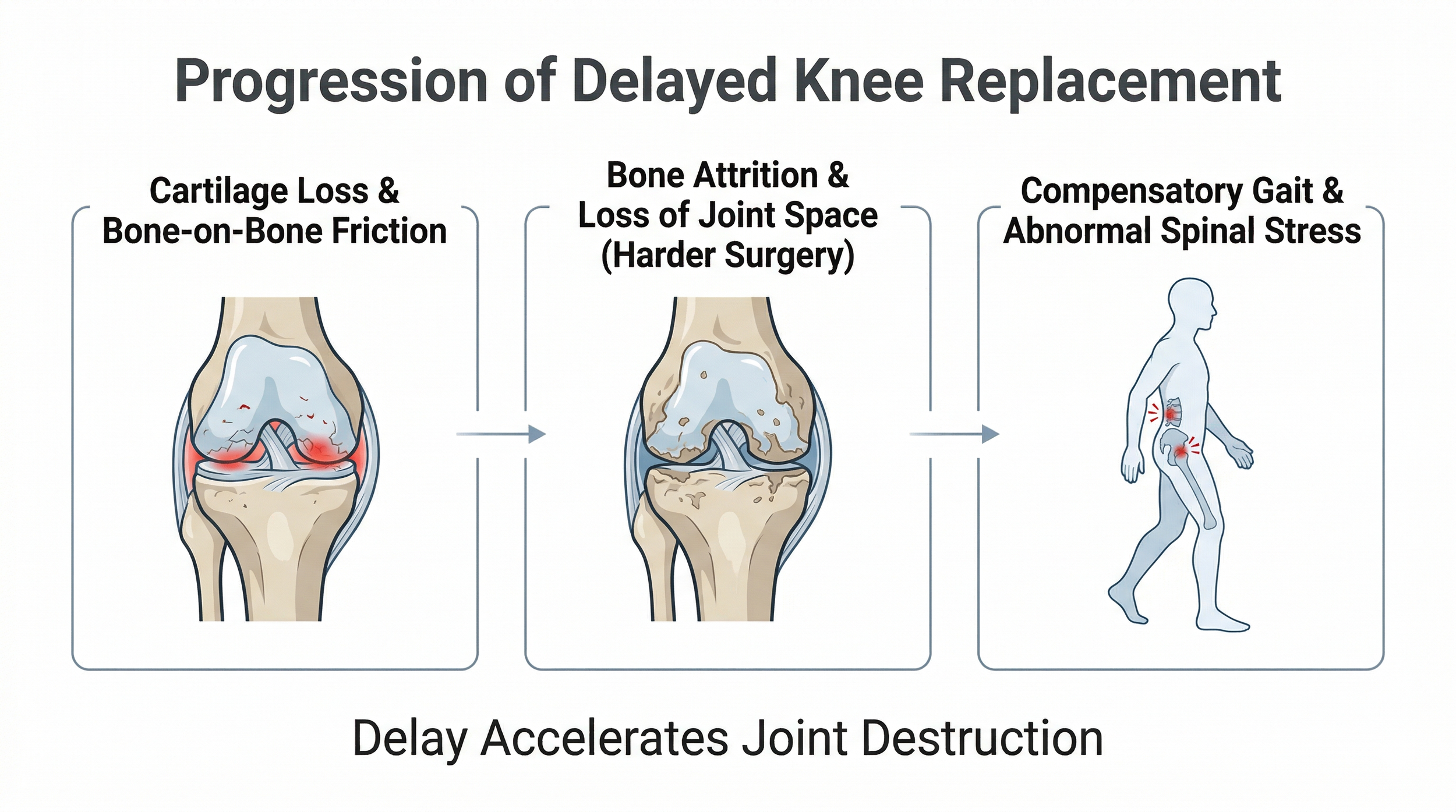
Delaying a total knee replacement (TKR) does not freeze your condition; it accelerates joint destruction. You need a specialist to look at two critical variables immediately:
Joint Space and Bone Attrition
If your X-ray shows Kellgren-Lawrence Grade III or IV, the protective cartilage is gone. You are losing the actual structural bone of your knee. Waiting too long causes severe bone loss and permanent joint stiffness. A delayed surgery is much harder to perform and often requires complex, specialized hardware to stabilize the knee instead of a standard implant.
Compensatory Gait and Spinal Damage
Are you limping to avoid the pain? This is called an "antalgic gait." It completely shifts your body mechanics, placing massive, abnormal stress on your lower back and your healthy hip. Delaying the fix for your knee often leads to chronic spine issues or early arthritis in your good leg because it is overworked.
The Beijing Advantage: High Volume = High Precision
In surgery, massive repetition equals safety. Because of the enormous patient population in China, doctors in Beijing’s top public hospitals get the highest frequency of hands-on surgical training in the world. A top orthopedic surgeon in Beijing performs more complex joint replacements in a single month than many Western experts handle in a year. This high-volume environment ensures they are masters of sub-millimeter precision using advanced robotic tools.
Elite Hospitals & Surgeon Profiles
In Beijing, you are not just getting a hospital; you are getting access to national-level medical hubs.
| Hospital | Emergency & Outpatient | Surgical | Beds |
|---|---|---|---|
| Department of Orthopedics, Beijing Jishuitan Hospital | 3,000,000+ (Total) | 90,000+ (Total) | 1800+ (Total) |
| Department of Orthopedics, Peking Union Medical College Hospital, PUMCH | 15,000+ (Orthopedic Dept) | 5,000+ (Orthopedic Dept) | 132 (Orthopedic Dept) |
| Department of Orthopedics, Peking University People's Hospital | 2,670,000+ (Total) | 78,500+ (Total) | 1448 (Total) |
Source: Beijing Jishuitan Hospital (Official Description) | Department of Orthopedics, Peking Union Medical College Hospital (Official Description) | Department of Orthopedics, Peking University People's Hospital (Official Description)
Beijing Jishuitan Hospital
Known as China's premier National Orthopedic Medical Center, Jishuitan handles the highest orthopedic surgical volume in Asia. They are the pioneers of robotic-assisted joint replacement in the region, acting as the ultimate hub for complex reconstructive procedures.
Dr. Z (Chief Physician, Professor): With over 25 years of dedicated orthopedic experience, Dr. Z performs more than 600 complex joint replacements and revision surgeries every single year. He brings unmatched hands-on expertise to the operating table.
Peking Union Medical College Hospital (PUMCH)
Established by the Rockefeller Foundation, PUMCH is China’s most prestigious medical institution. It is the absolute authority for handling highly complex cases, especially for patients who need joint replacements but also have underlying heart or autoimmune conditions.
Dr. W (Chief Surgeon, Professor): With 40+ years of clinical authority, Dr. W oversees a department performing over 5,000 orthopedic surgeries annually. He specializes in advanced joint arthroplasty for the most severe, late-stage osteoarthritis cases.
Volume Means Precision and Safety
In the field of surgery, the accumulation of experience is the sole path to technical proficiency.
Due to China's huge population base and patients' extreme inclination towards top - tier medical resources, doctors in these top - notch institutions in Beijing are exposed to the highest - frequency practical training globally:
"A top - level surgeon in Beijing may handle more cases of flap transplantation or complex craniofacial repair in a single month than the total number of cases handled by experts in Western developed countries in a year or even several years."
The Reality of Navigating Top Chinese Public Hospitals
Language Barrier: Top surgeons in public hospitals do not handle direct patient inquiries or emails in English.
The Appointment System: Public hospital systems require a Chinese ID or complex registration for foreigners, often sold out weeks in advance.
Our Value (Pandamed): We have the direct institutional Green Channel. We bypass the public queue and connect your case directly to the Chief Physician's desk.

The Checklist: What Records Do You Need?
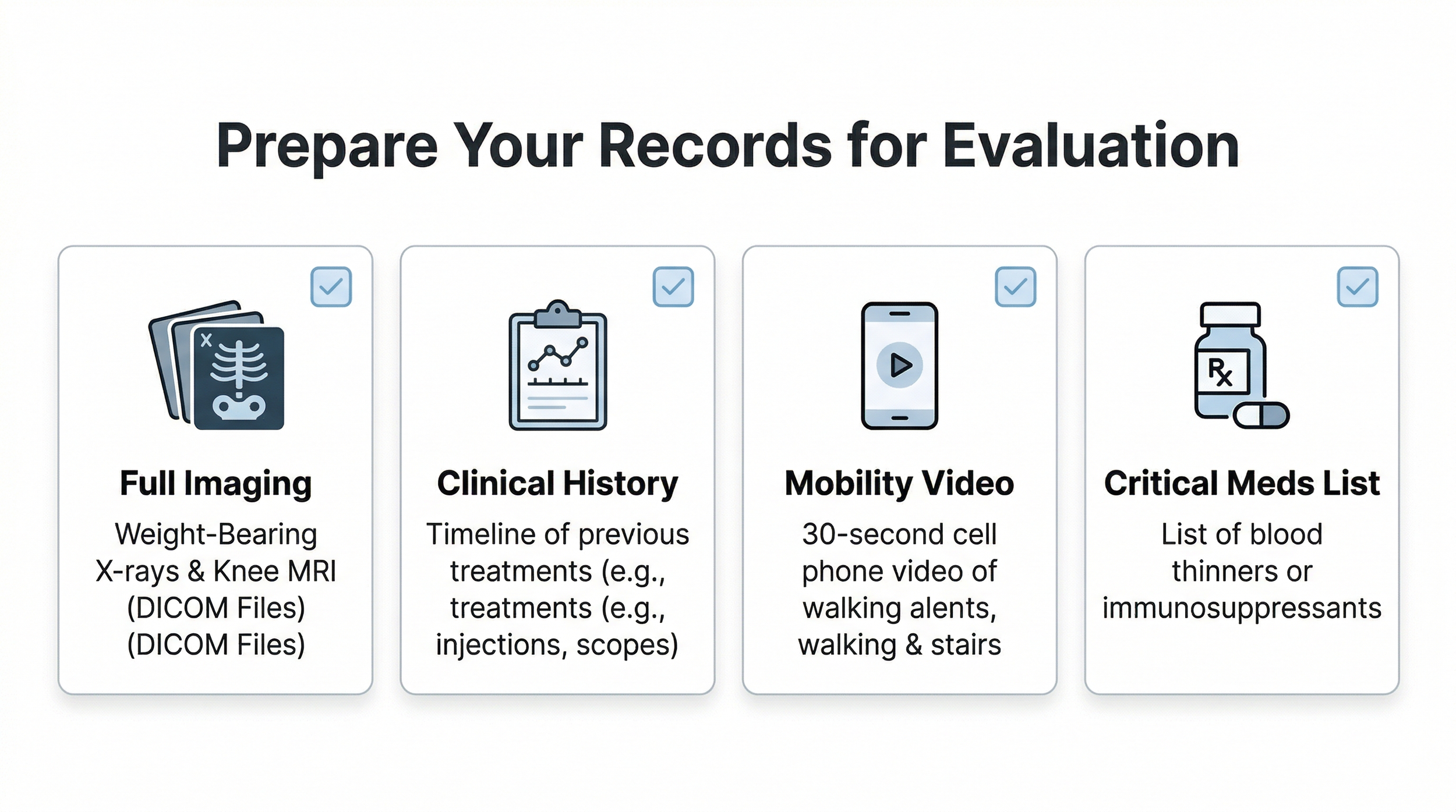
To bypass the public queues and get an immediate clinical evaluation, gather your digital files. Have old scans? That's fine for an initial look. Do not wait for a new doctor's appointment just to get new images.
Full Imaging (DICOM Files): Original digital data (not photos) of your Weight-Bearing X-rays and Knee MRI.
Clinical Score & History: A timeline of previous treatments (e.g., injections, scopes).
Mobility Video: A simple 30-second cell phone video of you walking and climbing stairs. This shows the surgeon your real-time joint stability.
Critical Meds List: A list of blood thinners or immunosuppressants you take.
Traveling with Support
Author Bio: Ryan Lee is a Beijing-based medical concierge and the founder of PandaMed. With a strict compliance background, he helps international patients navigate China's top public hospitals safely. He secures direct access to Chief Physicians for complex cases.
Medical Disclaimer: This information is for educational purposes only and is not medical advice. PandaMed is a care coordination service, not a medical provider. Always consult a qualified doctor for your specific condition.
References:
Guidelines for the Management of Osteoarthritis of the Knee, American Academy of Orthopaedic Surgeons (AAOS).
Global, regional, and national burden of osteoarthritis, [NCBI/PubMed - PMID: 37675071]
Annual Surgical Volume Report, Department of Orthopaedics, Beijing Jishuitan Hospital (2023 Internal Report).
Annual Surgical Volume Report, Department of Orthopedics, Peking Union Medical College Hospital (2024 Internal Report).
