
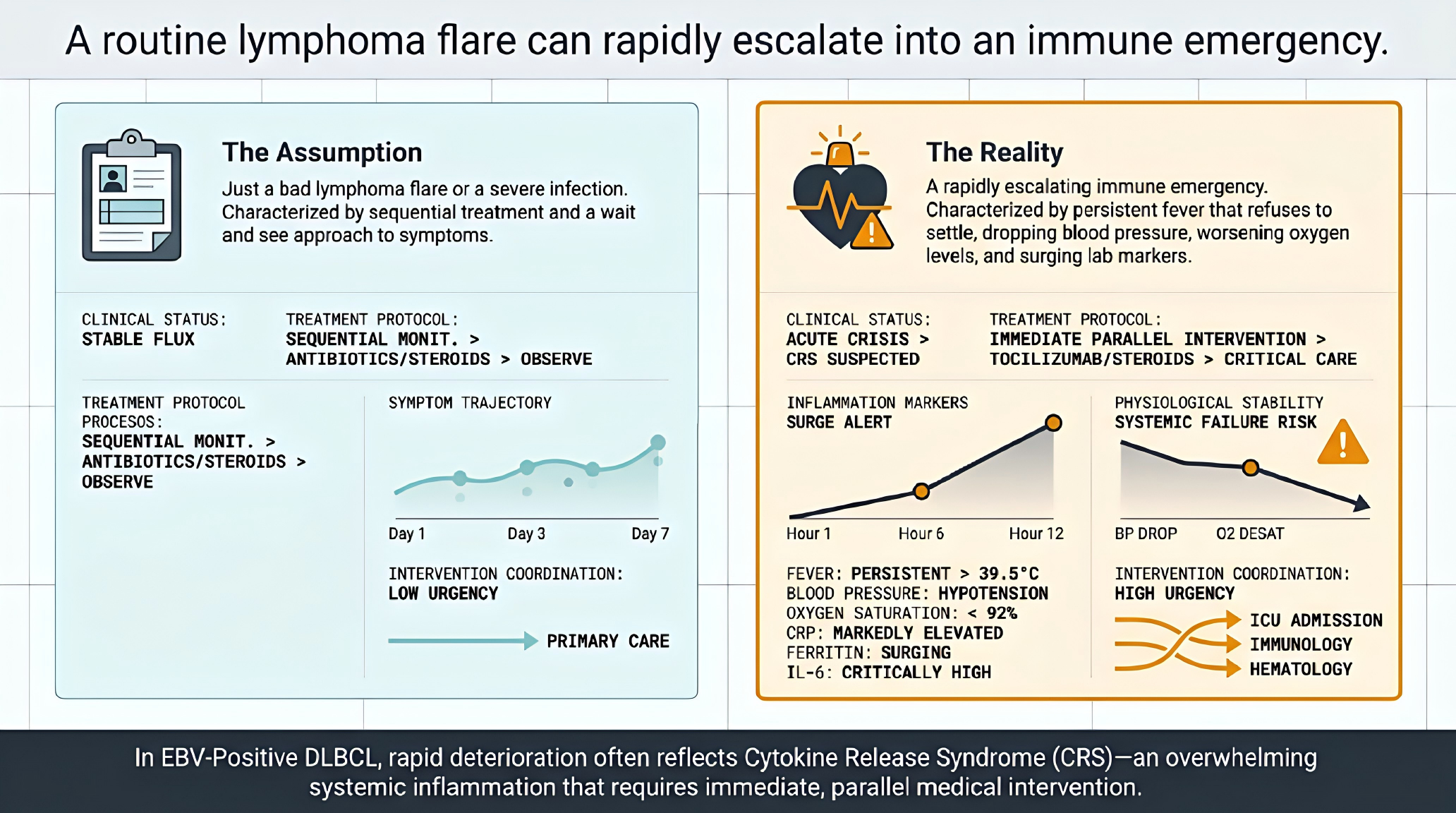
A patient may first look like they have “just a bad lymphoma flare” or a severe infection. Then the fever does not settle, blood pressure drops, oxygen levels worsen, and lab markers surge. In EBV-positive diffuse large B-cell lymphoma, that escalation can reflect cytokine release syndrome, or CRS, and it can become dangerous fast.
For international patients trying to understand whether this is a routine lymphoma complication or a time-sensitive immune emergency, Beijing’s top public hospitals are worth understanding. The strongest centers can bring hematology, ICU, infectious disease, pathology, and organ-support teams into the same case early, which matters when CRS may overlap with HLH, infection, or rapid lymphoma progression.
Quick Decision Snapshot
| Decision Point | Typical Western Pathways | Top Beijing Public Hospitals |
|---|---|---|
| Multidisciplinary review | Often split across hematology, ICU, and infectious disease teams depending on admission pathway | High-level public centers can coordinate hematology, ICU, infection, pathology, and organ-support review within one referral system |
| Imaging and pathology review speed | Outside records may need re-review across separate institutions | Major Beijing centers are often able to review prior scans, pathology, and lab trends quickly once records are organized |
| First-line treatment decision in unstable cases | Treatment may proceed in sequence as teams rule out infection, CRS, HLH, and lymphoma progression | Tertiary referral hospitals may make a parallel plan for cytokine control, anti-lymphoma treatment, infection coverage, and ICU support |
If you already have scans, pathology, discharge notes, or old lab reports, you can send them to contact@pandamedglobal.com to check whether your current records are enough for an initial review and what to prepare next. Old records are often enough for an initial records check.
Why EBV-Positive DLBCL Can Trigger a More Dangerous Inflammatory Spiral
EBV-positive diffuse large B-cell lymphoma, not otherwise specified, is a distinct lymphoma subtype with aggressive biology and poor prognosis. It accounts for about 5% to 15% of all DLBCL cases and is reported more often in parts of Asia and Latin America. According to the source article from Medical Journal of Peking Union Medical College Hospital in 2026, this subtype is not just biologically aggressive on the tumor side. It is also more likely to drive overwhelming immune activation.
That is where CRS enters the picture. CRS is a systemic inflammatory syndrome caused by excessive release of cytokines such as IL-6, TNF-alpha, IL-1, and IFN-gamma. In real clinical terms, that can mean persistent fever, hypotension, hypoxia, capillary leak, organ dysfunction, and rapid deterioration.
In EBV-positive DLBCL, this is not random. The paper explains that EBV latent proteins, especially LMP1, can activate the NF-kappaB pathway, which in turn drives IL-6 production. That matters because IL-6 is one of the central mediators of CRS. The article describes a malignant signaling loop often summarized as LMP1-NF-kappaB-IL-6-STAT3, which can promote both tumor growth and cytokine amplification.
This helps explain why some patients with EBV-positive lymphoma do not behave like standard DLBCL cases. The cancer itself, the virus, the immune system, and the tumor microenvironment may all be reinforcing each other at the same time.
What Makes These Cases Harder Than “Regular” Lymphoma Complications
One major problem is that CRS can look similar to severe infection, sepsis, HLH, or rapid lymphoma progression. In practice, those conditions may also overlap. That is why high-level centers do not just ask, “Is this lymphoma?” They ask a more urgent set of questions: is this cytokine storm, is this infection, is this HLH, is there organ failure starting, and what has to be treated first in parallel rather than one step at a time?
The source article highlights several features that make EBV-positive DLBCL especially difficult:
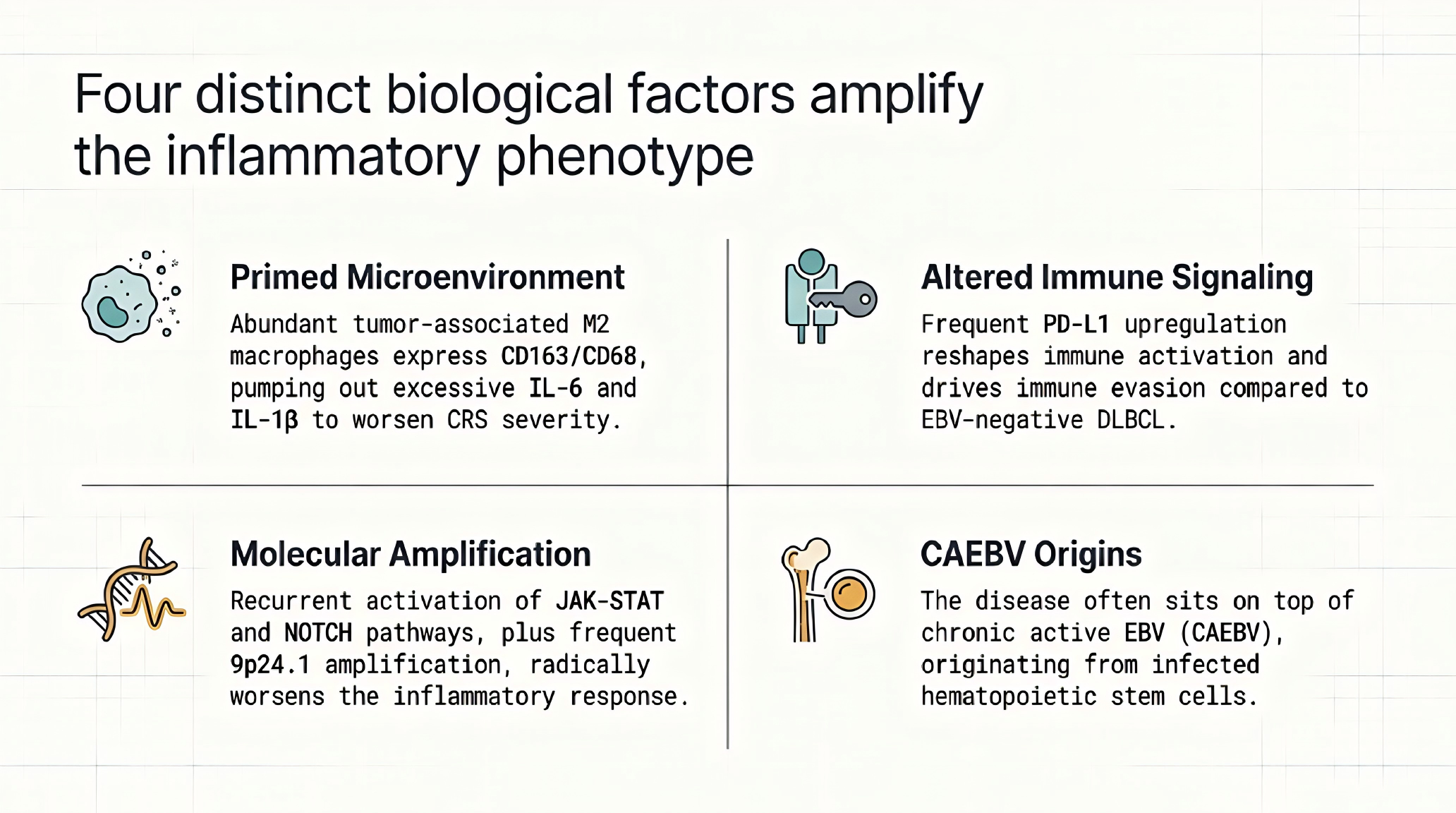
First, the tumor microenvironment may already be primed for inflammation. Studies cited in the paper found abundant tumor-associated macrophage infiltration, especially M2 macrophages, with elevated CD163/CD68 expression. These macrophages can produce more IL-6 and IL-1beta, worsening CRS severity.
Second, immune checkpoint signaling may be altered. Compared with EBV-negative DLBCL, EBV-positive cases more often show PD-L1 upregulation. That may contribute to immune evasion, but it can also reshape immune activation patterns and cytokine release.
Third, molecular abnormalities may amplify the inflammatory phenotype. The article cites 2023 molecular profiling data showing recurrent activation of the JAK-STAT and NOTCH pathways, along with frequent 9p24.1 amplification. These findings are relevant because they may affect both lymphoma behavior and cytokine signaling.
Fourth, some cases may sit on top of chronic active EBV disease biology. The paper notes that part of EBV-positive DLBCL may be linked to chronic active Epstein-Barr virus infection, or CAEBV, which can evolve through EBV-related lymphoproliferative disease into overt malignancy. A 2024 Blood study from Professor Wang Zhao’s team reported that CAEBV originates from infected hematopoietic stem cells. That finding matters because it changes how some clinicians think about disease origin, progression, and why stem cell transplantation may cure selected CAEBV cases.
For families, the practical point is simple: when EBV-positive DLBCL becomes unstable, the case may no longer be just about choosing a chemotherapy regimen. It may be about controlling a rapidly escalating immune emergency while still treating the lymphoma underneath it.
The Warning Signs Specialists Watch Before CRS Turns Severe
CRS often begins with fever, but it does not stay there in severe cases. The article describes the clinical picture in a way that is very useful for patients and caregivers: high fever, chills, fatigue, low blood pressure, fast heart rate, shortness of breath, low oxygen levels, confusion, drowsiness, headache, seizures in severe neurologic involvement, and gastrointestinal symptoms such as nausea, vomiting, or diarrhea.
The current widely used clinical grading approach, based on ASTCT consensus criteria cited in the paper, classifies CRS into 5 grades:
Grade 1 means fever of at least 38 C without hypotension or hypoxia.
Grade 2 means fever plus hypotension not requiring vasopressors and/or hypoxia needing low-flow oxygen.
Grade 3 means fever plus hypotension requiring one vasopressor and/or hypoxia needing high-flow oxygen.
Grade 4 means fever plus hypotension requiring multiple vasopressors and/or hypoxia requiring mechanical ventilation.
Grade 5 means death.
One important nuance from the paper: once antipyretics or anti-cytokine treatment are started, fever may disappear. That does not mean the CRS is over. Severity then has to be judged by blood pressure support needs and oxygen requirement.
The article also summarizes the biomarkers clinicians monitor when they worry the case is moving in the wrong direction. The most important one is IL-6. In one cited study, peak IL-6 levels in patients with CRS were almost 30 times higher than in those without CRS. Other markers associated with more severe CRS include IL-10, IFN-gamma, IL-8, soluble IL-2 receptor alpha, ferritin, CRP, LDH, falling neutrophil count, and falling platelet count.
A particularly useful risk signal discussed in the paper is the EASIX-F model reported by Greenbaum et al. in 2021. In that model, a high-risk group defined by EASIX > 4.6 and ferritin > 321 ng/mL predicted a 74% cumulative incidence of grade 2 to 4 CRS. That model was not created specifically for EBV-positive DLBCL, but it shows the type of combined lab-risk thinking clinicians increasingly use.
The paper also notes that LDH above 350 IU/L was reported as an independent predictor of acute kidney injury associated with CRS, and that PET/CT SUVmax before treatment may correlate with CRS severity. For EBV-positive DLBCL specifically, the authors recommend regular monitoring of peripheral blood EBV-DNA copy number, because a rapid rise may suggest EBV reactivation and increased CRS risk.
If the case is complicated, or you are not sure whether your MRI, pathology, operative notes, or old reports are enough, you can email what you already have to contact@pandamedglobal.com for record-preparation and next-step guidance. Existing records are often enough to start.
When CRS May Be Crossing Into HLH
One of the most important points in this paper is that severe CRS can progress into hemophagocytic lymphohistiocytosis, or HLH, a much more dangerous hyperinflammatory syndrome with high mortality.
CRS and HLH overlap. Both can present with cytokine storm, high fever, lab abnormalities, and rapid organ dysfunction. But the underlying emphasis is different. CRS is mainly framed as excessive immune activation. HLH involves immune regulatory failure, impaired NK-cell and cytotoxic T-cell function, and often hemophagocytosis.
The article gives several practical clues that should raise concern for HLH transformation in a patient already being watched for CRS. These include sharply worsening liver function, persistent high fever, and cytopenias. The source also emphasizes that ferritin above 10,000 ng/mL has relatively high specificity for HLH. Additional diagnostic workup may include soluble IL-2 receptor/CD25 testing, NK-cell activity analysis, and bone marrow examination.
The paper uses the HLH-2004 framework as the internationally used diagnostic standard. Once HLH is diagnosed, management usually shifts away from CRS-focused supportive care alone and toward formal HLH-directed immunosuppressive treatment plus organ support.
That transition point is exactly why experienced centers matter. If the team misses the moment when “CRS-like” inflammation has become HLH, treatment can lag behind the biology of the disease.
How Treatment Is Usually Structured in Serious Cases
The article recommends a graded, multidisciplinary approach. In EBV-positive DLBCL with CRS, the problem is not solved by symptom control alone. The inflammatory process, the lymphoma, the viral biology, and infection risk all have to be managed together.
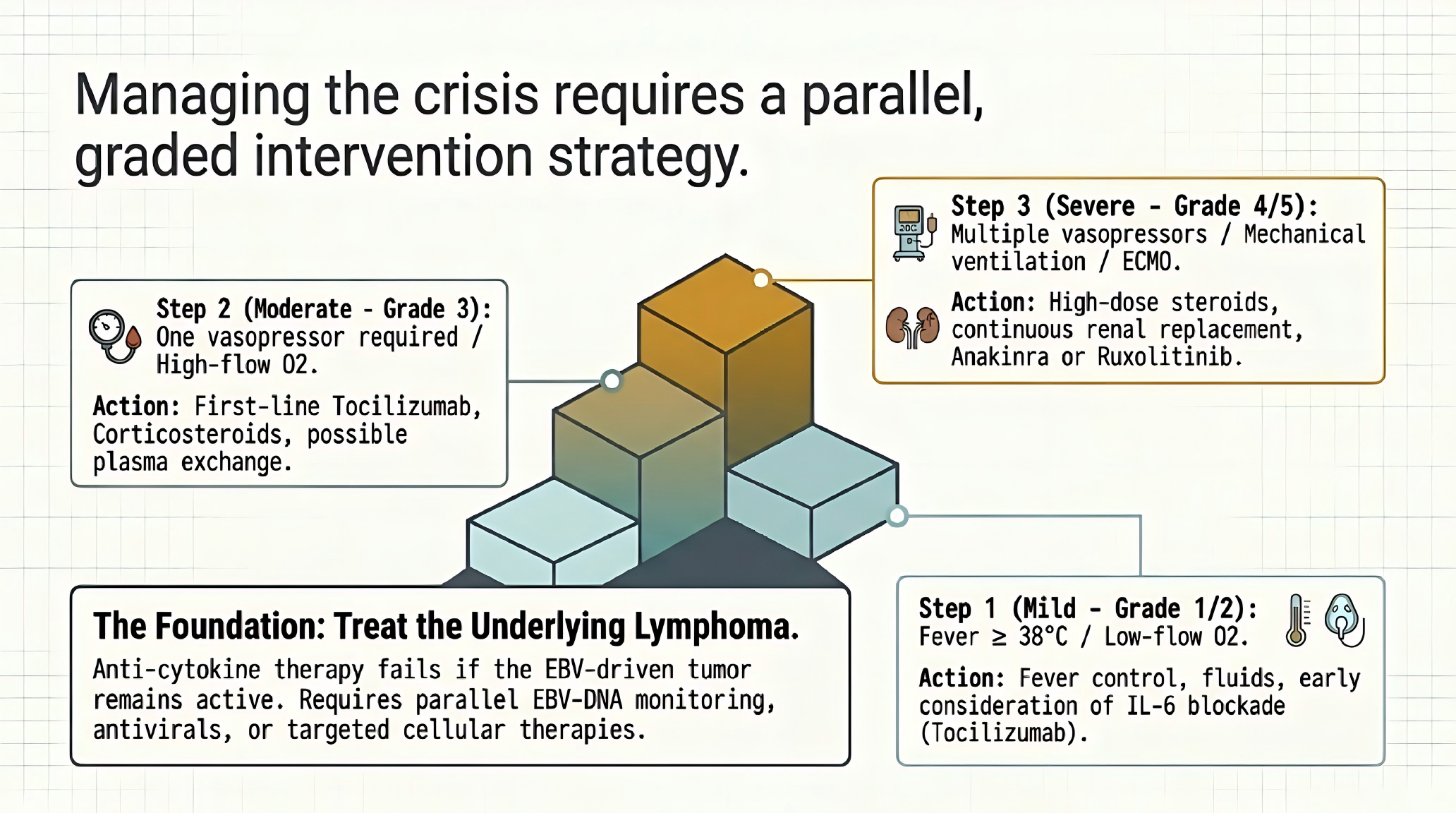
For mild CRS, grade 1 to 2, supportive care remains central: fever control, fluids, electrolyte management, oxygen as needed, and close monitoring of labs and vital signs. In higher-risk patients, the authors note that early or preventive use of tocilizumab, an IL-6 receptor antagonist, may be considered.
For moderate CRS, grade 3, the paper describes IL-6 receptor blockade as first-line treatment in many cases because it can quickly improve fever and hypotension. If tocilizumab is ineffective or unsuitable, corticosteroids may be used, though the immune suppression tradeoff has to be considered carefully. Vasopressors, respiratory support, and plasma exchange may also be needed in selected patients with marked hypercytokinemia.
For severe CRS, grade 4 to 5, the article discusses high-dose corticosteroid treatment, escalation of organ support, mechanical ventilation if needed, ECMO, vasopressors, and continuous renal replacement therapy. In severe or tocilizumab-refractory cases, especially when HLH features are emerging, the paper notes potential use of anakinra or ruxolitinib.
But the authors make another key point: in EBV-positive DLBCL, clinicians must also treat the underlying lymphoma promptly. Anti-cytokine therapy alone is not enough if the tumor and EBV-driven immune stimulation remain active.
The paper also discusses EBV-DNA monitoring and says antiviral agents such as ganciclovir, valganciclovir, or foscarnet may be considered, while clearly noting an important limitation: these drugs mainly suppress lytic EBV replication and have limited effect on latent infection in tumor cells. In other words, antivirals do not replace anti-lymphoma treatment.
A further strategy mentioned is EBV-specific cytotoxic T-cell therapy, which aims to restore targeted immune surveillance against EBV-infected cells. The authors describe it as promising in theory, though timing, safety, and integration with anti-cytokine treatment still need more clinical study.
What International Patients Often Misunderstand About Urgency
Families often assume that the most important question is where to get the “best lymphoma treatment.” In an unstable EBV-positive DLBCL case, that is only part of the question. The more urgent issue may be whether the patient is entering a phase where CRS, HLH, infection, and organ injury need to be evaluated simultaneously.
That is why tertiary hospitals with strong hematology and ICU infrastructure matter. In Beijing, international families often look first at leading public hospitals with deep hematology-oncology capability and high-level critical care support. For a case involving lymphoma plus possible cytokine storm or HLH, what matters is not only reputation, but whether the center can handle rapid pathology review, serial inflammatory markers, ICU escalation, infection control, and anti-lymphoma planning without fragmentation.
For some patients, the immediate value of a Beijing opinion is not a same-day treatment change. It is a clean specialist read on the case: is this primarily CRS, suspected HLH, uncontrolled lymphoma biology, infection overlap, or some combination? That clarity can change the next decision fast.
The Checklist
For this condition, the most useful records usually include pathology, EBV testing, and trend data rather than one single “perfect” new scan. You do not need brand-new records for every case. Existing records are often enough to start.
Please try to gather whatever you already have, especially:
Pathology materials: original pathology report, immunohistochemistry, EBER in situ hybridization result, flow cytometry if available, and any outside pathology review.
Imaging: PET/CT, CT, MRI, and the written radiology reports. If possible, include the image files on CD, cloud link, or exported DICOM set.
Bloodwork trends: CBC, liver function, renal function, coagulation, CRP, ferritin, LDH, triglycerides, fibrinogen, cytokine panels if available, and serial EBV-DNA copy number results.
Hospital records: discharge summaries, ICU notes, fever charts, oxygen requirement, blood pressure support records, and transfusion history.
Treatment records: chemotherapy history, steroids, tocilizumab, anakinra, ruxolitinib, antiviral drugs, antibiotics, antifungals, and response timeline.
HLH-related workup if done: soluble CD25 or soluble IL-2 receptor, NK-cell activity testing, bone marrow report, and hemophagocytosis findings.
If you are unsure what is missing, send what you already have to contact@pandamedglobal.com and ask whether your current records are enough for an initial records check and what to prepare first.
Family / Logistics
If your family needs help understanding visas, lodging, appointments, translation, family travel, or Beijing care coordination, you can email contact@pandamedglobal.com. Practical planning is often easier once a specialist has reviewed the records and clarified whether the immediate issue is active lymphoma, CRS, possible HLH, or recovery planning after hospitalization.
Author Bio
Ryan Lee is a Beijing-based medical concierge and the founder of PandaMed. With a strict compliance background, he helps international patients navigate China's top public hospitals safely. He secures direct access to Chief Physicians for complex cases.
Medical Disclaimer
This information is for educational purposes only and is not medical advice. PandaMed is a care coordination service, not a medical provider. Always consult a qualified doctor for your specific condition.
References
Kong Q, Ma J, Guo Zhijun. Diagnosis and Treatment of Epstein-Barr Virus-Positive Diffuse Large B-cell Lymphoma Complicated by Cytokine Release Syndrome. Medical Journal of Peking Union Medical College Hospital. 2026;17(1):33-39. doi: 10.12290/xhyxzz.2025-0815.
Malpica L, Marques-Piubelli ML, Beltran BE, et al. EBV-positive diffuse large B-cell lymphoma, not otherwise specified: 2024 update on the diagnosis, risk-stratification, and management. Am J Hematol. 2024;99(10):2002-2015.
Hong JY, Ko YH, Kim SJ, et al. Epstein-Barr virus-positive diffuse large B-cell lymphoma of the elderly: a concise review and update. Curr Opin Oncol. 2015;27(5):392-398.
Swerdlow SH, Campo E, Pileri SA, et al. The 2016 revision of the World Health Organization classification of lymphoid neoplasms. Blood. 2016;127(20):2375-2390.
