
Chordoma Proton Therapy in China: A US Patient Case
When specialist review changed the treatment path
A 27-year-old woman from the United States contacted PandaMed while exploring treatment in China for a recurrent cervical chordoma. She had already undergone partial tumor resection in the US, but the tumor grew back soon afterward.
By the time she reached out, she had done extensive research on her own. She was specifically interested in carbon ion radiotherapy, believing it might offer a stronger biological effect against a treatment-resistant tumor. Her goal was clear: she wanted to know whether she could travel to China for heavy ion treatment.
What became clear during case review, however, was that the most important question was not simply which technology was more powerful. It was which treatment approach was safer and more appropriate for the exact location of her tumor.
The patient’s condition and why she looked abroad
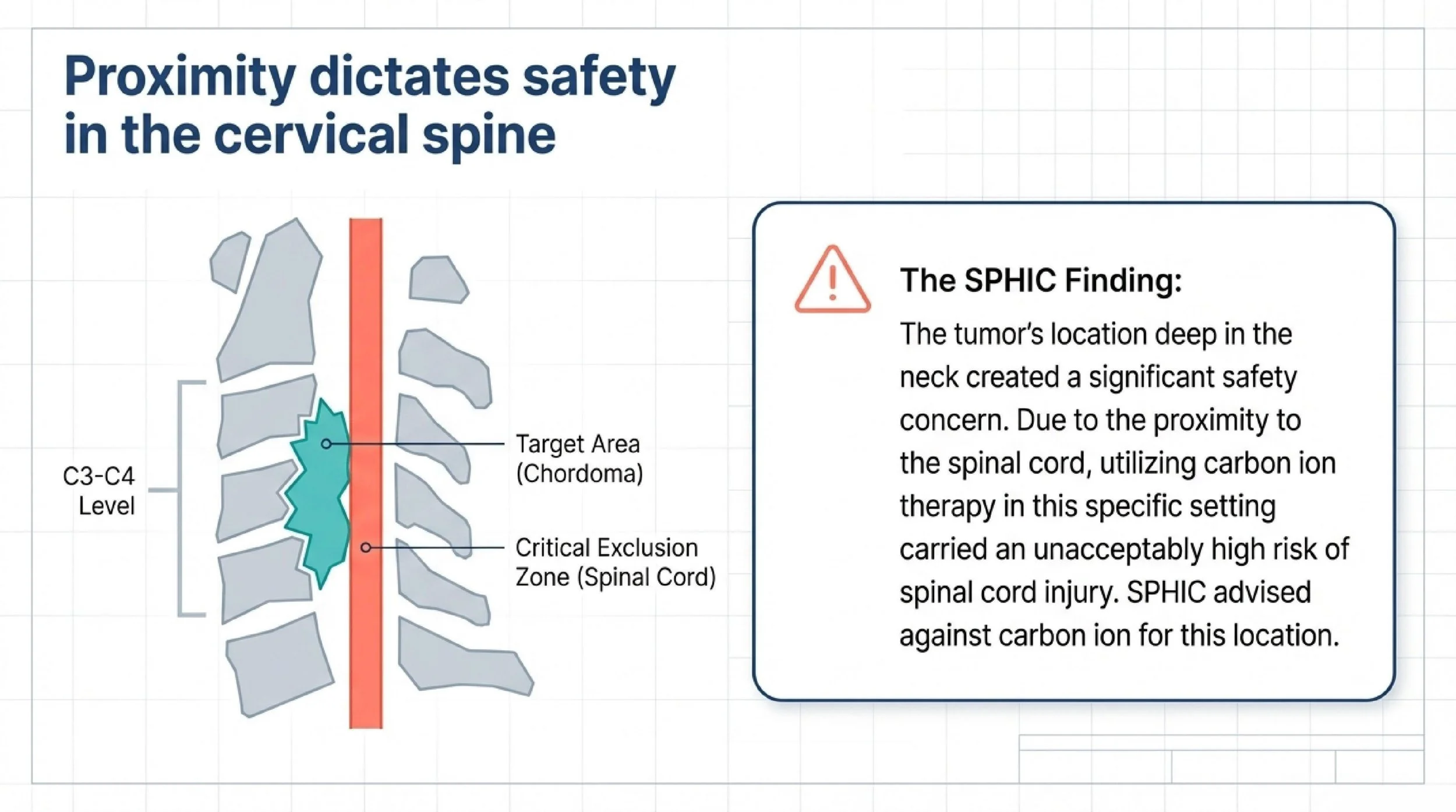
The patient had been diagnosed with a poorly differentiated chordoma in the cervical spine, at the C3–C4 level. Chordoma is a rare tumor, and treatment planning can be especially challenging when the lesion is close to critical structures.
In her case, the tumor’s position deep in the neck and near the spinal cord made treatment selection particularly important. Because of the recurrence after surgery, she began looking beyond her home country for additional radiotherapy options, including advanced particle therapy available in China.
Like many international patients, she arrived with a treatment preference already in mind. But a preferred treatment is not always the same as the right treatment for an individual anatomy and disease setting.
Why PandaMed did not simply proceed with the original request
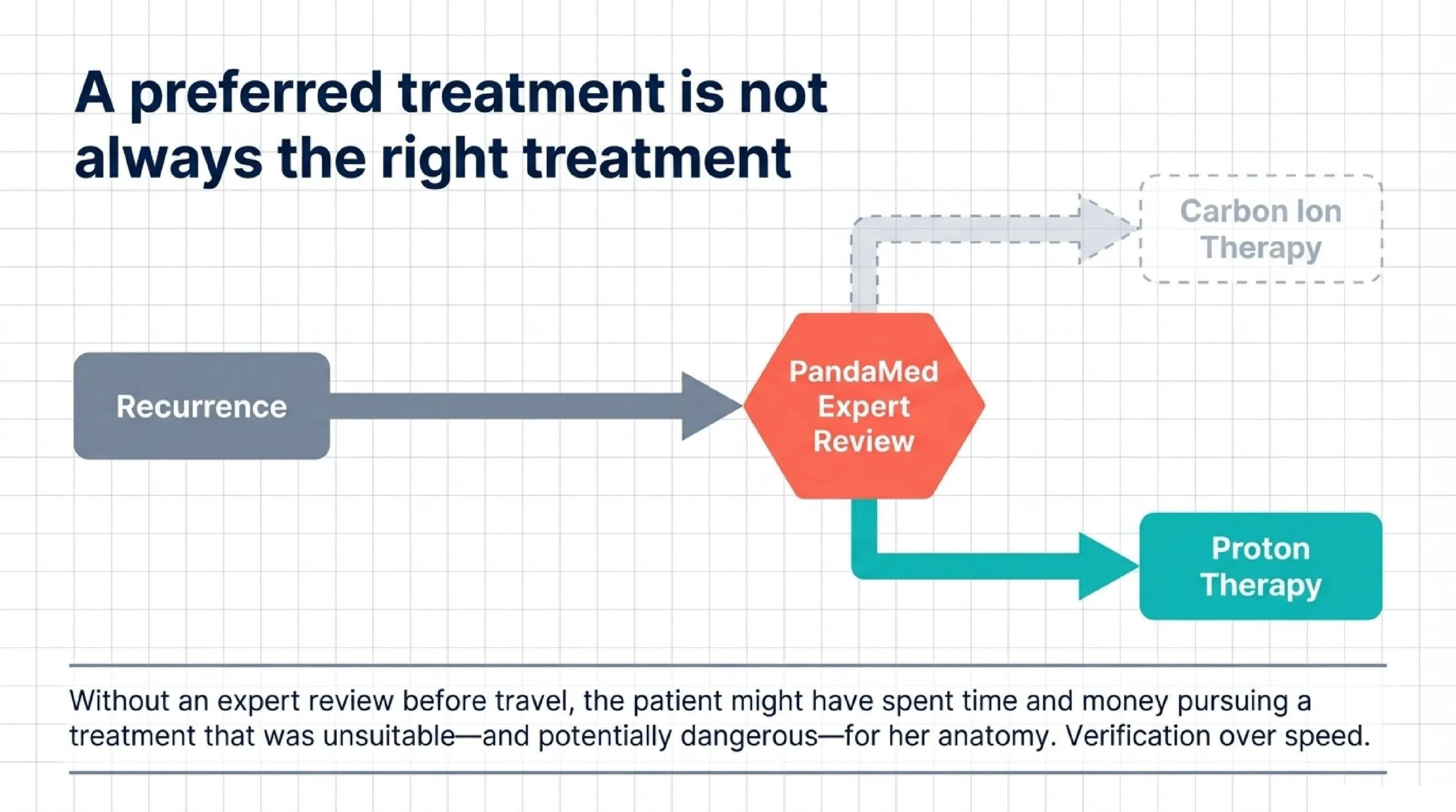
Rather than treating her request as a straightforward booking, PandaMed first helped organize a specialist review of her imaging and medical history.
As a cross-border medical service company, PandaMed did not provide the medical treatment itself. Our role was to help collect records, coordinate communication, support translation where needed, and connect the case with appropriate specialists for evaluation.
For this patient, two senior physicians in Shanghai reviewed the case:
Dr. Wang, Department of Neurosurgery, Huashan Hospital
Dr. Huang, Department of Head and Neck Oncology, Shanghai Proton and Heavy Ion Center (SPHIC)
This review became the turning point in the case.
The key medical finding: carbon ion therapy was not the best fit for this tumor location
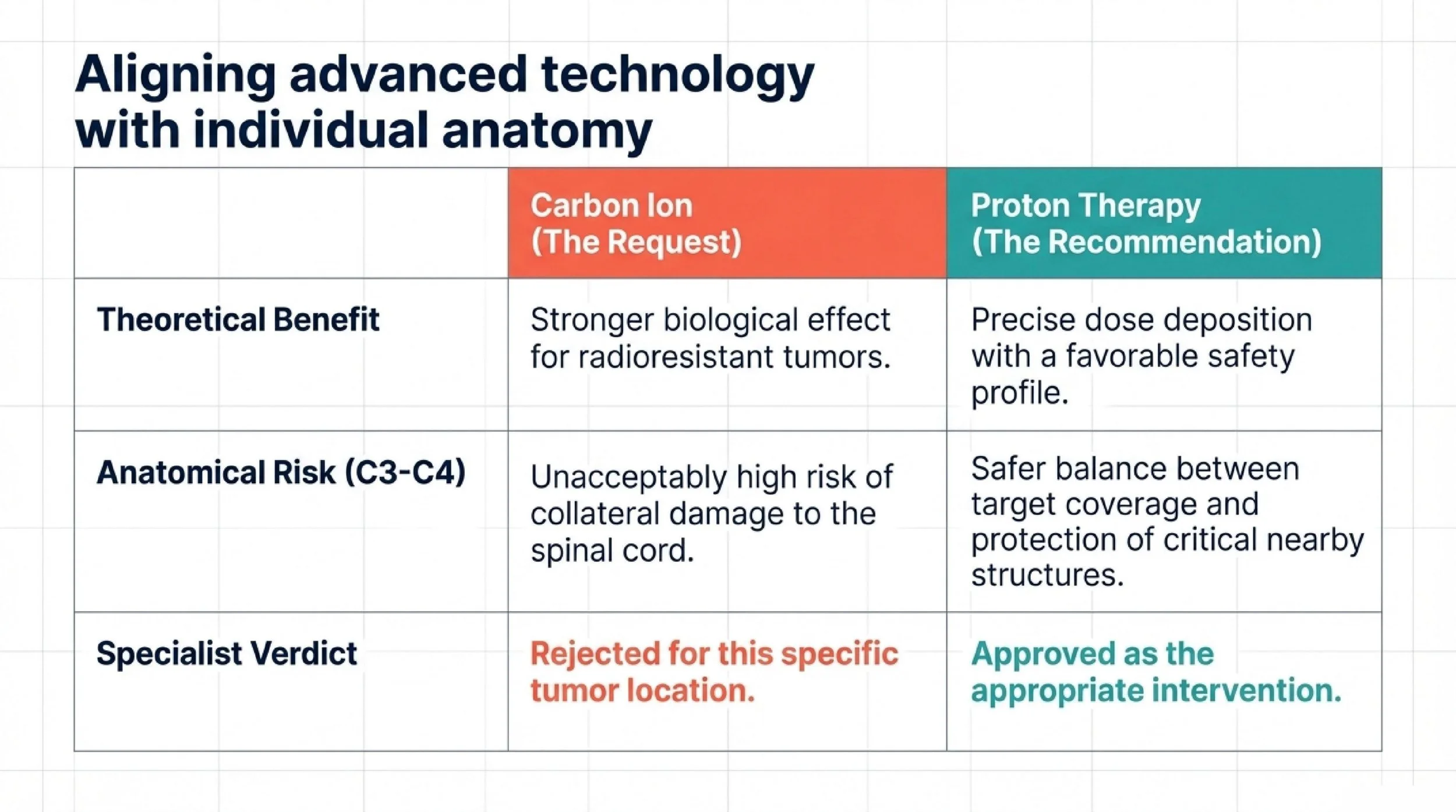
The patient had specifically asked about carbon ion therapy, which is often discussed for difficult or relatively radioresistant tumors. However, the expert review identified an important limitation in her case.
According to the specialist opinion from SPHIC, the tumor’s location in the cervical spine created a significant safety concern because of its proximity to the spinal cord. In this setting, the use of carbon ion therapy could carry an unacceptably high risk of spinal cord injury. For that reason, the center advised that carbon ion therapy was not used for this location.
Instead, the reviewing specialists agreed that proton therapy was the more appropriate option for her case, offering a safer balance between target coverage and protection of nearby critical anatomy.
This was the most important value of the review process: it did not simply confirm what the patient had hoped to receive. It helped clarify what specialists considered safer and more suitable for her specific situation.
The treatment roadmap she received
After the review, PandaMed helped present the patient with a clearer and more practical treatment path in China.
The proposed plan included a 30-session proton therapy course over approximately 1.5 months. She also received a detailed cost estimate of around 278,000 RMB, approximately 39,000 USD based on the exchange rate at the time.
In addition, the patient was informed of an estimated two-month waiting period, giving her a more realistic sense of timing before making a travel decision.
To support informed decision-making, she was also given an alternative Plan B option involving CyberKnife treatment, so that she could compare pathways rather than feel locked into a single choice.
Why this case matters for international patients
This case is a useful example of a common challenge in cross-border cancer care: patients often research technologies very carefully, but the final treatment decision still depends on tumor location, prior treatment history, imaging findings, and specialist judgment.
In this case, the main value was not speed. It was verification.
Without an expert review before travel, the patient might have spent time and money pursuing a treatment that was not considered suitable for her anatomy. By clarifying this early, she was able to move forward with a medically grounded plan, clearer expectations, and a better understanding of the practical steps involved.
The case also highlights the importance of distinguishing between a treatment that sounds promising in general and one that is appropriate for an individual patient. For rare tumors such as chordoma—especially in sensitive areas like the cervical spine—that distinction matters.
PandaMed’s role in cases like this
PandaMed does not replace the physician’s role, and we do not provide direct medical treatment. Our role is to support international patients through the early decision-making and coordination process, including:
medical record collection and organization,
cross-border communication support,
translation and case preparation,
specialist coordination,
and practical guidance around timing, logistics, and treatment planning.
For patients and families trying to understand whether treatment in China may be feasible, that early clarity can make the next step easier and more informed.
A note on individual results
This case reflects one patient’s individual experience. Treatment suitability and outcomes vary based on diagnosis, disease status, prior treatment history, imaging findings, and physician evaluation. Any treatment decision should be based on review by qualified medical specialists.
Contact PandaMed
If you or a family member is exploring proton therapy in China, carbon ion therapy, or other cross-border cancer treatment options, PandaMed can help you organize records, understand possible pathways, and seek appropriate specialist input before making travel decisions.
For a private consultation, contact: contact@pandamedglobal.com
