
Remote Consultation for Spine Surgery in China: A Patient Case Study
How one international patient prepared for spinal treatment in Shanghai through remote consultation and case coordination
For many international patients, the hardest part of seeking treatment abroad is not only choosing a hospital or specialist. It is also understanding how to begin: how to submit medical records, how to communicate across languages, and how to know whether travel for treatment is appropriate before making major plans.
This case study describes how one patient with a complex spinal condition moved from overseas inquiry to a remote specialist consultation and a confirmed surgical pathway in China. To protect privacy, personal details have been anonymized.
This case reflects one patient’s individual experience. Treatment suitability and outcomes vary based on diagnosis, disease status, prior treatment history, and physician evaluation.
The Patient’s Situation
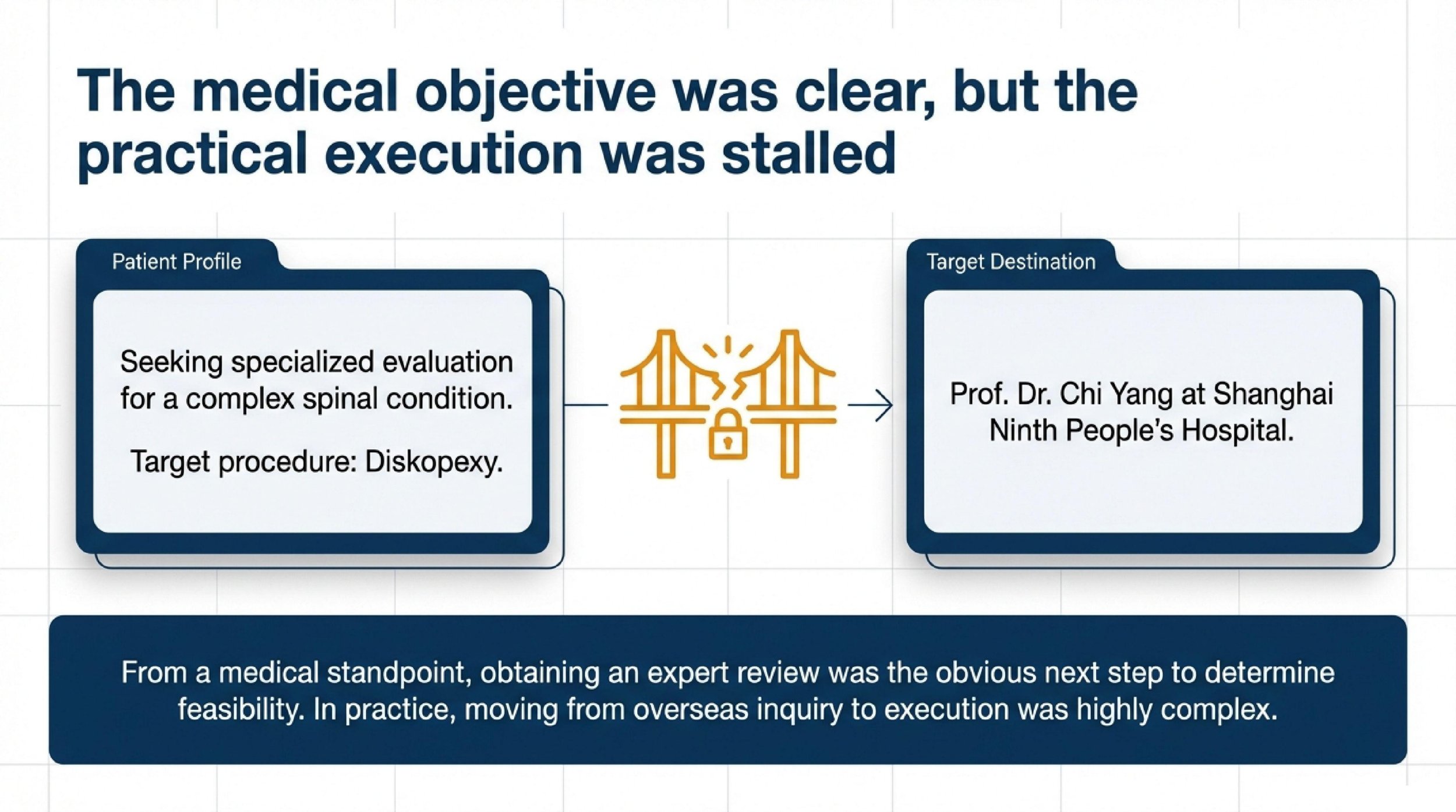
The patient was seeking evaluation for a complex spinal condition and was exploring whether a procedure known as Diskopexy might be appropriate. After reviewing available options, the patient identified Prof. Dr. Chi Yang at Shanghai Ninth People’s Hospital as a specialist they hoped to consult.
From a medical decision-making standpoint, the next step seemed clear: obtain a professional review of the case and determine whether treatment in China was feasible.
In practice, however, getting to that point was not simple.
Why the Process Was Difficult
Although the patient had already identified a target hospital and surgeon, several practical barriers made it difficult to move forward.
The first challenge was language. The patient was not able to communicate directly with the hospital team in China in a way that would support accurate medical discussion, document submission, and scheduling.
The second challenge was case preparation. For a complex spinal case, it is not enough to send a brief description by email. Imaging, medical history, and supporting records need to be organized clearly and submitted in a format that the receiving team can review efficiently.
The third challenge was process uncertainty. The patient needed clarity on how a remote consultation could be arranged, how the consultation fee would be handled, and what would be required if the case moved forward to in-person treatment and admission.
For international patients, these practical issues often become the main reason a medically appropriate option is delayed.
Why Remote Consultation Was an Important First Step
Before committing to international travel, the patient wanted an expert opinion on whether the case appeared suitable for further treatment planning in Shanghai. A remote consultation offered a practical way to do that.
This approach allowed the specialist team to review the patient’s submitted records in advance and provide an initial professional assessment. It also gave the patient an opportunity to better understand the proposed direction of care, ask questions, and evaluate whether traveling for treatment was worth pursuing.
In cross-border care, this step can be especially valuable because it helps reduce avoidable uncertainty before a patient makes larger logistical and financial decisions.
How PandaMed Supported the Process
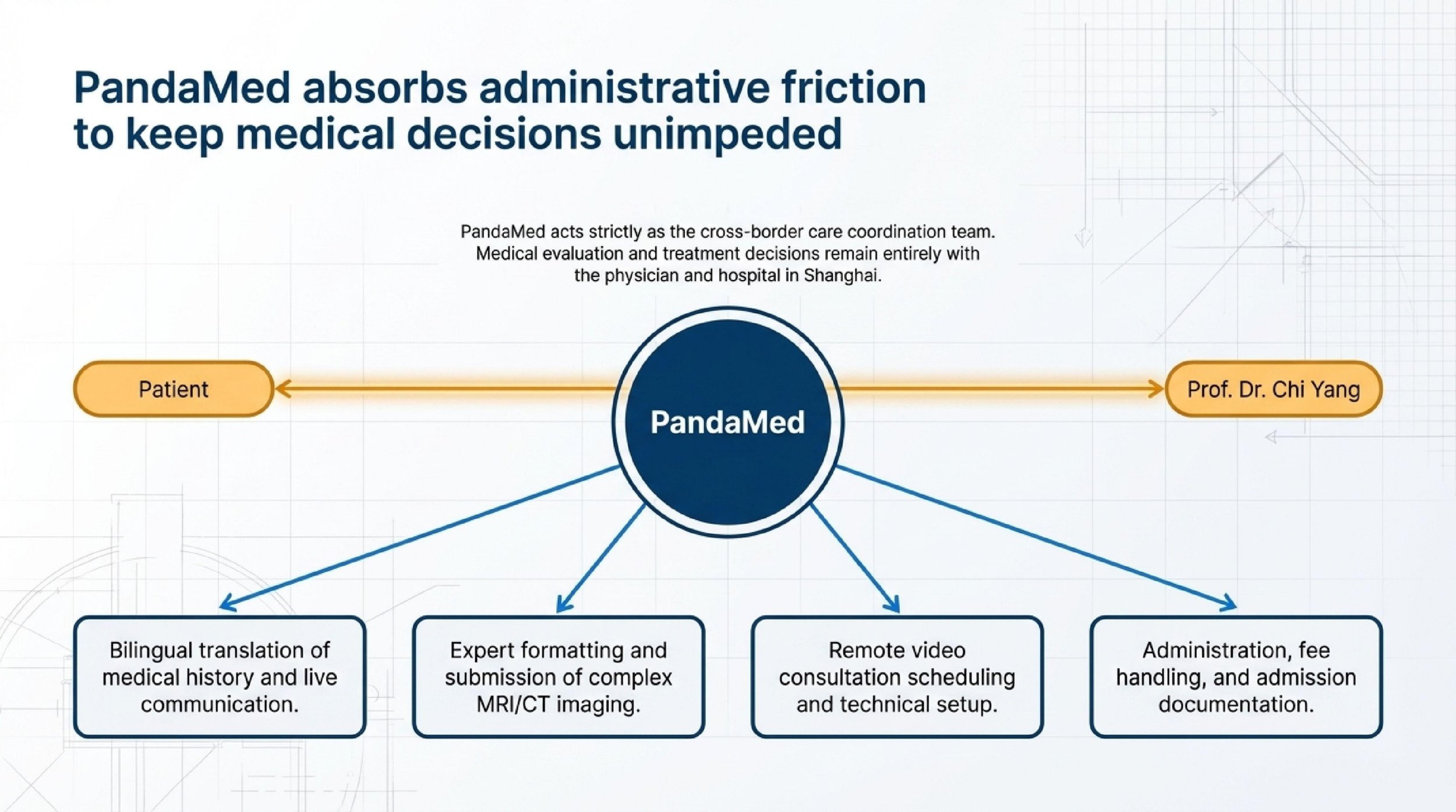
PandaMed acted as the cross-border care coordination team, not the treating medical provider. The medical evaluation and treatment decisions remained with the physician and hospital in Shanghai.
Our role was to help the patient move through the pre-admission process in a clear and organized way.
We assisted with communication between the patient and Prof. Dr. Chi Yang’s team, helping ensure that the patient’s questions, medical history, and supporting materials were translated accurately and presented in a form suitable for review.
We also helped organize the submission of the patient’s records, including MRI and CT imaging, so the materials could be reviewed more efficiently by the receiving medical team.
Once the records were in place, PandaMed coordinated the arrangements for a remote video consultation, giving the patient a chance to receive an expert opinion before traveling.
In addition, we helped the patient understand the administrative side of the process, including consultation fee handling and admission-related documentation, so that non-medical tasks did not become an additional source of stress.
The Outcome
After the case materials were submitted, the patient received a specialist evaluation within a relatively short time frame and was able to move forward with a clearer treatment pathway.
Most importantly, the patient was able to confirm a route toward treatment with the specialist and hospital they had hoped to reach. Instead of trying to navigate language barriers, fragmented communication, and document logistics alone, they had a structured process for moving from inquiry to medical review and surgical planning.
While this case does not predict the experience of every patient, it does show how timely coordination, accurate record preparation, and bilingual communication support can make a meaningful difference in cross-border treatment planning.
What This Case May Be Helpful For
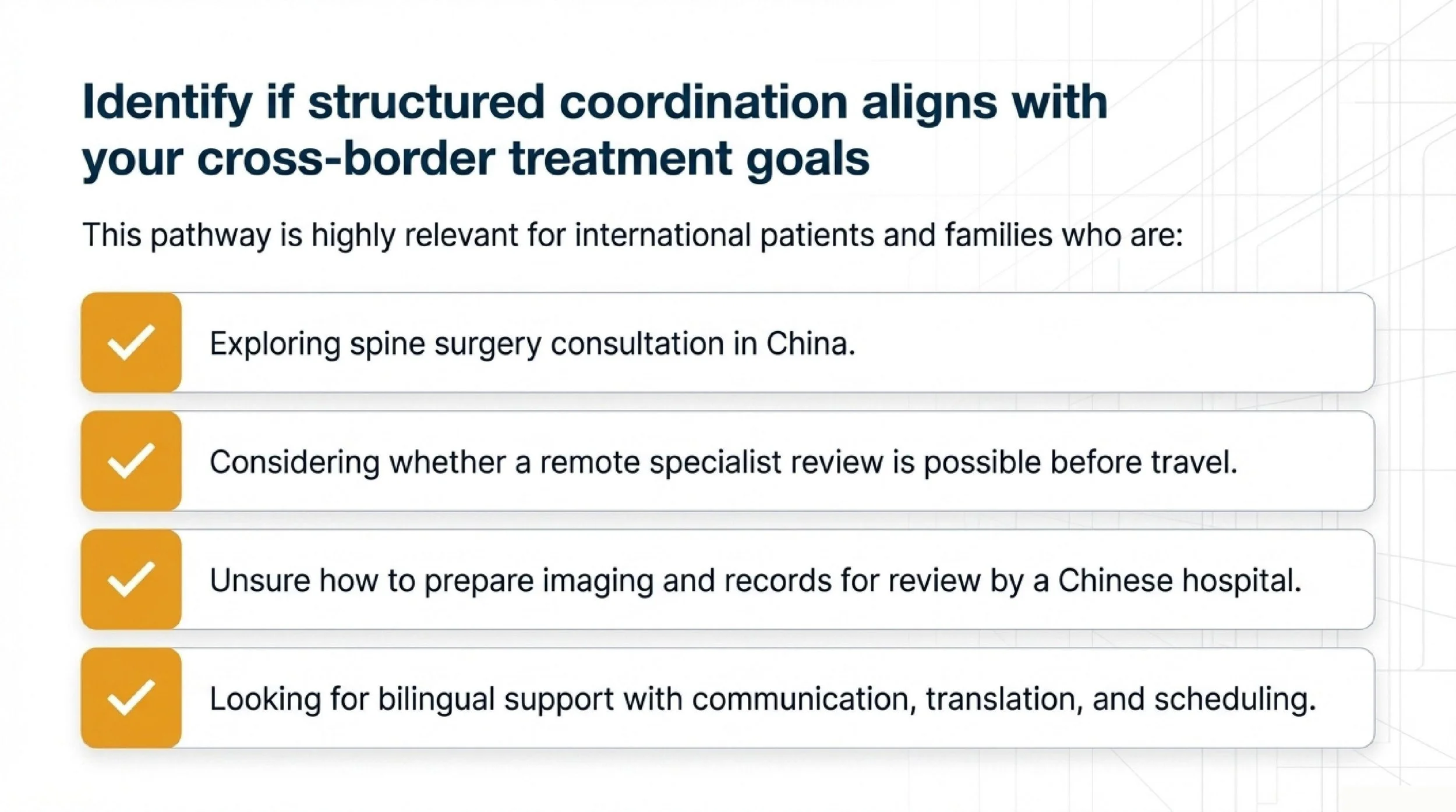
This case may be relevant to patients and families who are:
exploring spine surgery consultation in China;
considering whether a remote specialist review is possible before travel;
unsure how to prepare imaging and records for review by a Chinese hospital;
looking for bilingual support with communication, translation, and scheduling.
For many international patients, the main question is not only where to go for treatment, but how to start the process in a safe, informed, and organized way.
Considering Spinal Treatment in China?
If you are exploring a spine consultation or treatment option in China and are unsure how to begin, PandaMed may be able to help you understand the next steps. Our team can assist with early-stage case coordination, medical record preparation, translation support, and communication guidance for international care pathways.
If you would like to discuss whether your case is suitable for further review, you are welcome to contact us at contact@pandamedglobal.com.
