
TAVI in China for Severe Aortic Stenosis: A New Zealand Patient Story
For families facing long wait times for urgent heart care, the question is often not just where treatment is available, but how quickly a safe and appropriate evaluation can happen.
This article shares the journey of an older New Zealand patient diagnosed with severe aortic stenosis, a condition in which the aortic valve becomes narrowed and restricts blood flow from the heart. After being told he could face a wait of several months for treatment at home, his family began looking at overseas options, including specialist evaluation in Shanghai.
This case reflects one patient’s individual experience. Treatment suitability and outcomes vary based on diagnosis, disease status, prior treatment history, and physician evaluation.
A Growing Problem With Limited Time
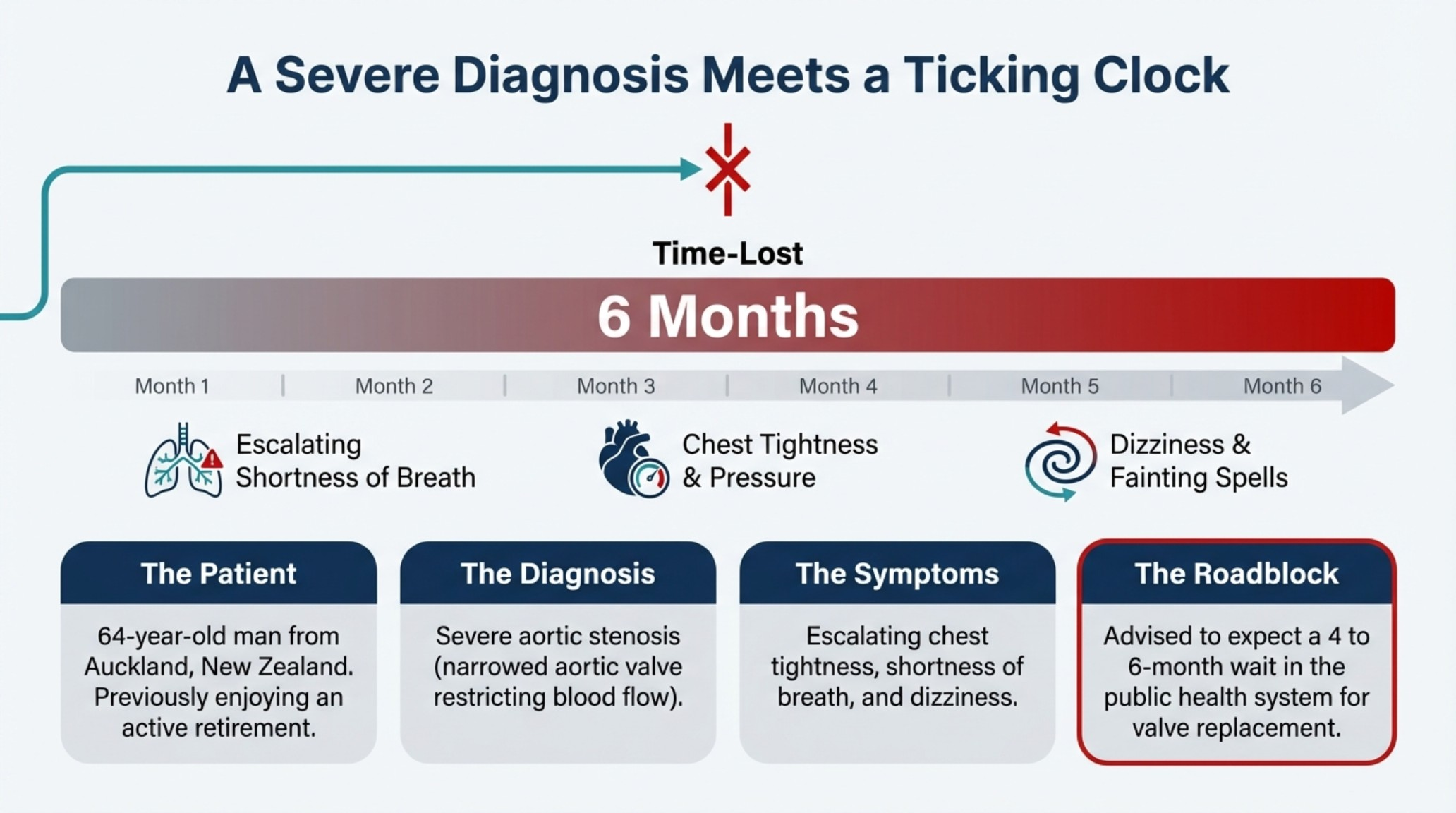
Steve M., a 64-year-old man from Auckland, had been enjoying an active retirement when he began noticing chest tightness, shortness of breath, and dizziness. His cardiologist diagnosed severe aortic stenosis and advised that he would likely need heart valve replacement treatment.
The challenge was timing. According to the family, the expected wait in the New Zealand public system was roughly 4 to 6 months. With symptoms worsening, that timeline felt difficult for the family to accept, and they started exploring whether earlier specialist review might be possible abroad.
Why the Family Looked to China
John’s daughter began researching international options and came across PandaMed. The family was not looking for a shortcut. They were looking for a way to understand whether earlier treatment evaluation might be possible, what type of procedure could be appropriate, and whether the logistics of overseas care could realistically be managed.
Shanghai became an option because the family wanted access to:
specialist cardiovascular review,
a hospital capable of managing complex valve procedures,
and English-language coordination support during travel and treatment.
Remote Review Before Travel
According to the draft, the first stage moved quickly. PandaMed helped the family organize medical records, including echocardiogram findings and prior test reports, and arranged translation so the materials could be reviewed by a cardiovascular team in Shanghai.
Following that review, the treating team advised that TAVI could be considered. TAVI, or transcatheter aortic valve implantation, is a less invasive approach used in selected patients with aortic valve disease. Whether a patient is suitable for TAVI depends on multiple factors, including anatomy, surgical risk, imaging results, and physician assessment.
At this stage, PandaMed’s role was coordination rather than treatment. The medical recommendation came from the hospital team, while PandaMed supported record collection, communication, translation, and travel planning.
Preparing for the Trip
Once the family decided to proceed with in-person evaluation in Shanghai, PandaMed assisted with practical arrangements, including travel planning, accommodation coordination, and hospital communication. John traveled with his wife, which helped make the process feel more manageable.
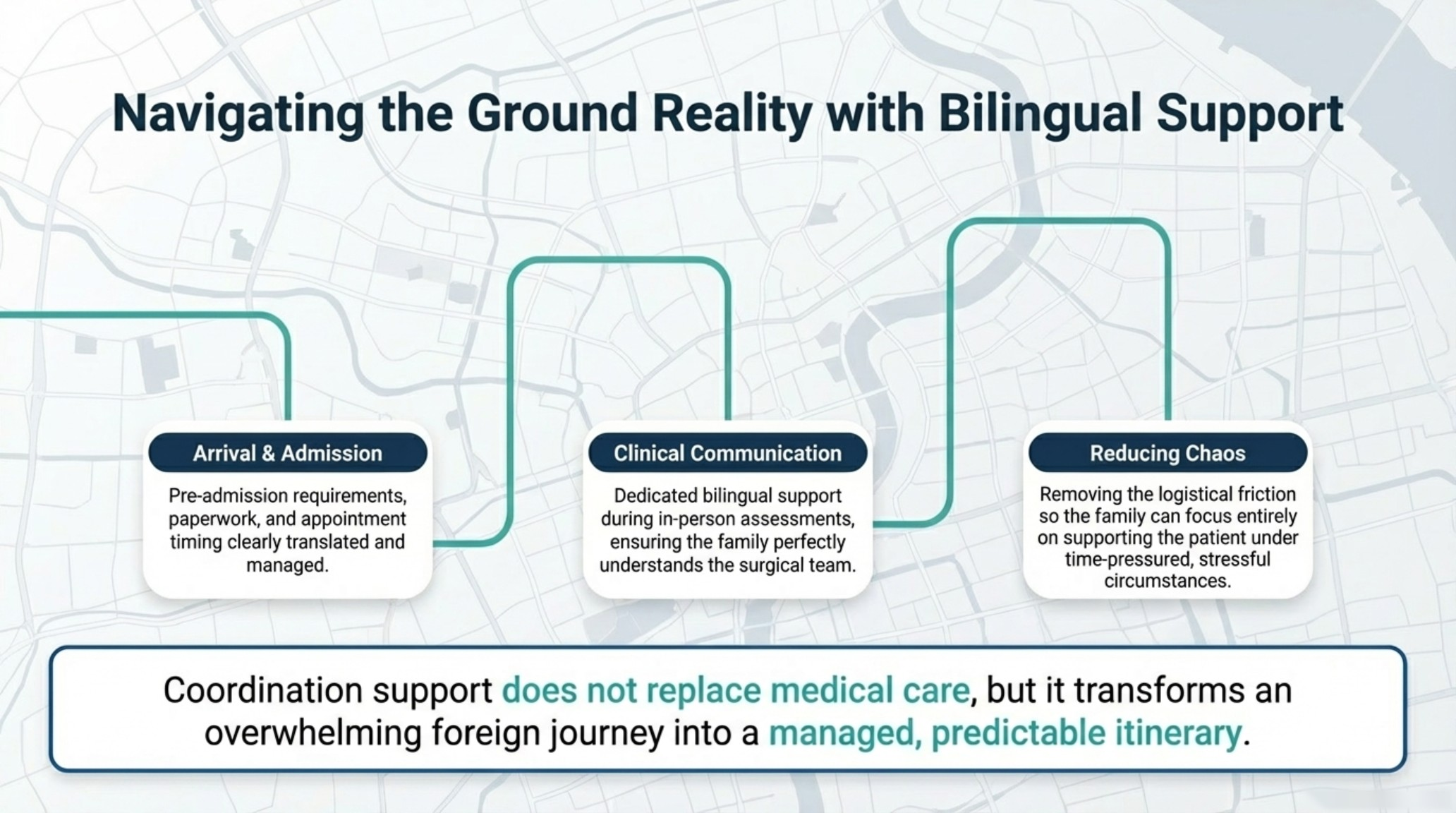
For many international patients, this stage matters almost as much as the clinical plan itself. When care involves another country, families often need help understanding paperwork, appointment timing, pre-admission requirements, and what to expect on arrival.
Evaluation and Treatment in Shanghai
After arriving in Shanghai, John completed the hospital’s in-person assessment and pre-procedure testing. PandaMed provided bilingual support during the process, helping with communication, scheduling, and coordination between the family and the hospital team.
The draft states that John went on to receive TAVI after the local evaluation process. The procedure was described as going smoothly, and he was reportedly walking in the hospital corridor within a few days. He was discharged after less than a week.
While recovery timelines vary from patient to patient, the family’s account suggests that the shorter hospital stay and less invasive nature of TAVI were important parts of their experience.
The Family Experience
One of the strongest parts of the draft is the family perspective. Cross-border care can feel overwhelming, especially when the patient is older and the decision must be made under time pressure. In this case, the presence of coordination support appears to have reduced some of that stress.
The family described feeling reassured by having help with translation, hospital communication, and travel logistics. That kind of support does not replace medical care, but it can make the overall treatment journey more understandable and less chaotic for patients and relatives.
Outcome and Follow-Up
According to the draft, the full timeline from initial inquiry to treatment was about 2.5 weeks, and John returned to New Zealand in under three weeks. The reported outcome included easier breathing, better energy, and relief from chest tightness.
These reported improvements should be understood as part of one individual case experience, not as a universal result. Recovery after TAVI varies depending on the patient’s age, overall health, disease severity, and physician-directed follow-up plan.
The draft also included an estimated total cost of from NZ$45,000, including hospital care, travel, and support services. Since costs can vary by hospital, procedure complexity, travel arrangements, and length of stay, any quoted figure should be treated as an estimate rather than a fixed package price.
What This Case May Mean for Other Families
For some patients, the hardest part is not deciding whether treatment is needed. It is deciding what to do when treatment is needed, but access is delayed.
This case suggests that for families facing long local wait times, overseas specialist review may be worth exploring. That does not mean every patient should travel, and it does not mean every patient will be suitable for TAVI or for treatment in China. But it does show that, with proper medical review and careful coordination, international evaluation can become a practical option in selected cases.
If you or a family member are considering treatment in China and want help understanding what records would be needed for an initial review, PandaMed can help coordinate the process, explain next steps, and support communication with hospitals and physicians.
To learn more, email contact@pandamedglobal.com.
