
How Long Does a China Medical Visa Take for International Patients?
SEO Title: How Long Does a China Medical Visa Take?
If you are planning medical travel, timing is usually one of your first questions. When patients search how long does china medical visa take, they are usually hoping for a simple answer like “a week” or “ten days.”
The problem is that there is no single timeline that fits every case. Embassy processing may be relatively fast in some places, but the total timeline depends on where you apply, how complete your documents are, the time of year, and how quickly the medical side of the case is ready. In many situations, the visa itself is only one small part of the full schedule.
The Short Answer: Embassy Processing Is Often Only Part of the Timeline
Once a visa application is formally accepted by a Chinese embassy, consulate, or Chinese Visa Application Service Center, standard processing often takes around 4 to 5 business days in many locations. In some jurisdictions, faster options may be available, such as express processing in 2 to 3 business days or even rush service in 1 business day.
But those numbers only describe the embassy or visa-center stage. They do not include the time needed to prepare medical records, complete hospital review, obtain treatment-related supporting documents, or finalize flights and accommodation.
That is why the more useful question is usually not just how long the visa takes. It is how long the full medical travel process may take from first case review to arrival in China.
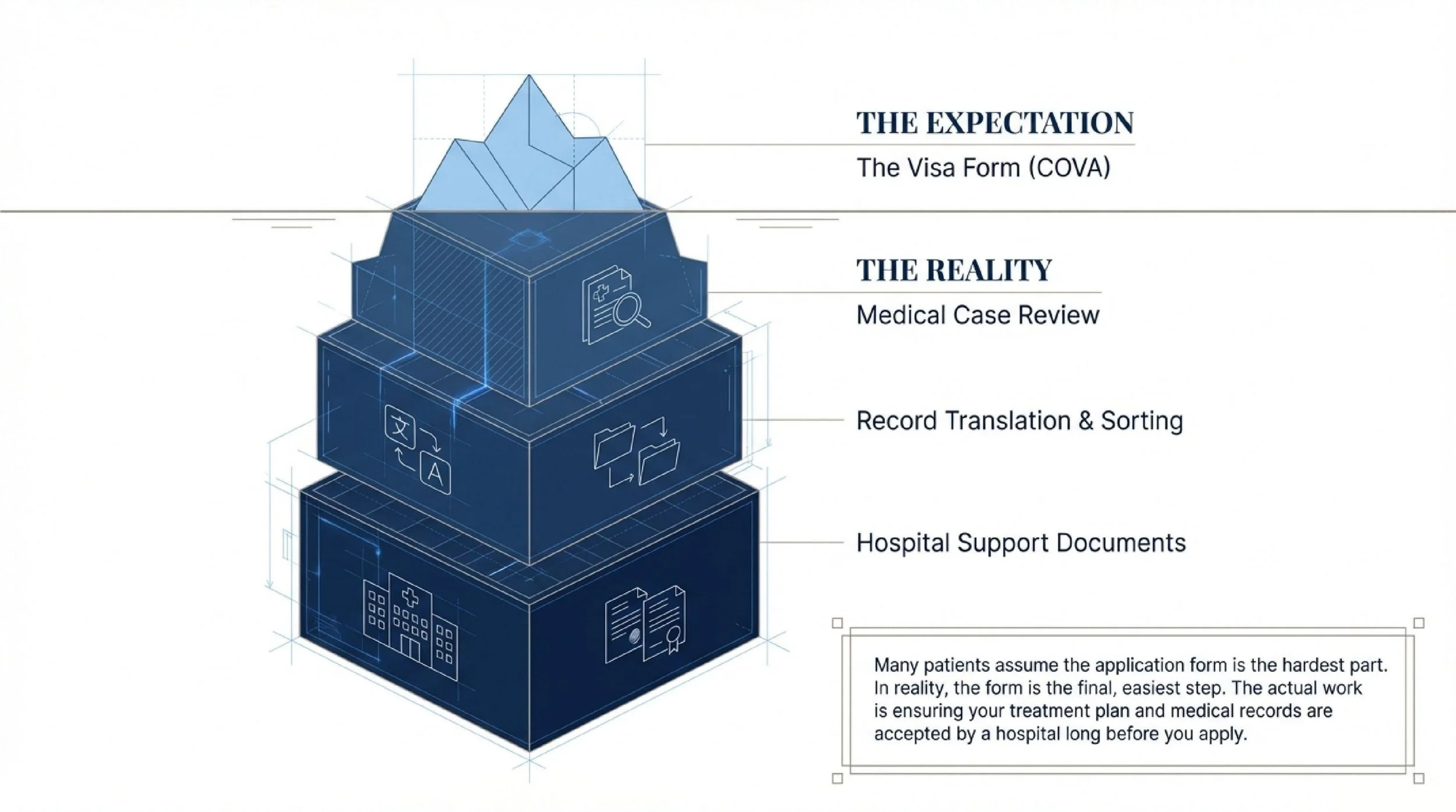
What Actually Affects China Medical Visa Processing Time?
Several factors can change the timeline, even after the application is ready to submit.
Application location
Processing speed can vary by country and even by individual consulate or visa center. Some locations offer expedited service. Others do not. Appointment availability can also differ.
Document completeness
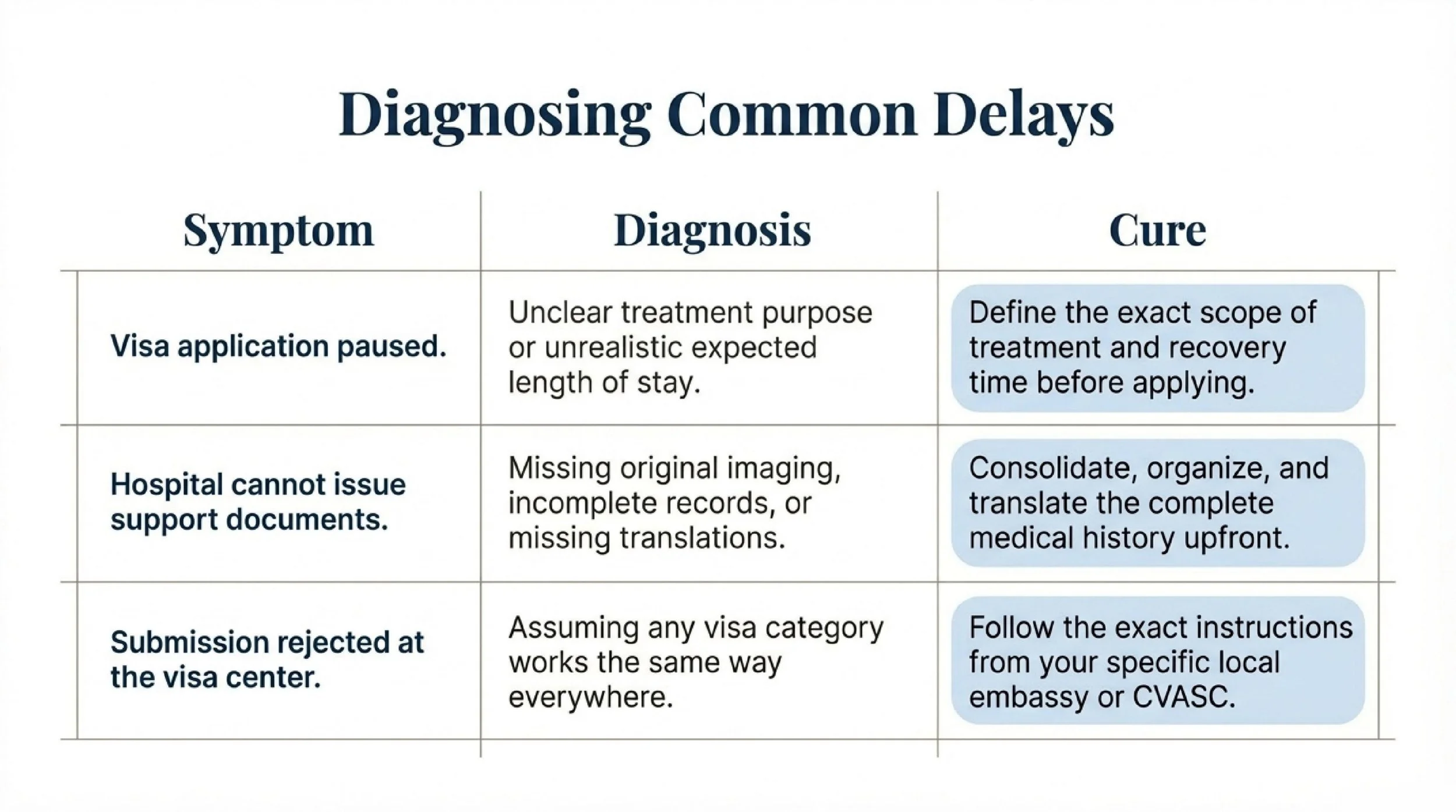
One of the most common causes of delay is an incomplete file. Missing documents, incorrect photo specifications, inconsistent travel details, or incomplete application forms can slow the process down quickly. If additional documents are requested, the timeline may extend.
Seasonal volume and public holidays
Visa centers are often busier before major Chinese holidays, school breaks, and summer travel peaks. Processing may slow during those periods. Public holidays in either the country of application or in China can also affect timing.
Individual case review
Some applications may move faster than others depending on the travel purpose, personal travel history, and whether supporting documents are clear and easy to verify. If treatment-related invitation materials need further checking, more time may be needed.
The Bigger Timeline: From Case Review to Arrival in China
This is where many patients underestimate the process.
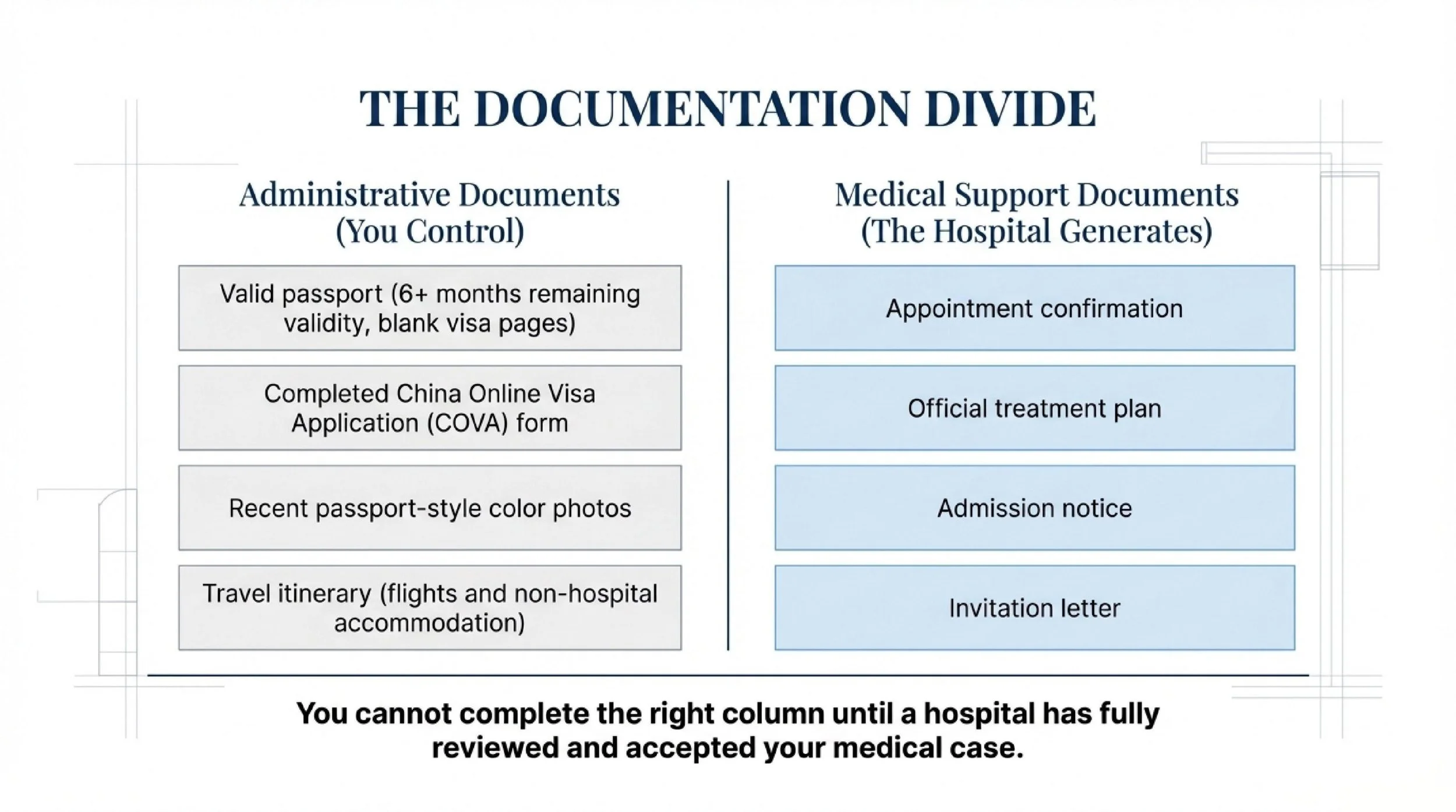
If you are traveling for medical treatment, you usually do not start with the visa form. You start with the medical side. In many cases, hospital-related supporting documents must be prepared before the visa application can move smoothly.
A realistic full timeline often looks like this:
| Stage | Typical Timing | What Happens |
|---|---|---|
| Record gathering and translation | About 1 to 2 weeks | Patients organize diagnosis summaries, imaging, pathology if relevant, and core treatment history |
| Hospital review and acceptance | About 1 to 3 weeks | The medical team reviews the case, decides whether treatment is feasible, and may issue treatment-related supporting documents for eligible accepted cases |
| Visa application stage | About 1 to 2 weeks | This includes appointment booking, document submission, processing, and passport return |
| Travel logistics | About 1 to 2 weeks | Flights, lodging, airport transfer, and pre-arrival coordination are finalized once timing is confirmed |
When you put those steps together, the total timeline from initial decision to actual arrival in China is often around 4 to 8 weeks, depending on urgency, case complexity, and how organized the records are at the start.
Why Working Backward Usually Makes More Sense
Patients often focus on visa timing first, but the more useful question is how long the full process may take from case review to arrival.
If you already know you want to be in Beijing by a certain date, the most practical move is to work backward from that target. That means allowing enough time for:
medical record organization
translation if needed
hospital review
treatment-related supporting documents
visa processing
travel and lodging arrangements
If you wait until the last minute to begin the medical review, even a fast embassy processing window may not save the schedule.
Why Medical Preparation Often Matters More Than the Visa Form
This is the part many first-time medical travelers do not expect.
The visa application itself may move fairly quickly once everything is ready. But before that, the hospital usually needs enough information to understand the case. If the records are incomplete, spread across multiple providers, missing imaging, or lacking a clear summary, that can delay the entire process.
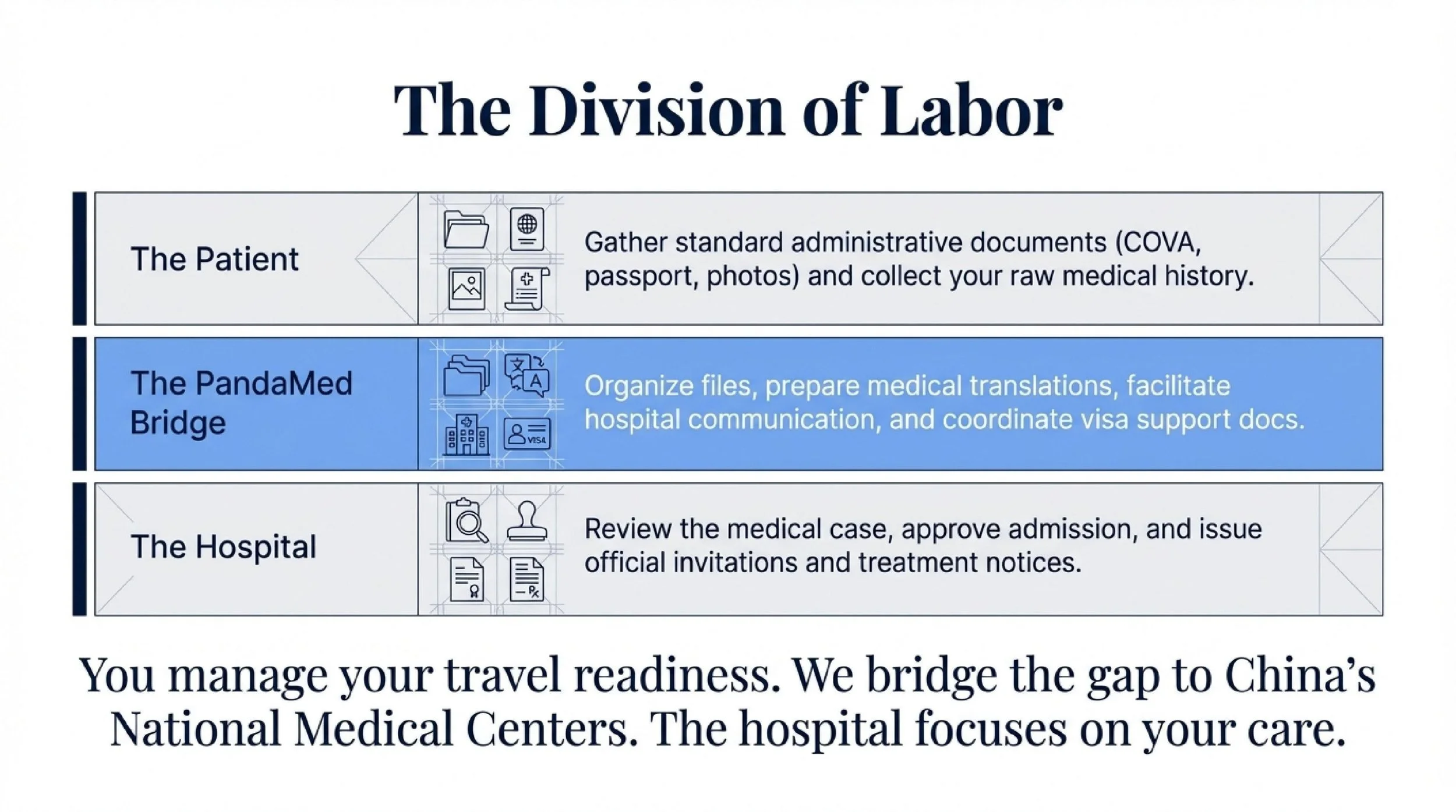
For eligible patients accepted by partner hospitals, treatment-related supporting documents for a medical visa application may be issued after the medical review is completed. PandaMed helps coordinate that preparation by assisting with record organization, translation, hospital communication, and pre-travel case planning.
PandaMed does not make visa decisions, and final visa approval always depends on the relevant embassy, consulate, visa center, and immigration authorities. But making the hospital side more organized can make the overall timeline much more predictable.
How PandaMed Can Help
If you try to rush to the embassy before the medical side is ready, delays are more likely.
PandaMed supports international patients who are considering medical care in Beijing by helping them organize medical records, prepare the case for hospital review, and clarify what documents may be needed before the visa stage. For eligible accepted cases, we can also help coordinate the hospital-issued supporting documents used in a medical visa application.
If you are unsure whether your current records are enough, or you want help planning the timeline backward from your intended travel date, you can contact contact@pandamedglobal.com.
FAQ
Can I expedite a China medical visa application?
In many locations, maybe yes. Some embassies or visa centers offer faster processing for an added fee, such as 2 to 3 business day express service or 1 business day rush processing. But this only speeds up the visa-office stage. It does not shorten hospital review or record preparation time.
When should I start the process?
A practical starting point is often 6 to 8 weeks before the intended travel date, especially if records need to be collected, translated, reviewed, and then converted into hospital support documents. The exact timing may be shorter or longer depending on the case.
What usually causes the biggest delays?
The biggest delays often happen before visa submission. Common bottlenecks include scattered medical records, slow translations, missing imaging, unclear case summaries, and waiting too long to begin hospital review.
Can PandaMed help make the timeline clearer?
Yes. PandaMed cannot approve visas or replace official embassy procedures, but we can help patients understand the medical side of the timeline first. That often makes the later visa step easier to plan.
Final Thought
If you are asking how long a China medical visa takes, that is the right question to start with. But for real planning, it is usually not the most important question.
The more useful question is this: How long will the full process take from case review to arrival?
If you want help understanding that timeline based on your existing records and treatment goal, email contact@pandamedglobal.com. In many cases, older records are enough to begin the first review.
