
How to Pay for Medical Treatment in China as an International Patient
Understanding the payment methods, billing timeline, and financial documents you need before and during hospital care in Beijing.
For many international patients, the financial side of medical travel can feel just as uncertain as the clinical side. If you are planning treatment in China, you may be wondering whether your cards will work, how much cash to bring, or whether you can pay in US dollars.
The short answer is that payment in Chinese hospitals is manageable — but it works differently from most Western healthcare systems. The most important thing to understand is this: paying for medical care in China is not a single transaction at the end of your stay. It is a phased process that runs alongside your treatment. Knowing when payments are expected, and how each stage works, can help you avoid delays and arrive better prepared.
How Payment Works in Chinese Hospitals: The Core Difference
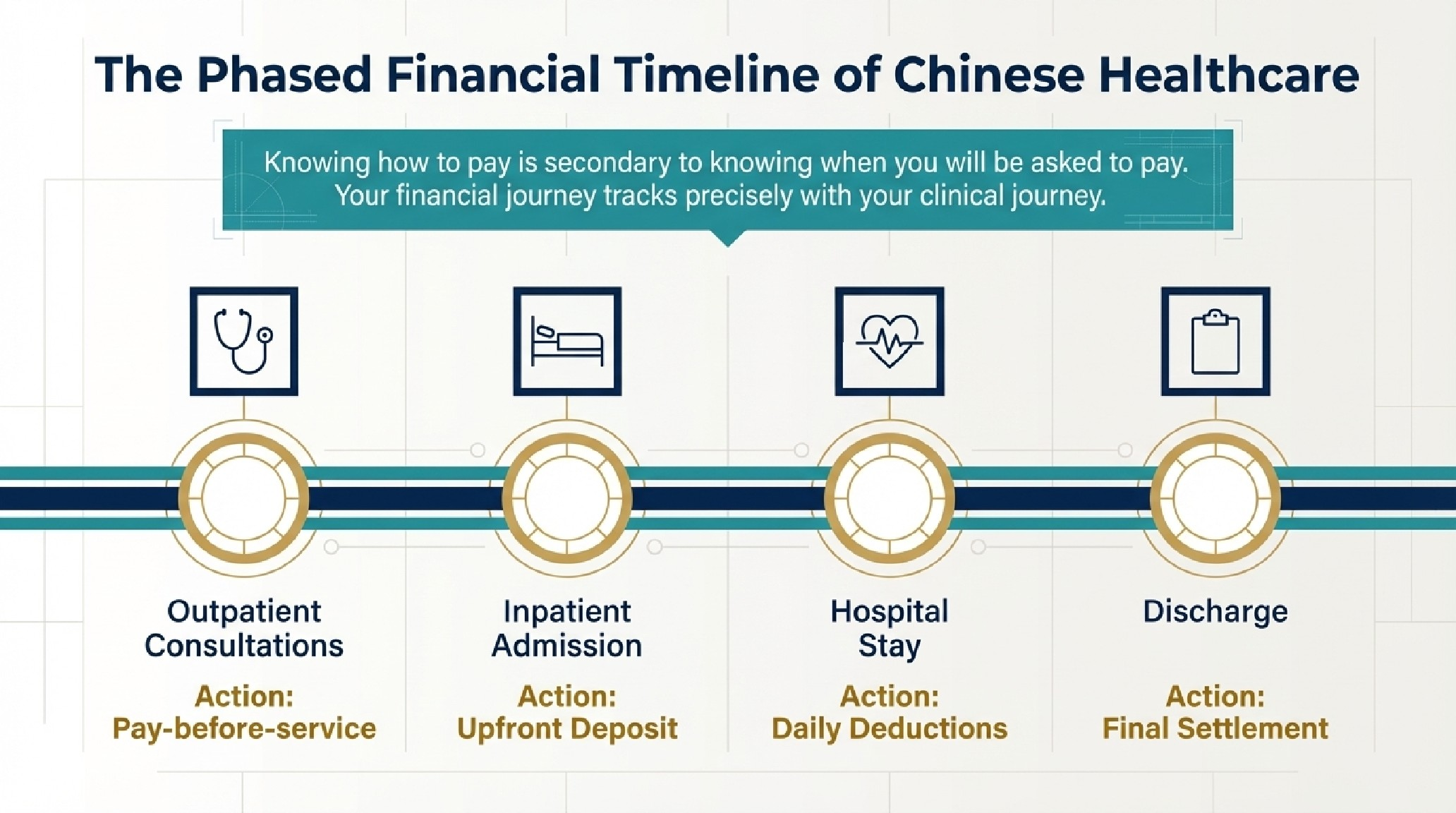
In many Western countries, patients receive a bill weeks after discharge. In China, the system operates primarily on a pay-as-you-go and deposit basis. You will be asked to pay at multiple points during your care, not just at the end.
This means financial preparation is not just about having enough money. It is about having the right payment methods available at the right stages of your treatment.
What Payment Methods Are Generally Accepted
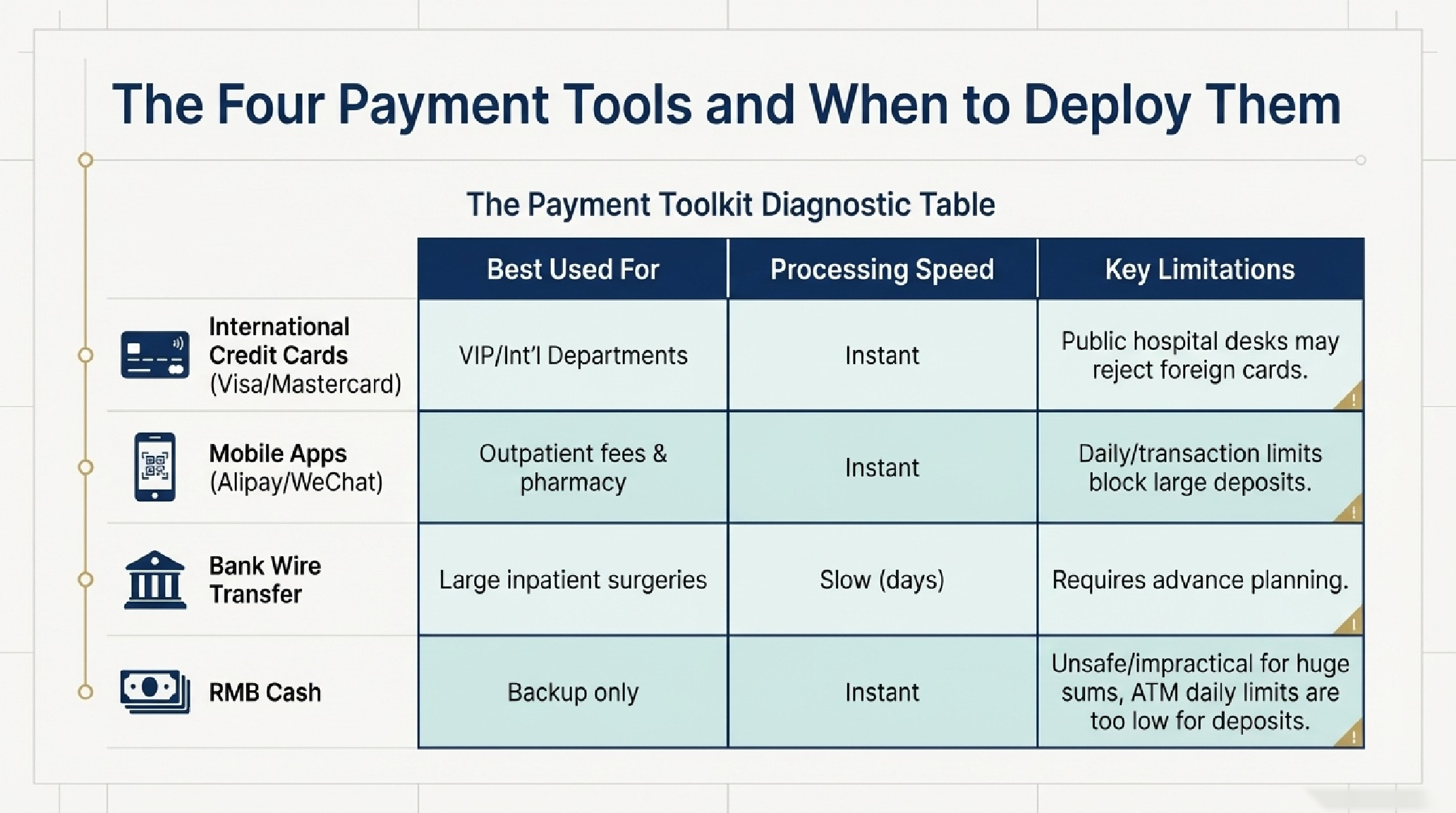
Chinese hospitals, particularly the international or VIP departments of major public hospitals and private international clinics, typically support several payment options. However, not every method works in every setting, and it is generally advisable to prepare more than one option before you travel.
International Credit Cards
Major hospitals, especially those with dedicated international departments, generally have point-of-sale terminals that accept foreign Visa and Mastercard. American Express may be accepted in some settings. That said, standard outpatient registration desks in public hospitals may not always accept foreign physical cards. It is worth confirming with the specific hospital or department in advance.
Mobile Payments via Alipay or WeChat Pay
Alipay and WeChat Pay are the most widely used payment methods across China. International visitors can now link a foreign credit card to either app, which makes them useful for outpatient registration fees, pharmacy purchases, and other smaller transactions. However, daily or per-transaction limits set by your home bank or the apps themselves may make mobile payments less practical for large inpatient deposits.
Bank Wire Transfer
For significant inpatient procedures or complex surgeries, the total cost may exceed what credit card limits can cover. In these cases, a direct wire transfer to the hospital's official bank account is often the most reliable option. International wire transfers typically take several business days to clear, so this requires advance planning before your travel dates.
Cash in RMB
Physical Chinese Yuan is rarely the primary method for large medical bills, but keeping a modest amount of cash as a backup is still practical. Technical issues with apps or cards can happen, and having some RMB on hand provides a useful fallback for smaller payments.
The Payment Timeline: What to Expect at Each Stage
Understanding when you will be asked to pay is just as important as knowing how to pay. The following reflects how billing typically works across a standard inpatient journey in a Chinese public hospital.
Outpatient Consultations and Diagnostic Tests
At the outpatient level, payment is generally required before each service is provided. After registering and paying a consultation fee, you will see the doctor. If the doctor orders a blood test, imaging scan, or other diagnostic procedure, you will typically need to pay for that specific test at a payment window or self-service kiosk before the lab or radiology department will proceed.
Inpatient Admission and the Initial Deposit
If you are admitted for surgery or extended inpatient treatment, the hospital will generally require an upfront deposit before admission is finalized or before a non-emergency procedure is scheduled. The deposit amount varies depending on the procedure and the hospital, and can range considerably. It is advisable to request a cost estimate from the hospital before you travel so you can plan accordingly.
Daily Deductions During Your Stay
Once admitted, the costs of your ongoing care — medications, nursing, use of facilities, surgical time — are typically deducted from your deposit on a daily basis. If your deposit balance runs low, the hospital will usually notify you and ask you to top it up before care continues.
Discharge Settlement
At discharge, the hospital will calculate the final total. If your deposit exceeded the actual cost, the difference is refunded. If the total exceeded your deposit, the remaining balance must be settled before you leave.
Why Keeping the Right Documents Matters
Whether you are paying out of pocket or planning to seek reimbursement through your insurance provider, keeping accurate financial records is essential.
The most important document is the official tax invoice, known in China as a fapiao. This is a government-registered document issued by the hospital billing department. It is the standard document required for insurance claims and official financial records. A credit card receipt or a screenshot of a mobile payment transaction is generally not sufficient for these purposes.
At discharge, it is strongly recommended to request both the official invoice and an itemized billing breakdown from the hospital billing department. The itemized breakdown lists every individual charge — medications, procedures, nursing, and other services — and is often required by insurance providers for reimbursement review.
A Note on Foreign Insurance
Standard public hospital departments in China generally do not offer direct billing with foreign insurance providers. However, the international or VIP departments of major public hospitals, as well as some private international clinics, may have direct-billing arrangements with global insurers such as Bupa, Cigna, or Allianz. If you carry international health insurance, it is important to confirm the billing arrangements directly with your insurer and the specific hospital department before you travel.
All transactions within Chinese hospitals are conducted in Chinese Yuan (RMB). If you pay with a foreign credit card, your home bank will handle the currency conversion.
How PandaMed Can Help
The most challenging part of managing medical finances in China is usually not the payment itself. It is knowing when each payment will be expected, what it covers, how to retain the right documentation, and how to avoid disruptions to your care caused by billing miscommunication.
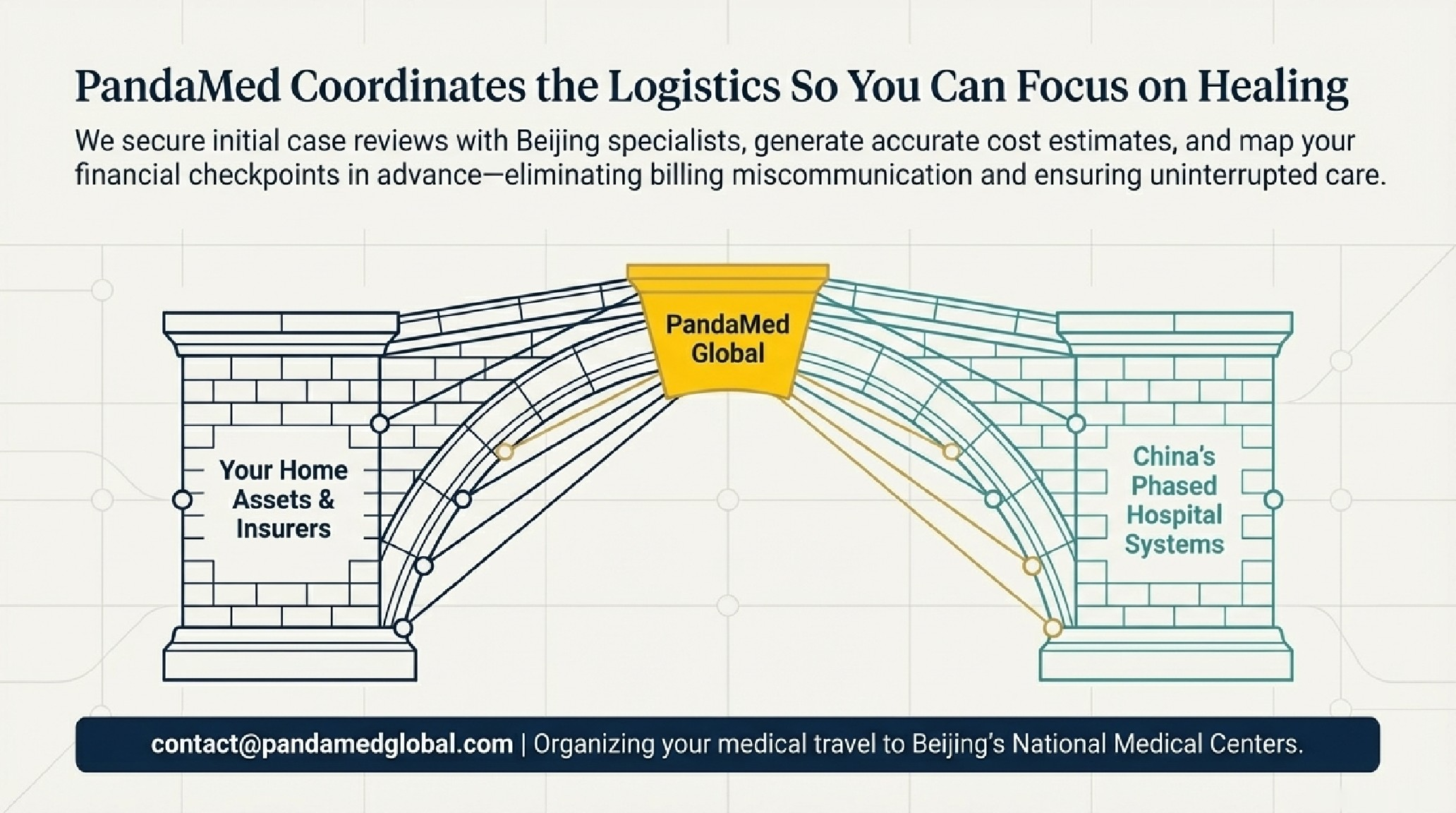
The best way to prepare financially is to first have a clear picture of your treatment path. PandaMed supports international patients traveling to Beijing by helping them organize their medical records and prepare for an initial case review with Beijing specialists. Understanding the likely treatment phases and timelines in advance allows you to plan your budget, coordinate with your bank, and arrive with the right payment options in place.
If you would like help preparing for your care in Beijing, you are welcome to contact PandaMed at contact@pandamedglobal.com.
Frequently Asked Questions
Do Chinese hospitals accept foreign insurance directly?
Standard public hospital departments generally do not offer direct billing with foreign insurers. However, the international or VIP departments of major public hospitals and some private clinics may have arrangements with global insurance providers. It is important to confirm this with your insurer and the hospital before you travel.
Can I pay in US dollars or euros?
All transactions within Chinese hospitals are conducted in RMB. If you use a foreign credit card, your home bank will manage the currency conversion at the prevailing exchange rate.
What if I do not have enough for the inpatient deposit?
In many cases, the deposit must be paid before admission is finalized or before a non-emergency procedure is scheduled. Requesting a cost estimate from the hospital before your travel dates is strongly recommended so you can ensure your available funds or credit limits are sufficient.
Are there ATMs inside the hospitals?
Most major hospitals have ATMs in or near the lobby, and many accept foreign debit cards for RMB withdrawals. However, daily withdrawal limits are typically too low to cover large inpatient deposits, so ATMs are better suited for smaller cash needs.
