
Relapsed/Refractory B-ALL and NHL: Understanding CNCT19 CAR-T Pathways in Beijing
Relapsed or refractory B-ALL and NHL can worsen fast after standard treatment stops working. In this setting, timing, disease burden, and access to an experienced CAR-T team can all affect what options are still realistic. For international patients, Beijing’s top hematology centers are worth understanding because they combine high case volume, transplant depth, and rapid cellular therapy adoption.
Quick Decision Snapshot
| Pathway | First-line treatment after relapse/refractory disease | Specialist wait time | Out-of-pocket cost |
|---|---|---|---|
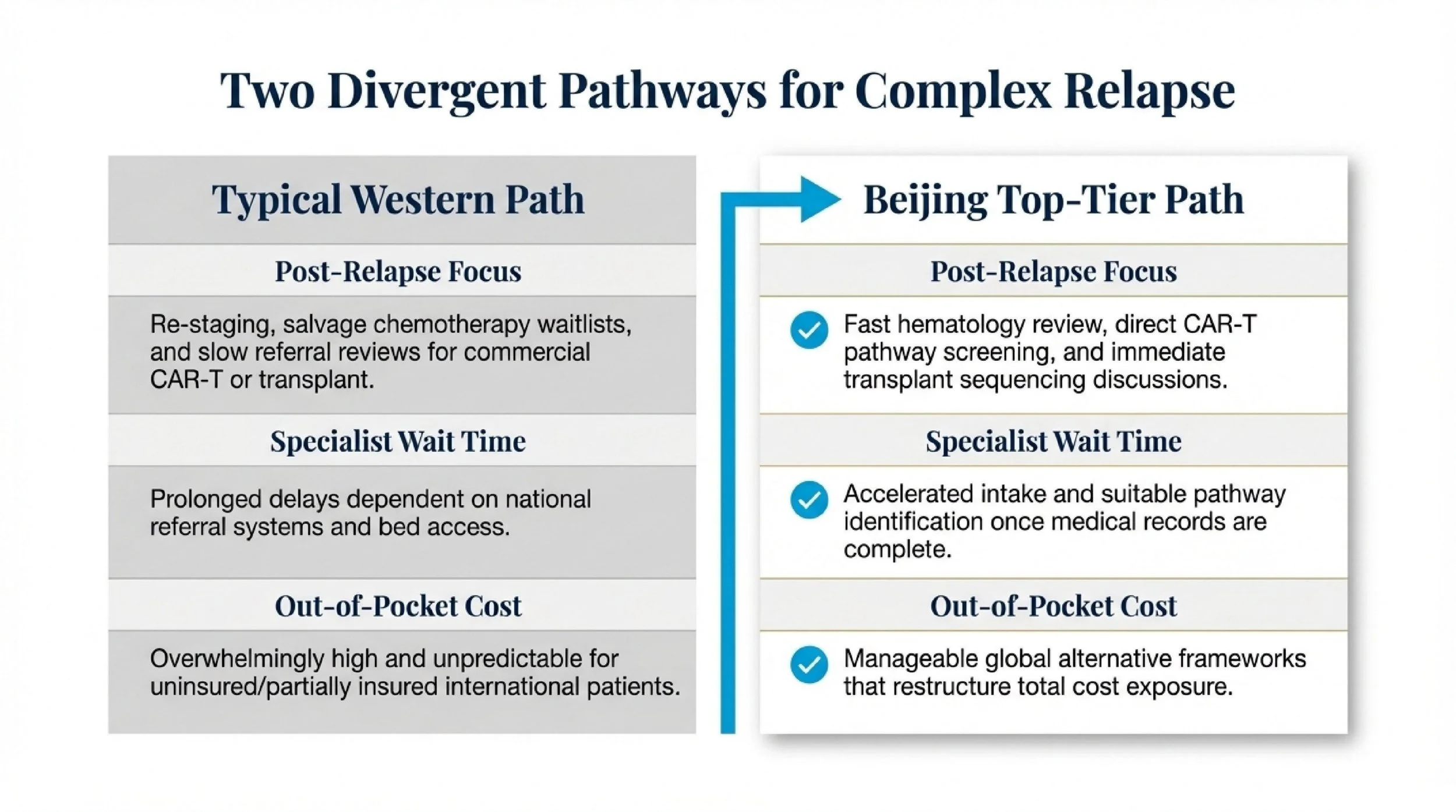
| Typical Western pathway | Salvage chemotherapy, targeted therapy, bridging therapy, then commercial CAR-T if eligible | Often depends on referral chain, insurance approval, and manufacturing slot availability | Often high and highly variable, especially for uninsured or cross-border patients |
| Top Beijing public hospitals | Rapid specialist review for relapsed/refractory B-ALL or NHL, with evaluation for in-house CD19 CAR-T such as CNCT19, dual-target CAR-T, or CAR-T to allo-HSCT sequencing | Public appointments may be difficult for international patients and can be booked out weeks ahead; internal specialist coordination can be much faster once records are reviewed | Varies by diagnosis, manufacturing pathway, admission length, complications, and whether transplant is needed afterward |
If you are not sure whether your current scans, bone marrow reports, flow cytometry, or pathology are enough, you can email your existing records to contact@pandamedglobal.com. Old records are often enough for an initial records check and basic next-step guidance.Patient Profile and Clinical Difficulty
Why You Cannot Just "Wait and See"
Disease burden can rise quickly and make CAR-T harder
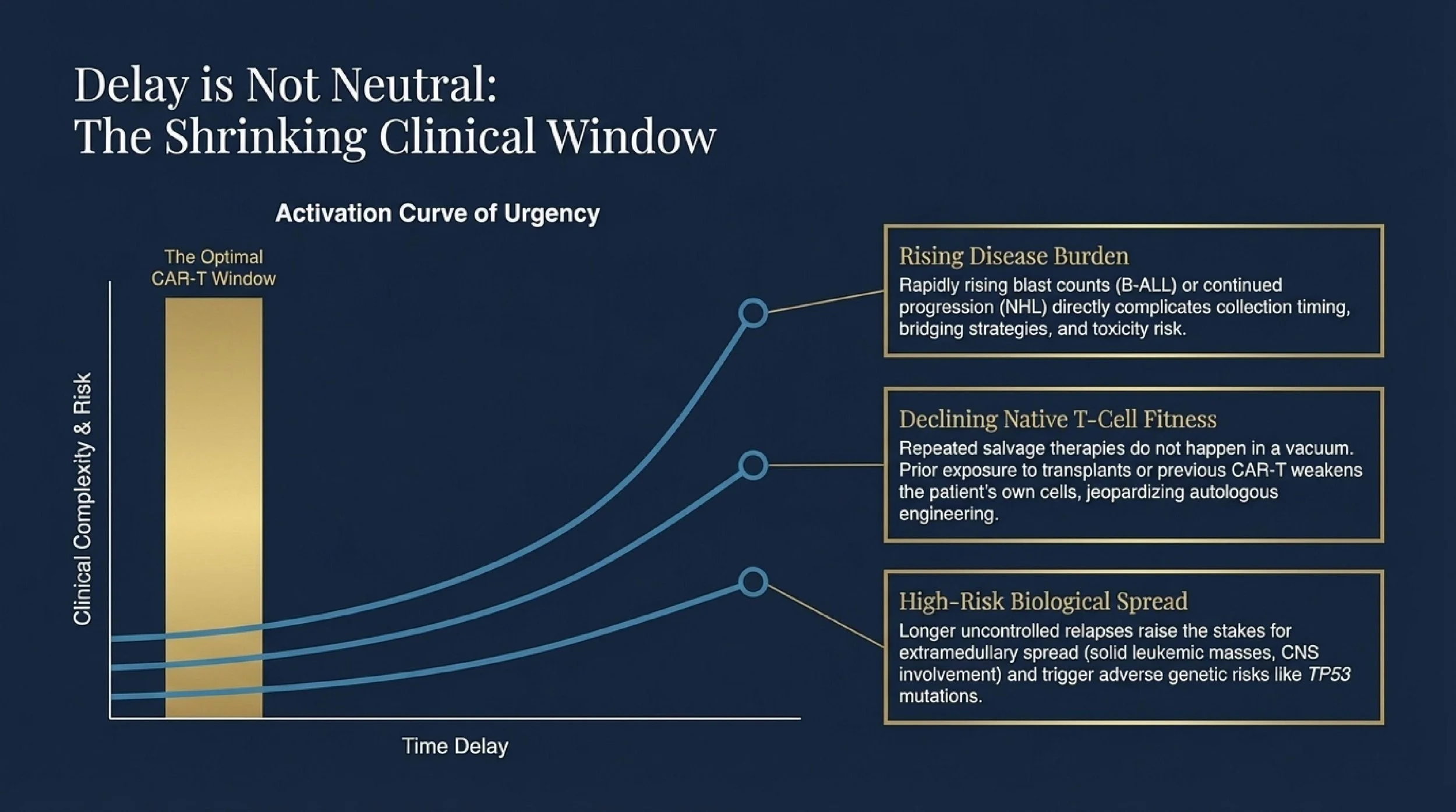
In relapsed or refractory B-cell acute lymphoblastic leukemia and aggressive B-cell lymphoma, delay is not neutral. Disease burden can increase quickly, and that changes both eligibility and risk.
Repeated salvage therapy can exhaust native T-cells. That matters because CAR-T depends on collecting functional T-cells and then expanding them into an effective product. If the disease burden is already very high by the time leukapheresis is arranged, lymphodepletion may work less well, metabolic complications may increase during the vein-to-vein interval, and the risk of severe cytokine release syndrome may also rise.
The draft source notes that for one adult B-ALL patient, salvage therapy had become ineffective and the prognosis had narrowed to 2–6 months. For another pediatric B-ALL patient, relapse occurred 6 years after diagnosis, but bone marrow still showed 5% primitive/naive lymphocytes, signaling ongoing relapse risk. For the refractory NHL patient, disease progression continued despite R-CHOP and multiple salvage lines. These kinds of scenarios are exactly why treatment timing matters.
Plainly put: waiting can reduce the chance of collecting strong T-cells and can make the whole process more medically complex.
Extramedullary disease can change response patterns
In relapsed B-ALL, longer uncontrolled relapse increases the chance of disease outside the marrow, including central nervous system involvement or solid extramedullary masses. Once extramedullary disease is established, standard CAR-T responses may become less predictable and overall disease control may be harder.
This is one reason high-volume hematology centers matter. Teams that see these patterns often are usually better positioned to judge whether a patient should move toward single-target CD19 CAR-T, dual-target CD19/CD22 CAR-T, sequential CAR-T, or CAR-T followed by allogeneic transplant.
Source attribution for this disease-burden concern was provided in the draft as: Journal of Clinical Oncology (2022): Disease Burden Affects Outcomes in Pediatric and Young Adult B-Cell Lymphoblastic Leukemia After Commercial Tisagenlecleucel.
Why CNCT19 has drawn attention
The therapy highlighted in your draft is Inaticabtagene Autoleucel (CNCT19), a fully independently developed Chinese CD19-targeted CAR-T product. According to the material you provided, its single-chain antibody design was developed to support longer in vivo persistence and longer-term immune surveillance.
The draft also preserved several specific clinical claims that should remain intact:
Over 5 years of real survival cases have now been reported across adult B-ALL, pediatric B-ALL, and NHL.
Overall remission reached 82.1% at 3 months after infusion in key clinical studies cited in your materials.
Compared with earlier-generation CAR-T approaches, CNCT19 was described in the source material as having a lower incidence of severe adverse events, making it potentially more practical in heavily pretreated or physically weaker patients. That does not mean low risk. CAR-T still requires careful inpatient monitoring for CRS, neurotoxicity, infection, marrow suppression, and organ stress.
Why Beijing volume may matter
In cellular therapy, experience is not abstract. It is operational.
Managing CRS and ICANS is partly a volume skill. A center that handles these toxicities routinely is more likely to have mature escalation pathways, better ICU coordination, and tighter judgment on when to intervene without unnecessarily suppressing CAR-T expansion.
Two Beijing centers stand out in this field:
Peking University Institute of Hematology at Peking University People’s Hospital is nationally known for the “Beijing Protocol” in haploidentical transplantation and for advanced research on CAR-T followed by allo-HSCT, especially in high-risk disease biology such as TP53-mutated cases.
Institute of Hematology & Blood Diseases Hospital, CAMS is China’s only national-level blood disease center and was identified in your draft as a key site in the pivotal CNCT19 pathway, with sustained remission data in relapsed or refractory B-ALL.
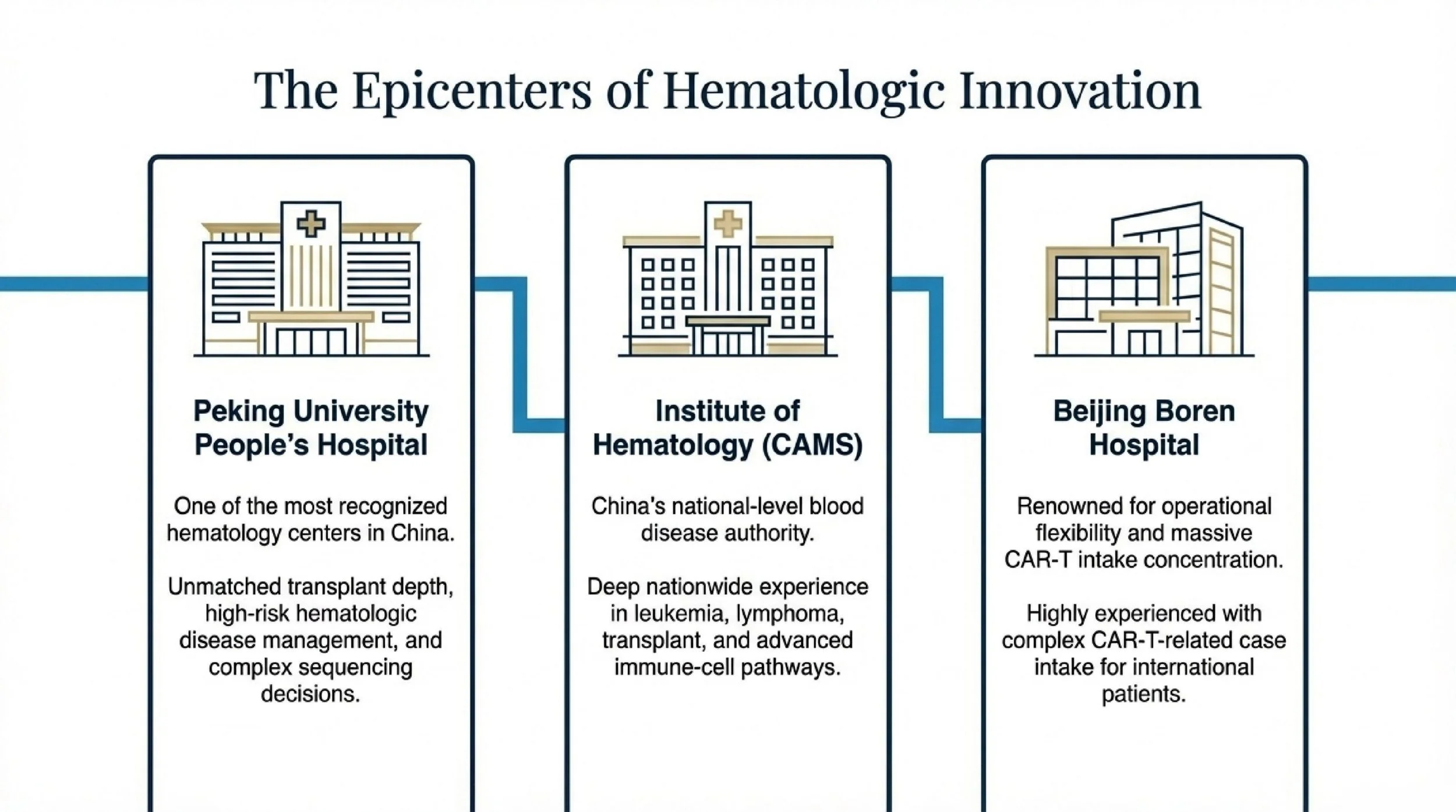
Your source material also described Beijing Boren Hospital as a major specialty center in dual-target CD19/CD22 CAR-T and sequential CAR-T, especially for patients needing highly individualized cellular therapy pathways.
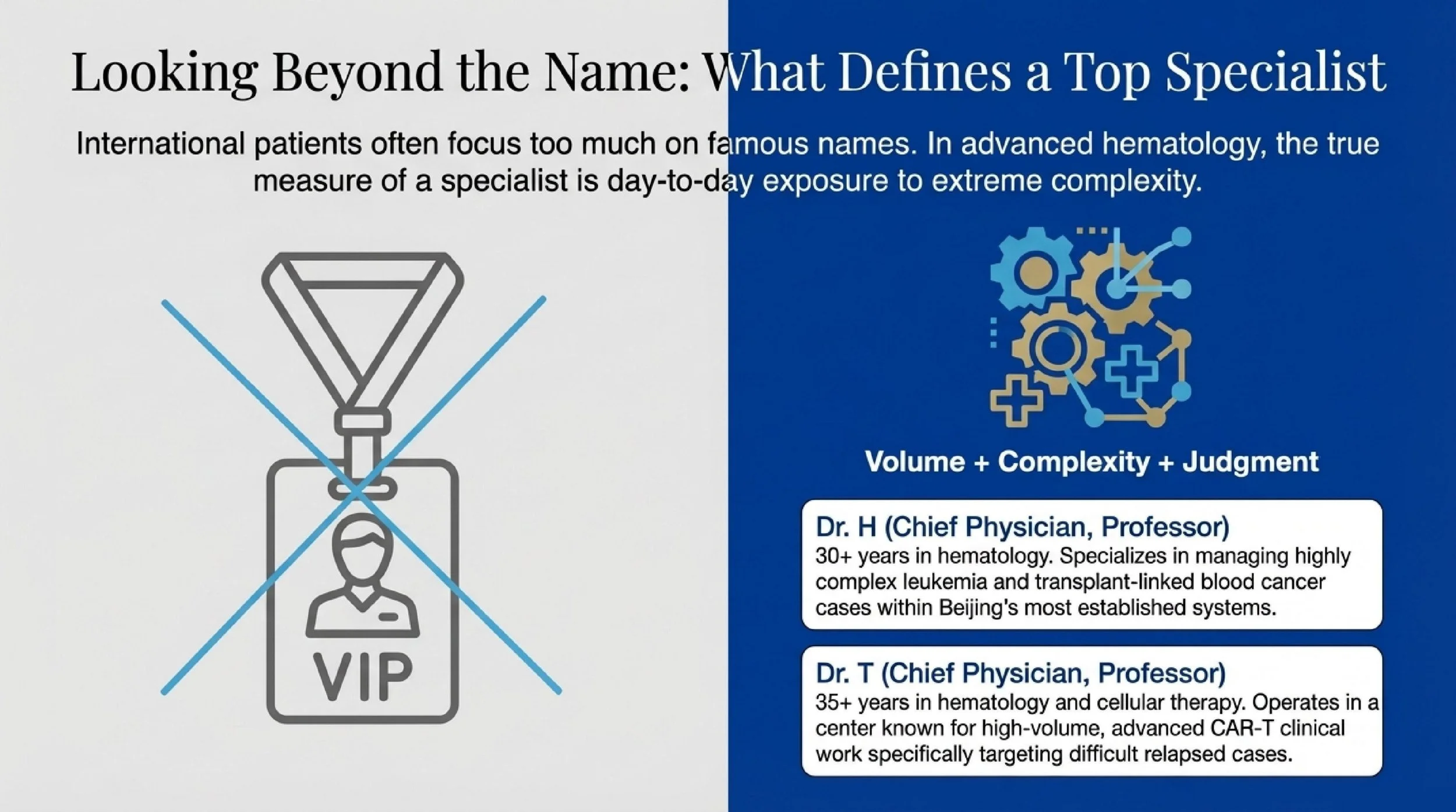
For doctor profiles, keeping the article compliant and non-promotional, two anonymous senior specialists can be presented this way:
Dr. H is a senior chief hematologist with 35+ years of experience in leukemia, transplantation, and high-risk cellular therapy strategy.
Dr. T is a senior chief hematologist with 40+ years of experience and a team history of 4,000+ CAR-T cases.
If your case is complicated, or if you do not know whether your current pathology, marrow report, or prior treatment records are enough, email what you already have to contact@pandamedglobal.com. Existing records are often enough to start a records check and clarify what to prepare next.
The Checklist
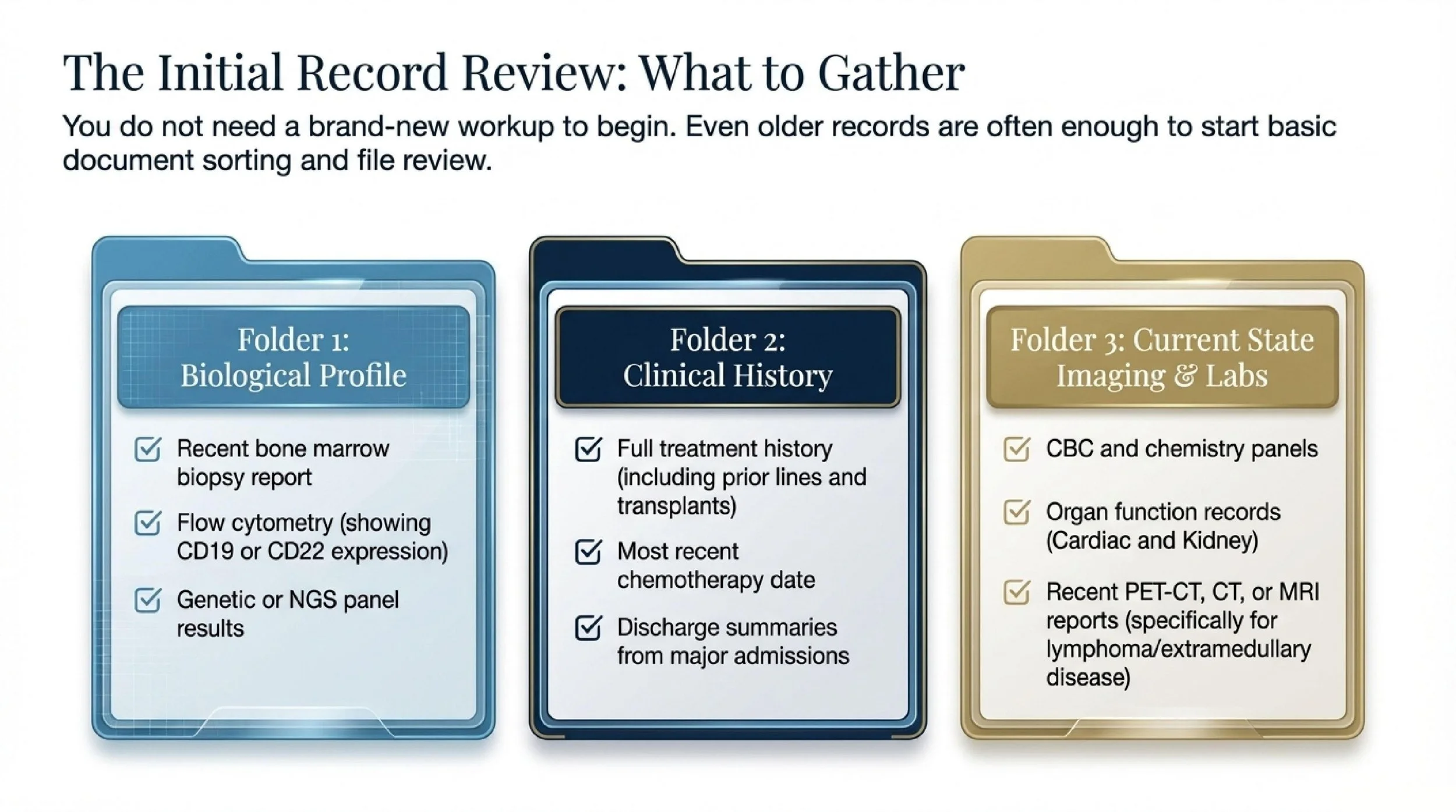
You do not need to wait for brand-new records before asking for an initial review. In many cases, existing records are enough to start.
For relapsed or refractory B-ALL or NHL, the most useful files usually include the following:
Bone marrow biopsy and flow cytometry, ideally recent, including confirmation of CD19 and when relevant CD22 expression. Your draft specified reports within 14 days when possible.
Genetic or NGS panel results, including mutations or rearrangements such as BCR-ABL, TP53, and IKZF1, because these can affect risk assessment and whether single-target or multi-target CAR-T is more reasonable.
Full treatment history, including prior chemotherapy lines, prior transplant, blinatumomab, inotuzumab, any earlier CAR-T exposure, and the date of the most recent chemotherapy.
Organ function testing, especially echocardiogram with LVEF above 50% and creatinine, because lymphodepletion and CAR-T admission require a basic organ reserve check.
Pathology reports and discharge summaries, especially if the diagnosis shifted over time or if there were prior relapse sites outside marrow or nodes.
Imaging and CNS-related records, if there is concern for extramedullary disease, CNS involvement, bulky progression, or refractory nodal disease.
Family and Beijing Logistics
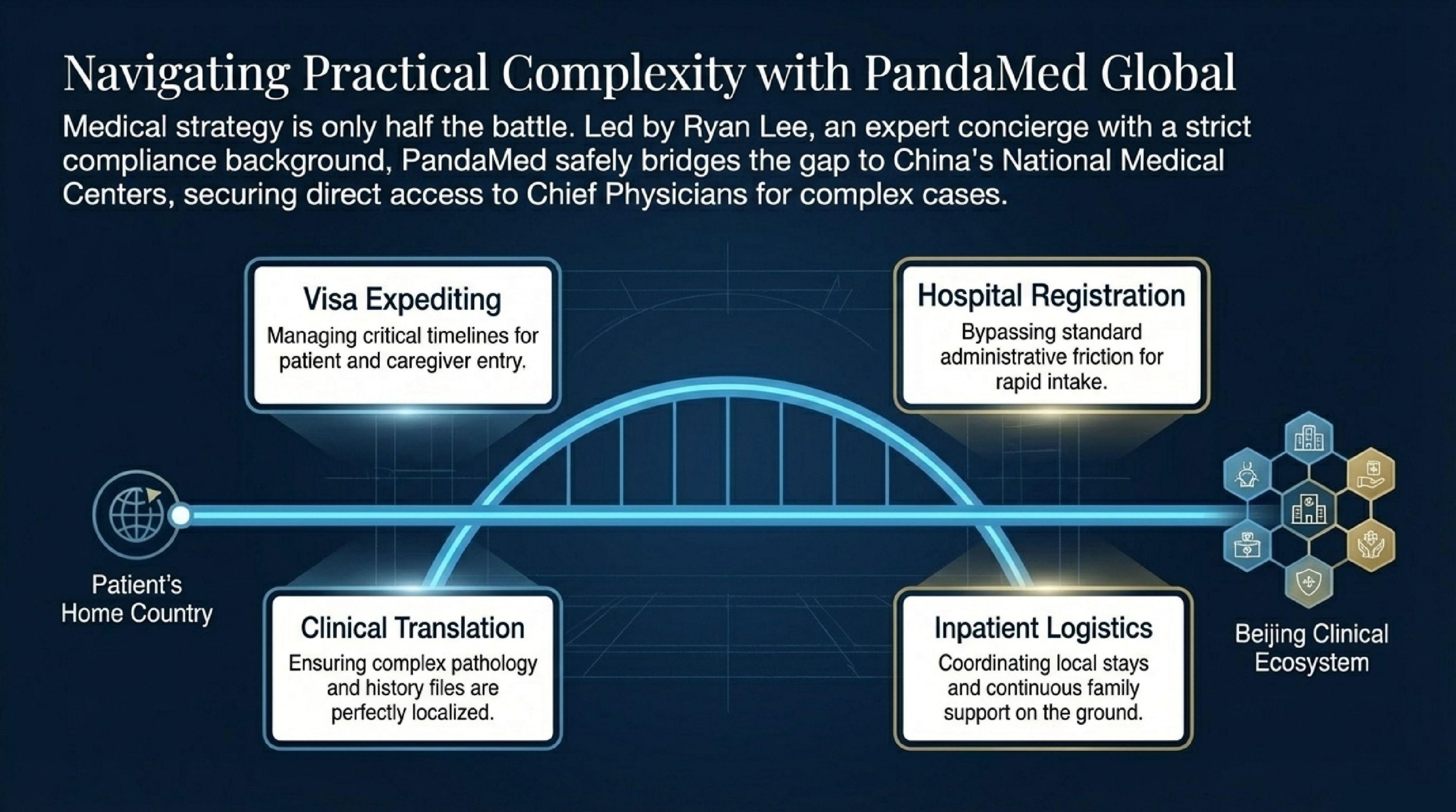
Patients often travel with a spouse, parent, or other caregiver. If you want to understand medical visas, hospital appointment flow, translation, lodging near the hospital, admission steps, or Beijing care coordination, you can email contact@pandamedglobal.com. This is also useful if you want to know what to prepare first before making travel decisions.
Author Bio
Ryan Lee is a Beijing-based medical concierge and the founder of PandaMed. With a strict compliance background, he helps international patients navigate China's top public hospitals safely. He secures direct access to Chief Physicians for complex cases.
Medical Disclaimer
This information is for educational purposes only and is not medical advice. PandaMed is a care coordination service, not a medical provider. Always consult a qualified doctor for your specific condition.
References
Official Report from Juventas Bio (CNCT19 / Narsoplimab): patient profile material for adult B-ALL, pediatric B-ALL, and refractory NHL case summaries.
Long-term Follow-up Data of the ELIANA Trial (Kymriah) by Novartis and the ZUMA-3 Trial (Tecartus) by Gilead: background comparator context for long-term CAR-T outcomes in relapsed/refractory B-ALL.
Nature Communications (2023): Long-term follow-up of CD19 CAR-T cell therapy in patients with relapsed/refractory B-cell acute lymphoblastic leukemia.
Blood Journal (2024): long-term CAR-T follow-up and remission durability context in relapsed/refractory B-ALL.
Frontiers in Immunology (2025): European survey on CAR T-Cell analytical methods from apheresis to post-infusion immunomonitoring.
Discover Oncology (2025): CAR-T cell therapy in China: innovations, challenges, and strategic pathways.
ClinicalTrials.gov (2024): CAR-T registration and trial pathway context.
Journal of Clinical Oncology (2022): Disease Burden Affects Outcomes in Pediatric and Young Adult B-Cell Lymphoblastic Leukemia After Commercial Tisagenlecleucel.
Peking University Institute of Hematology Department Introduction: plain-text attribution for hospital profile and transplant/CAR-T program strength.
CAMS 2023 Annual Report: plain-text attribution for national hematology center scale and specialty role.
Boren Medical Group: plain-text attribution for dual-target CAR-T and sequential CAR-T program description.
